Key Takeaways
- Supreme Court rules trial courts can dismiss time-barred lawsuits on their own initiative.
- Decision aims to save judicial time and prevent vexatious litigation.
- Court can reject a plaint if it is clearly barred by law or lacks actionable legal right.
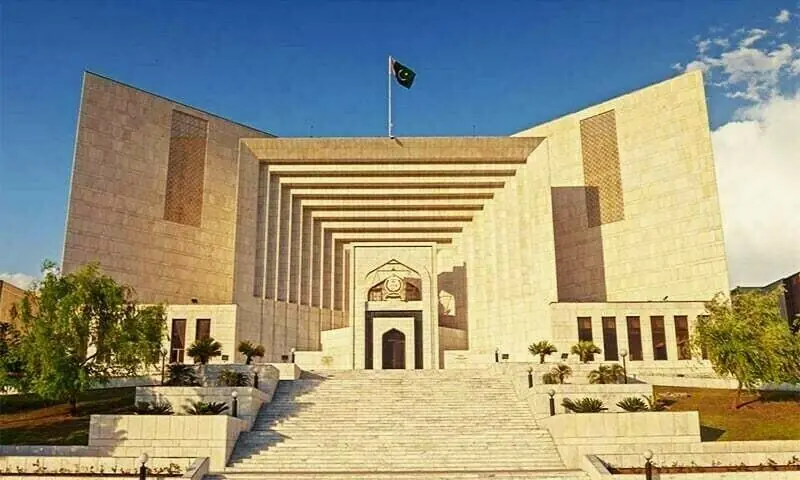
The Supreme Court of Pakistan has ruled that trial courts can independently reject time-barred lawsuits, a move aimed at streamlining the judicial process and preventing unnecessary litigation.
In a recent decision, Justice Muhammad Ali Mazhar, speaking for a three-judge bench, stated that trial courts are not barred by Section 3 of the Limitation Act, 1908, or Order VII, Rule 11 of the Code of Civil Procedure (CPC), 1908, from dismissing a suit on their own initiative if it is clearly time-barred or vexatious.
The ruling came in response to a case involving a dispute over a house in Army Officers Housing Colony, Askari-IV, on Rashid Minhas Road in Karachi. The original plaintiffs, including Abdul Wahab Shah, had filed a suit seeking a declaration, possession, and partition. The trial court initially rejected their plaint, ruling it was barred by limitation in September 2024.
The plaintiffs appealed to the Sindh High Court (SHC), which set aside the trial court’s decision and directed that all pending applications, including one seeking amendment of the plaint, be decided together. The defendant, Muhammad Islam Badshah, then challenged the high court’s decision before the Supreme Court.
Justice Mazhar’s ruling emphasized that a court’s power to reject a plaint is not contingent on a formal application from the defendant. He stated that if a plaint is clearly vexatious or time-barred, the court can dismiss it without conducting a mini-trial or examining the written statement.
The Supreme Court judge highlighted that courts have a responsibility to dismiss fundamentally flawed suits to save judicial time and prevent unnecessary litigation. He noted that if a plaint is found to be palpably vexatious or lacks an actionable legal right, the court can invoke Order VII, Rule 11 of the CPC to terminate the litigation at the earliest stage.
However, before rejecting a plaint, the court must first examine whether it discloses a cause of action, whether the relief claimed is undervalued, and if so, whether the plaintiff has corrected the valuation within the prescribed time. The court must also ensure that the relief is properly valued but the plaint is written on insufficiently stamped paper.
This ruling is expected to have a significant impact on the efficiency of the legal system, as it allows trial courts to address time-barred or vexatious cases more swiftly, thereby reducing the backlog of cases and ensuring that resources are allocated more effectively.