Key Takeaways
- The Museo de Historia de la Computación in Spain has created a 1:1 scale replica of the Cray-1 supercomputer.
- Powered by 30 2012-era Mac Minis, the replica achieves 1.3 teraflops of performance.
- The project serves as a tribute to the Cray-1 and Apple's founding, showcasing the evolution of computer architecture.
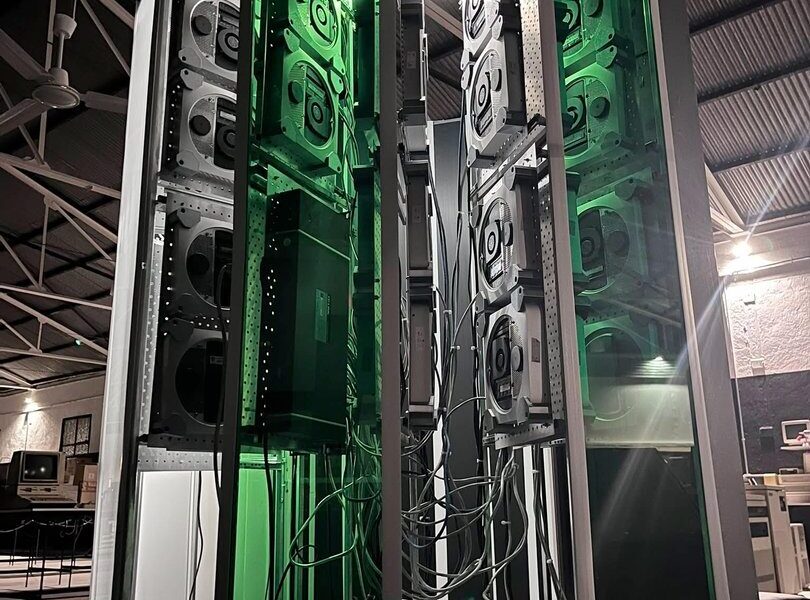
The Museo de Historia de la Computación in Spain has unveiled a groundbreaking replica of the Cray-1 supercomputer, a machine that was once the pinnacle of computing technology, from 1976. The replica, which is a 1:1 scale visual representation, is powered by 30 2012-era Mac Minis, a choice that might seem unconventional but has proven effective.
Developed over 18 months, the project aims to serve as a 50th-anniversary tribute to the Cray-1 and Apple's founding. The replica is a valuable educational tool for museum-goers, allowing them to understand the shifts in computer architecture since the original machine's inception.
The replica's performance is impressive, with the 64 active processing cores orchestrated to deliver 1.3 teraflops of combined performance. Prior to one node going offline, the museum reportedly achieved 1.5 teraflops using all 70 available cores. The system is composed of five quad-core i7 Mac Minis and 25 dual-core i5 models, with the majority dating back to 2012, except for two units from 2014.
The original Cray-1 used vector processing, applying a single instruction to multiple data elements simultaneously. In contrast, the replica distributes work across independent processors in a parallel cluster, showcasing the evolution of computing technology. This innovative approach has allowed the replica to achieve performance levels that far exceed the original machine, which had a peak theoretical performance of approximately 160 megaflops.
What was originally a purpose-built research machine has been re-created with consumer hardware that's vastly more capable than the machine that inspired it. The project serves as a testament to the enduring legacy of the Cray-1 and the rapid advancements in computing technology over the past five decades.
The replica is a valuable tool for understanding the shifts in computer architecture since 1976. It provides a tangible representation of the evolution from vector processing to parallel processing, highlighting the progress made in the field of computing.
The project's success lies in the effective use of consumer-grade hardware to recreate a machine that was once state-of-the-art. This approach not only honors the legacy of the Cray-1 but also demonstrates the potential of using older technology in creative and innovative ways.
The replica is a valuable educational tool, offering visitors a unique opportunity to explore the history of computing and the evolution of technology. It serves as a reminder of the rapid pace of technological change and the importance of preserving and understanding the past to inform the future.