Punjab has seen a 43% decrease in reported patients across five smog-related disease categories between January and October 2026 compared to the same period in 2025. The province is currently executing a 10-year Smog Mitigation Plan designed to address pollution sources consistently throughout the year rather than just during the winter months.
Exhaust from vehicles, emissions from factories and brick kilns, construction-related dust, the burning of agricultural residues and open waste burning all contribute to the overall pollution burden. To combat these, the province has introduced 1,100 electric buses across 28 districts, with plans to add another 1,900. Additionally, government mechanisms have conducted approximately 1.2 million vehicle emission tests.
Industrial and agricultural sectors have also seen significant shifts. More than 14,000 emission-control systems have been installed, covering over 96% of targeted industrial units. Furthermore, all 8,000 brick kilns covered by the provincial initiative have been converted to zigzag technology. To reduce crop-fire incidents, Punjab distributed more than 10,045 super seeders with a 60% subsidy, resulting in a 65% reduction in reported crop-fire incidents in 2025 compared to the previous year.
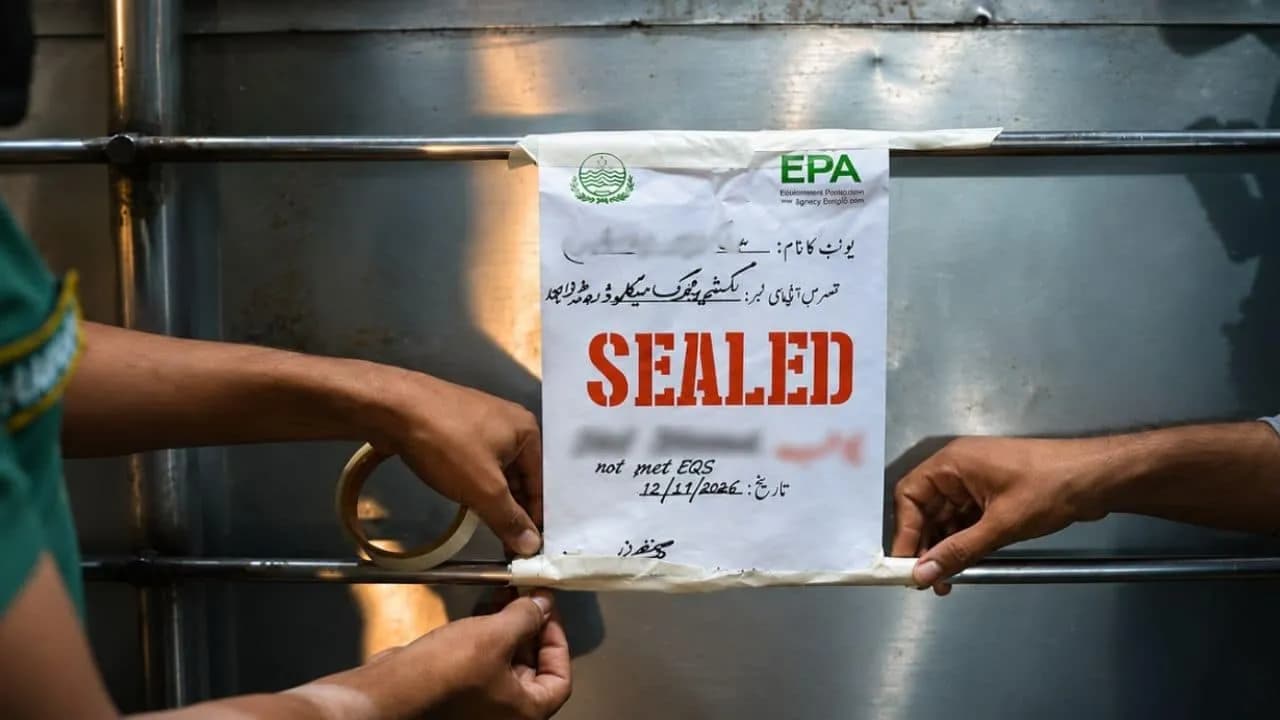
Enforcement has been bolstered by 67 Quick Response Units, which consist of 750 officers tasked with reaching reported field fires within a targeted response time of 10–15 minutes. The province has also established 80 air-quality monitoring stations, with a goal to reach 103 by the end of 2026, supported by AI-enabled monitoring and digital reporting.
Health and environmental data show a downward trend in pollution impacts. October 2026 was recorded as Lahore’s cleanest October in the last five years. Respiratory illness outpatients declined from approximately 22.87 million in January–October 2023 to 7 million during the same months in 2026. Nevertheless, changes in reported illnesses and environmental conditions cannot be attributed to a single intervention.
The 10-year Smog Mitigation Plan draws on international experiences from China, South Korea, the United Kingdom, Japan, and Mexico. The report emphasizes that while institutional policies are essential, citizens are encouraged to participate by avoiding open waste burning, maintaining vehicles, and reporting violations via the Green Punjab App or the 1373 helpline.