Levent Alpöge at Anthropic may have ended a century-long mathematical struggle by producing an AI-assisted proof of the Riemann hypothesis. The proof, which addresses the distribution of prime numbers, was developed using Anthropic’s Claude AI.
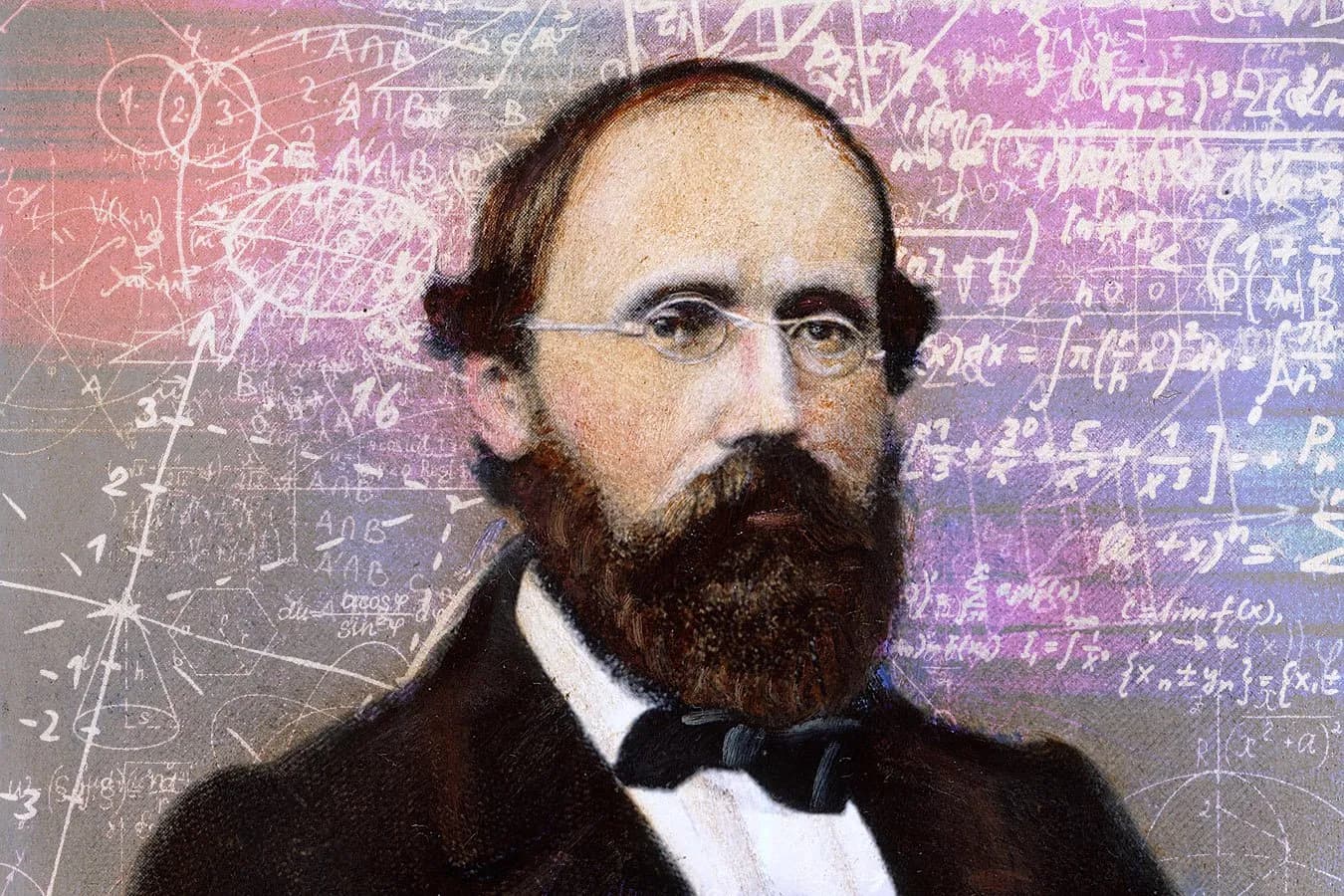
The Riemann hypothesis has been considered the most famous and stubbornly unsolved problem in mathematics since 1859, when Bernhard Riemann made a casual remark about a mathematical function in his memoir. He suggested that the spacing of primes could be inferred from the Riemann zeta function, specifically that its "non-trivial zeros" always sit on the same vertical line. While Riemann calculated some zeros to confirm his idea, he never proved it generally.
Christopher Hughes at the University of York in the UK stated, "This result, if true, will be the culmination of a struggle thousands of mathematicians have attempted in the past." The problem is one of the Clay Mathematics Institute’s Millennium Prize Problems, which offers a $1 million prize for a solution.
Scott Armstrong at Sorbonne University in Paris described the problem as "the queen of all the Millennium Problems," adding, "For the whole field of mathematics, there could not be a bigger theorem."
The new proof is massive in scale. Alpöge stated that the proof is over 250,000 pages long and has not yet been fully read, digested, or understood by the mathematics community. Its translation into the proof-checking software Lean is 17,000,000 lines long.
Because of this size, the proof will take time to adjudicate. Alex Walker at University College London said, "I have not had a chance to read the 17 million lines of Lean, so cannot speak to their truth." Walker also noted that the announcement did not reveal the specific mathematical tricks the AI used, though some believe it connected fields like number theory and arithmetic geometry in ways not currently in literature.
The Lean code is currently being adapted to run on a computer for review. Scott Aaronson at the University of Texas at Austin noted, "While Lean itself has some issues, so far none of the AI results with Lean certificates have had to be retracted." However, Aaronson suggested it may take years to unravel the details and reap the mathematical insights.
The implications of the proof are extensive. It would resolve the biggest open question in number theory regarding primes and provide firmer ground for numerous results that currently rely on the assumption that Riemann was correct. John Nicholson at the Max Planck Institute for Mathematics in Germany noted, "An extremely large number of results have previously been proven subject to the generalised Riemann hypothesis," and mentioned that several fast algorithms for computing quantities in algebraic number theory depend on that hypothesis. The hypothesis also has ties to theories of chaos in quantum systems in physics.