Young people at the National Youth Summit 2026 presented a 41-point charter demanding that federal and provincial governments turn their proposals into legislation, policy reforms, and dedicated budget allocations within two years. The charter addresses challenges regarding education, employment, skills development, entrepreneurship, financial inclusion, healthcare, climate change, and political representation. The youth-led document calls for time-bound commitments from the private sector, development partners, parliament, and government institutions, stating that young people should be recognized as active stakeholders in national development rather than merely beneficiaries of government policies.
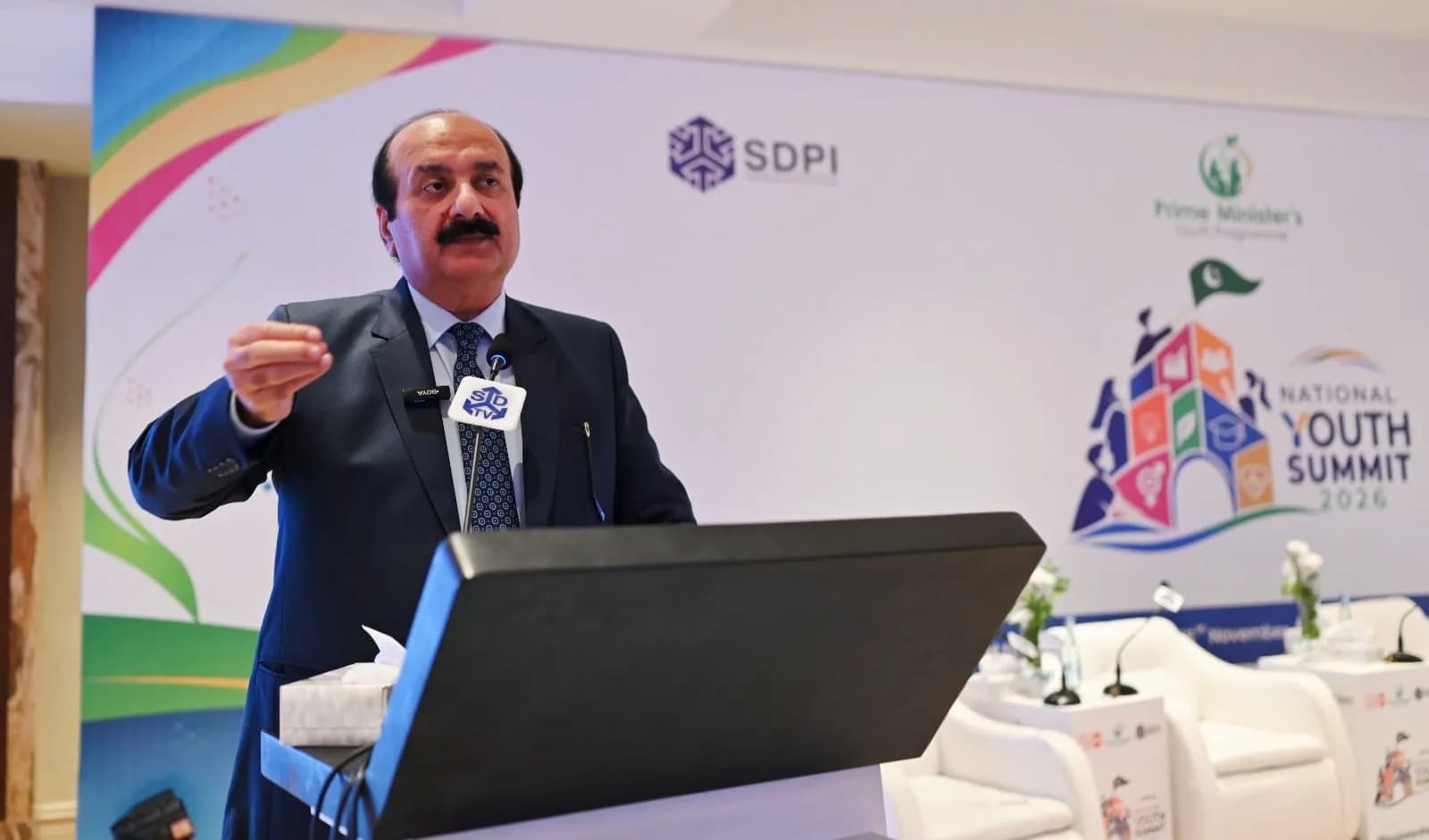
The summit, organized by UNFPA Pakistan in collaboration with the Prime Minister’s Youth Programme and the Sustainable Development Policy Institute (SDPI), took place on Wednesday in Islamabad. Speakers emphasized that investing in the youth is essential for sustainable development and urged policymakers to turn youth aspirations into concrete opportunities.
Chairman of the Prime Minister’s Youth Programme, Rana Mashhood Ahmad Khan, announced that the government would launch Pakistan’s first National Adolescent and Youth Policy in the coming months and declare 2027 as the Year of Skills. Khan stated the government is currently implementing the National Youth Employment Policy and has introduced the country’s first Artificial Intelligence (AI) and semiconductor policies. He noted that the National Youth Employment Policy, which received federal cabinet approval, aims to ensure at least 35 percent representation of women in the labor force annually and encourages young entrepreneurs to account for at least 10 percent of new company registrations every year.
UNFPA Country Representative in Pakistan, Dr Luay Shabaneh, urged young leaders to move beyond expressing views and engage in policy dialogue to hold policymakers and parliamentarians accountable. He stated that the summit was intended to enable young people to lead discussions on their future. “This is not for venting frustrations. It is about hope and how we can bring about change,” Shabaneh said, urging participants to provide practical solutions. He also highlighted that Pakistan could not transform its development landscape without investing in women’s capabilities, stating, “Women are a missed opportunity for the country.”
Earlier, Chairman Board of Governors SDPI, Shafqat Kakakhel, noted that nearly two-thirds of Pakistan’s population is below 30. He stated that while young people contribute through startups and volunteer initiatives, a structured mechanism is needed to translate their ideas into policy. The summit featured five thematic discussions, culminating in the Youth Demand Charter to be presented to government leadership. Kakakhel urged participants to be practical and honest, stressing that climate considerations should be integrated into all policy discussions.
Senator Jan Muhammad Buledi pledged to make efforts to present the youth proposals before the Senate and National Assembly, stating the state needs to provide quality internet, computers, and modern skills training. Dr Muhammad Ali, Joint Secretary of the Prime Minister’s Youth Programme, urged young people to use digital platforms to contest elections and influence policymaking.
Nawabzada Jamal Raisani, Member of the National Assembly (MNA), said young people should be treated as present-day citizens and active stakeholders rather than being regarded merely as future leaders, calling on political parties to provide them with general election tickets. Mahtab Akbar Rashdi, MNA, emphasized that young people entering leadership need patience and a sound understanding of legal procedures before taking decisions.
Responding to the charter, Syeda Amnah Batool, MNA and Focal person of the Prime Minister’s Youth Programme, assured participants that the document would be taken to parliament and relevant ministries for consideration. She stated the government would work to translate proposals into reforms and legislation using a whole-of-government approach to avoid departmental silos. Farzana Yaqoob, Member of the AJK Legislative Assembly, stated that the younger generation is better equipped than previous generations due to greater access to technology and education, urging them to turn opportunities into achievements.