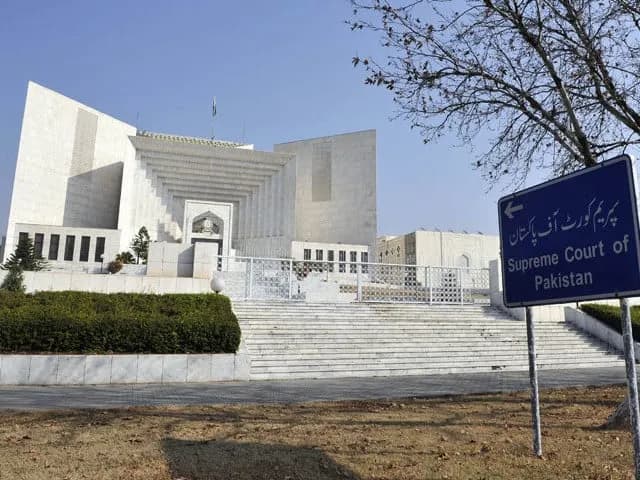
The International Commission of Jurists (ICJ) released a report on Wednesday stating that Pakistan’s 26th and 27th Constitutional Amendments have resulted in "systemic judicial capture" by other branches of the state. The report, titled "Judicial Capture: Independence of the Judiciary in Pakistan after the 26th and 27th Constitutional Amendments", concludes that the higher judiciary no longer enjoys the institutional guarantees of independence required under international law and standards, such as Article 14 of the ICCPR and the UN Basic Principles on the Independence of the Judiciary.
The ICJ noted that "The 26th and 27th Constitutional Amendments were a decisive break from the model of judicial independence that Pakistan had built after the restoration of the judiciary in 2009," the report noted. While the erosion of independence was not achieved through the overt removal of judges as seen during the rule of General Musharraf, the ICJ stated it was accomplished through constitutional amendments adopted by Parliament.
The 26th Amendment, passed in October 2024, changed the appointment, confirmation, and tenure of judges for the High Courts and the Supreme Court, specifically altering Article 175-A. It carved out constitutional benches from the Supreme Court with members chosen by a reconstituted Judicial Commission of Pakistan (JCP) where judges no longer held a majority. The 27th Amendment, passed barely a year later, turned those benches into the Federal Constitutional Court (FCC). This amendment also impacted the military’s chain of command, granted immunities to government officials, and prompted the resignation of two senior-most Supreme Court judges on the day it became law.
The ICJ observed that the ruling coalition "exploited" public grievances regarding court functions in a "self-serving manner" to control the judiciary. While the government argued the amendments were intended to "check judicial overreach, reduce the backlog of cases, end the perceived politicisation of the SC’s original jurisdiction and give Parliament a role in judicial appointments comparable to that of legislatures in other democracies", the ICJ stated these claims did not justify changes "glaringly inconsistent with Pakistan’s obligations under international law".
The report stated that even the highest courts in Pakistan no longer serve as a check on the Parliament or the executive, and their role as avenues for redress for victims of human rights violations is "seriously impaired".
In its recommendations, the ICJ called on the government to initiate a comprehensive review of the 26th and 27th amendments and their implementation in light of international law, particularly Pakistan's obligations under the ICCPR. This includes holding "transparent and broad public consultations" and seeking technical assistance from the UN special rapporteur on the independence of judges and lawyers.
The ICJ also provided specific recommendations to various bodies:
The JCP was told to revise appointment criteria to align with international standards, ensure published criteria are the sole basis for nominations, and refrain from transferring high court judges without consent.
The Supreme Judicial Council was asked to define "inefficiency" to only mean serious incompetence that renders judges unfit for duty.
The Special Parliamentary Committee was urged to adopt "clear and transparent criteria and procedures" for nominating the chief justice and top judges of the SC and FCC.
The FCC, SC, and high courts were urged to interpret the amendments in a manner consistent with the independence of the judiciary as guaranteed by Article 14 of the ICCPR.