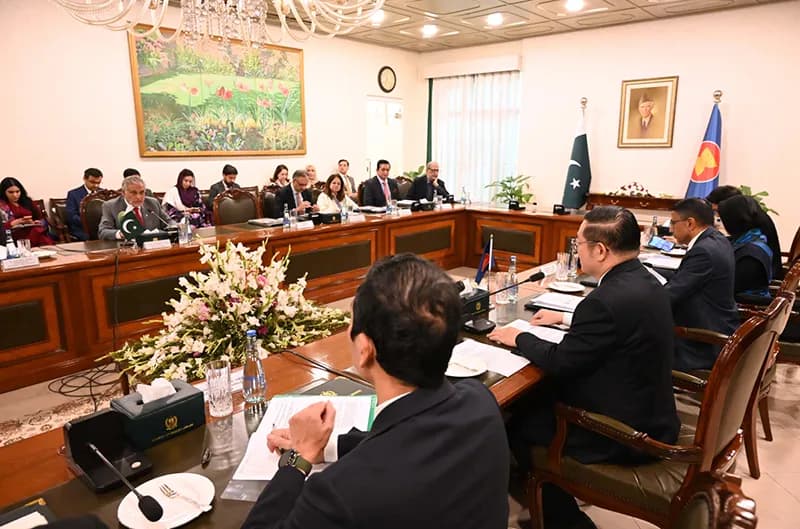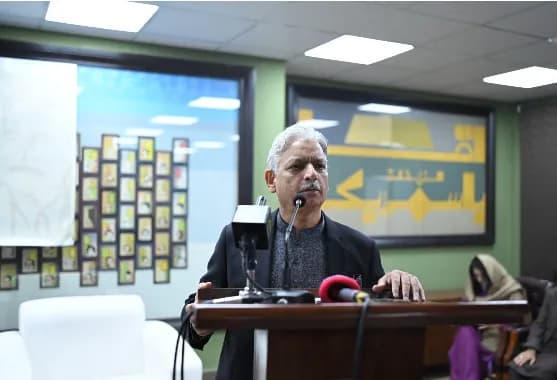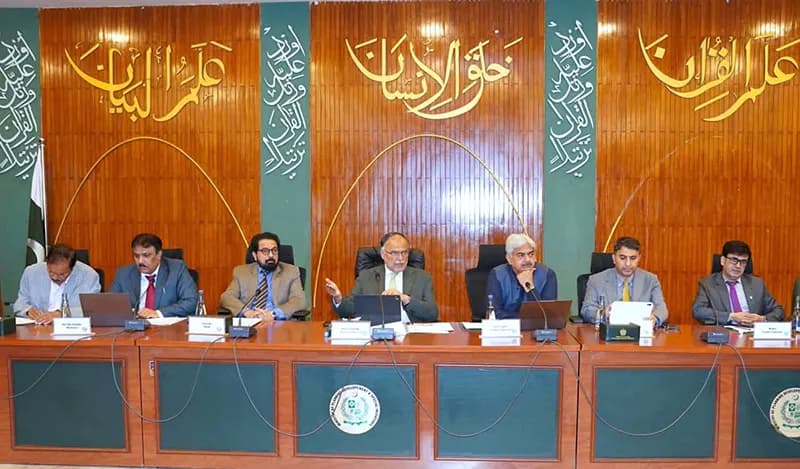
Federal Minister for Planning, Development and Special Initiatives Professor Ahsan Iqbal has called for the strengthening of data-sharing mechanisms across government institutions. Speaking at a meeting on November 21, Iqbal stated that these measures are necessary to promote evidence-based policymaking, improve coordination, and ensure that official statistics are used effectively.
Chairing the meeting at the National Centre for Cyber Connectivity (N3C) at the Pakistan Bureau of Statistics (PBS) headquarters, Iqbal emphasized the requirement for a secure and coordinated mechanism for sharing data between the PBS, federal ministries, divisions, and public sector organizations. He noted that the PBS has recently completed three major censuses—the 7th Population and Housing Census 2023, the Agricultural Census 2024, and the Economic Census 2023—alongside various other surveys.
Iqbal highlighted that the bureau possesses a state-of-the-art Tier-III-compliant data centre capable of hosting data securely according to international standards. He assured that the PBS would provide full support through digital solutions and secure data integration, while stressing the need for regular engagement with federal and provincial stakeholders. "Secure data sharing is necessary for smarter planning and informed policymaking," Iqbal said, adding that information exchange must follow relevant legal and policy frameworks.
Secretary Planning Dr Muhammad Tahir Noor stated that using PBS data effectively is essential for informed policymaking and for achieving the goal of leaving no one behind. He underscored the necessity of efficient data sharing with provincial governments, line ministries, and other stakeholders.
PBS Member (Support Services) Muhammad Sarwar Gondal briefed attendees on available datasets and their potential uses in development planning, monitoring, and decision-making. He demonstrated dashboards created by the PBS to help government departments access statistical insights. Gondal noted that as the national statistical organization, the PBS follows the United Nations Fundamental Principles of Official Statistics to ensure reliable data while protecting the confidentiality of individual and institutional information.
During the session, the PBS presented its Pakistan Spatial Support System (P3S), which serves as a secure mechanism for sharing data with government ministries. A demonstration showed how the system could be used by the Ministry of Information Technology and Telecommunication and the Pakistan Telecommunication Authority (PTA) regarding the National Connectivity Plan. Participants appreciated the proposal, and it was agreed that technical teams from the PTA and PBS would meet next week to streamline these arrangements.
The meeting also addressed a proposed mechanism involving the Election Commission of Pakistan (ECP) and NADRA to allocate census blocks to newly registered Computerized National Identity Card (CNIC) holders via an application programming interface (API). An ECP representative supported the initiative, emphasizing that APIs should be used to ensure the safe and reliable transfer of information.
Iqbal acknowledged the efforts of the PBS and directed the bureau to work closely with Islamabad-based departments to provide data for development schemes. He also proposed holding orientation workshops for provincial governments and line ministries to promote data integration. The meeting concluded with a resolution to promote a culture of data-driven governance and strengthen institutional collaboration.