Key Takeaways
- Pakistan strongly condemned Houthi attacks on Saudi Arabia, supporting the kingdom's right to defend its territory.
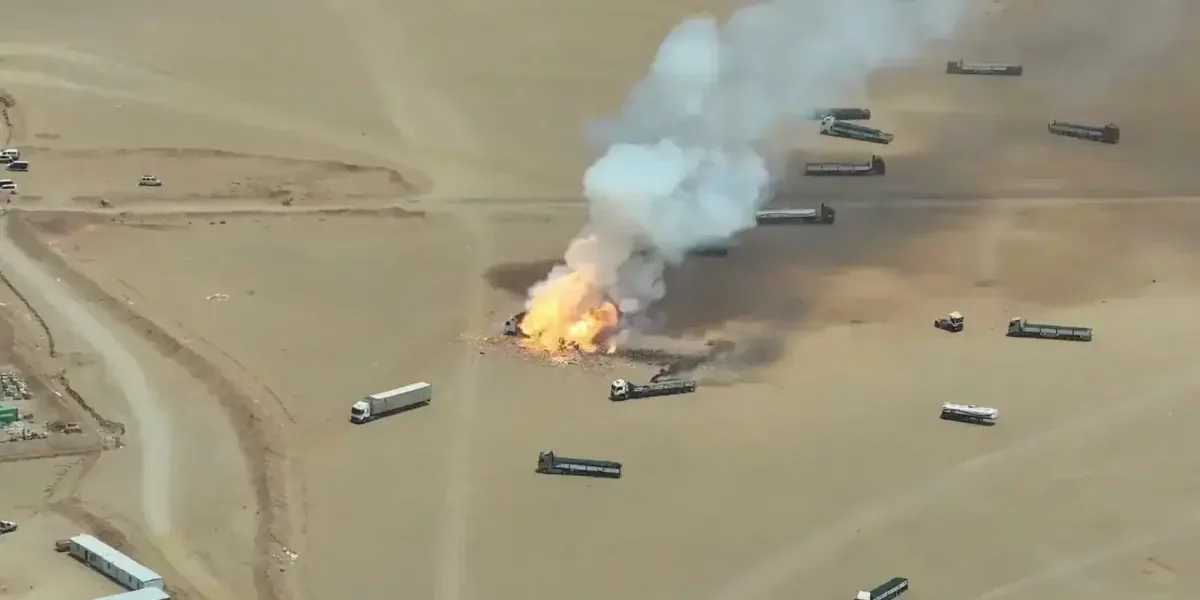
- The attacks injured 73 people, including women and children, and caused fires at energy facilities.
- The Makkah Joint Defence Agreement, signed by Pakistan, Saudi Arabia, and Turkiye, may face its first major test.
Pakistan has reaffirmed its support for Saudi Arabia following a series of Houthi attacks that targeted civilian and economic facilities in the kingdom. The attacks, which hit Abha, Khamis Mushait, Jazan, and Najran, injured at least 73 people, including women and children, according to Saudi authorities.
The Foreign Office of Pakistan strongly condemned the attacks, describing them as a 'flagrant violation' of Saudi Arabia's sovereignty and territorial integrity. The statement came after the attacks, which also caused fires at some energy facilities, leading to the temporary suspension of operations.
Prime Minister Shehbaz Sharif condemned the 'cowardly attack' and reaffirmed Pakistan's 'unwavering solidarity' with Saudi Arabia and its leadership. The unusually strong language from Islamabad comes against the backdrop of the Makkah Joint Defence Agreement, signed by Pakistan, Saudi Arabia, and Turkiye on August 7, which stipulates that an armed attack against any one of the three countries would be regarded as an attack against all three.
The attacks have raised questions over the practical meaning of the Makkah agreement, particularly if the confrontation develops into a sustained military campaign. However, there is no indication that Pakistan or Turkiye is preparing to enter the Yemen conflict militarily alongside Saudi Arabia. The wording of the Makkah agreement does not automatically prescribe a particular military response to every attack, but rather establishes the principle of collective defence and provides for greater coordination among the three countries.
The Houthis claimed responsibility for the attacks, stating that they targeted Saudi Aramco facilities in Abha, Najran, and Jazan, as well as King Khalid Air Base in Khamis Mushait. They said the attacks were retaliation for more than 120 Saudi strikes against Houthi-held areas in Yemen over the previous three days.
The latest escalation marks a sharp deterioration after a period in which the 2022 UN-brokered truce had significantly reduced large-scale fighting between Saudi Arabia and the Houthis. The situation has deteriorated rapidly in recent weeks, with the Houthis intensifying attacks against Saudi territory and Saudi-backed Yemeni forces launching a counteroffensive against Houthi positions.
The fighting has also acquired a wider strategic dimension because of the importance of Yemen's western coastline and the Bab al-Mandeb Strait, one of the world's critical maritime chokepoints. The Houthis have also targeted commercial shipping in the Red Sea, adding to the regional tensions and sending oil prices soaring.
The Saudi foreign ministry strongly condemned the 'terrorist Houthi militia's targeting of civilian and economic' sites, calling for an 'immediate halt to all forms of escalation practised by this militia' and Houthi attacks on shipping. The attacks have disrupted operations at some energy facilities, with the Saudi energy ministry stating that the needed measures would be taken to ensure the safety of the facilities and workers.