Key Takeaways
- Khyber Pakhtunkhwa to implement a six-year World Bank-funded fiscal reform programme.
- The programme aims to strengthen the province's fiscal system and improve public services.
- Expected to benefit 41 million residents through better healthcare and education services.
Khyber Pakhtunkhwa (KP) will launch a six-year World Bank-supported fiscal reform programme aimed at strengthening the province’s fiscal system and improving public service delivery. The programme, which is expected to be funded by a $200 million loan from the International Development Association (IDA), will lay the groundwork for improved service delivery and better resource allocation.
The programme’s total financing is estimated at $650 million, with the remaining amount to be provided by the KP government. The World Bank is expected to approve the loan later this month, with the programme’s expenditure framework covering fiscal years 2027-32.
Excluded from the Programme-for-Results (PforR) financing boundary are interventions related to taxation in the merged districts and former Provincially Administered Tribal Areas (PATA), as the provincial government has extended their tax-exempt status. The programme’s $20 million investment project financing component will provide technical assistance in these areas.
The primary beneficiaries of the Public Resources for Inclusive Development (PRID) Multiphase Programmatic Approach for KP are the province’s 41 million residents, who are expected to benefit from better-resourced and more efficient public services. Direct beneficiaries include recipients of improved healthcare and education services.
In the health sector, an estimated 1.3 million people are expected to benefit from improved services at rural health centres. In education, better planning, budgeting, and service delivery are expected to benefit about 3.7 million pupils enrolled in public primary schools across the province, including 2.1 million boys and 1.6 million girls.
Private investors are expected to benefit from access to better statistics and improved tax administration services. More broadly, improved mobilisation of own-source revenue (OSR), stronger public financial management (PFM), and evidence-based policymaking and planning are expected to align resource allocation more closely with provincial needs, ultimately improving the quality and equity of public services and investment across KP.
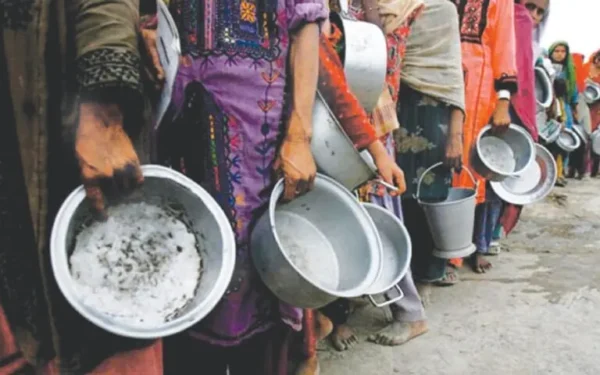
Since 2022, expenditure has risen due to higher salary and pension costs, the absorption of the merged districts, inflation, and an expanded Annual Development Programme (ADP), which also covers the salaries and allowances of contract and project staff. In fiscal year 2025, 35.3 per cent of the population lived below the national poverty line. About 40 per cent of children under five were stunted, 36 per cent of school-age children were out of school, and only 58 per cent were fully immunised.
The KP government has expanded the sales and property tax bases, improved taxpayer compliance, and strengthened tax administration. Measures include digitising stamp duty and property tax records in 12 cities and partially integrating revenue databases. However, several constraints continue to hamper OSR mobilisation, including a narrow tax base and other fiscal challenges.