Key Takeaways
- Prime Minister Modi announced India's chip mission has achieved commercial production.
- The second phase of the mission is funded at $13.5 billion, up from $8 billion.
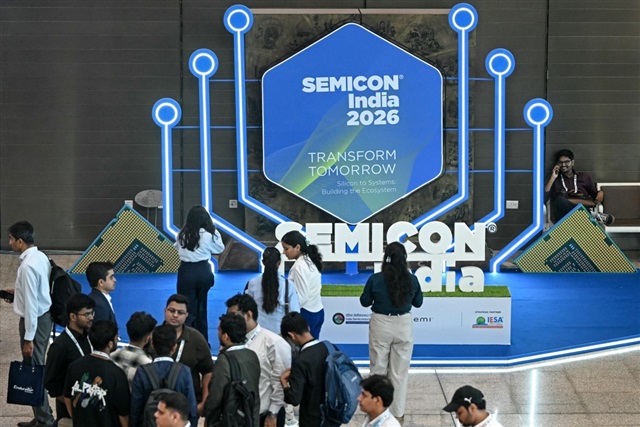
- Semicon India 2026 opened with a focus on inviting equipment and materials suppliers.
Prime Minister Narendra Modi announced at the opening of Semicon India 2026 that India's chip mission has reached commercial production, marking a significant milestone in the country's semiconductor industry.
Modi stated that the second phase of the mission, known as Semicon 2.0, is funded at $13.5 billion, a substantial increase from the initial $8 billion allocated for the first phase.
The government is now inviting equipment, materials, and chemicals suppliers to invest in the growing sector, signaling a shift from policy and pilot lines to full-scale commercial operations.
Semicon India 2026, the annual conference, has evolved from focusing on policy and projects to now emphasizing the commercialization of the industry, with the government aiming to attract private sector investment.
Modi's statement underscores the government's commitment to the semiconductor industry, positioning India as a key player in global chip manufacturing.
The move is part of a broader strategy to reduce India's reliance on imported chips and enhance its technological self-reliance, a goal that has been a cornerstone of the government's economic policies.
By inviting suppliers to invest, the government hopes to create a robust ecosystem that can support the growing demand for semiconductors in the country and beyond.
The commercial production of chips in India is expected to boost the local economy and create numerous employment opportunities in the tech sector.