Key Takeaways
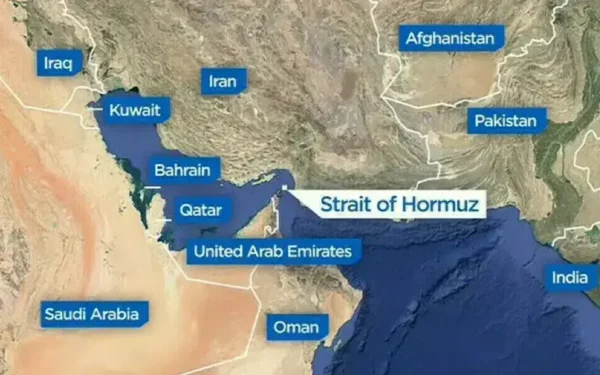
- Strait of Hormuz blockage and Bab al-Mandeb disruptions threaten global oil supplies.
- Saudi Arabia's crude exports fall to their lowest level in over three decades.
- Houthi attacks on Saudi targets and capture of Mocha port increase market concerns.
Global oil markets are facing unprecedented challenges as new disruptions in the Bab al-Mandeb strait are exacerbating existing issues in the Strait of Hormuz. The Bab al-Mandeb, a critical waterway linking Asia to Europe via the Red Sea and Suez Canal, is now under threat from attacks by Houthi forces and the capture of Yemen’s Mocha port.
Approximately 12 to 15 per cent of global maritime trade, worth over $1 trillion annually, transits through this strait. The recent events have added significant pressure to the already strained energy markets, leading to concerns about higher petrol prices in the coming weeks.
Saudi Arabia, the world’s top crude oil exporter, has been heavily reliant on the Bab al-Mandeb to bypass the blockage in the Strait of Hormuz. However, recent attacks have forced the country to redirect millions of barrels of crude oil through the East-West pipeline to its Red Sea port of Yanbu for shipments.
On Friday, Saudi Arabia announced it would shut down its crucial East-West crude oil pipeline as a precautionary measure after multiple attacks. The pipeline, which had been used to manage Saudi crude exports despite the Hormuz closure, is now under increasing threat.
The International Energy Agency (IEA) reported that Saudi Arabia’s crude supply fell by 2.3 million barrels per day in August, to 6 million barrels per day, the lowest level in more than three decades. This drop follows the targeting of ships transiting the Bab el-Mandeb and Saudi Arabia’s Jazan refinery and shipping near Yanbu by groups linked to Yemen’s Houthis.
In a separate development, Iran-backed militias in Iraq used drones to target Saudi Arabia’s Abqaiq oil processing site. The attacks have raised concerns about the security of oil shipments and the stability of global energy markets.
Last Friday, Saudi Arabia announced it would shut down its crucial East-West crude oil pipeline as a precautionary measure after multiple attacks. The pipeline, which had been used to manage Saudi crude exports despite the Hormuz closure, is now under increasing threat.
The IEA reported that Saudi Arabia’s crude output fell last month to its lowest level since 1990. This drop follows the targeting, by groups linked to Yemen’s Houthis, of ships transiting the Bab el-Mandeb and Saudi Arabia’s Jazan refinery and shipping near Yanbu. The attacks have added to the pressure on Saudi exports.
Markets are reacting with caution, as the combined effects of these disruptions could lead to significant price increases and supply shortages. The situation remains volatile, with ongoing tensions in the region likely to continue impacting global oil markets.