Key Takeaways
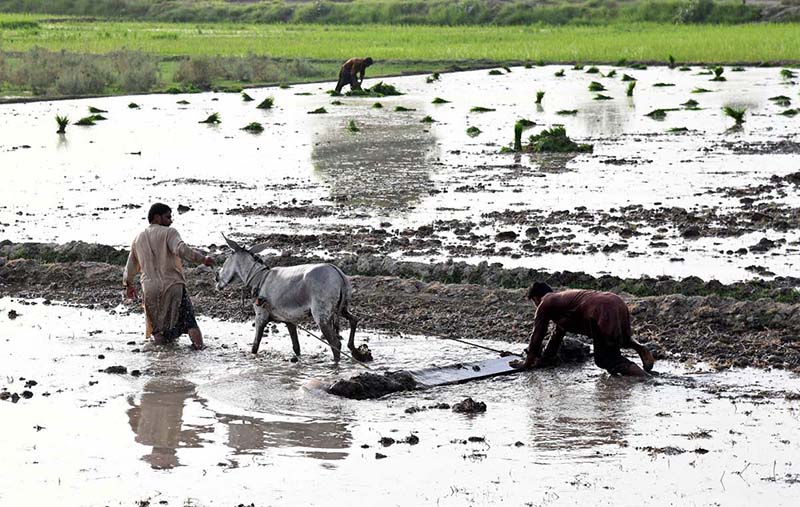
- A farmer manually levels a field using a wooden slab.
- Donkeys are led to the field to assist in preparation.
- The scene depicts traditional agricultural practices.
In an effort to prepare a field for rice cultivation, a farmer is seen pushing a wooden levelling slab by hand. This method of manual labour highlights the ongoing reliance on traditional farming techniques in Pakistan.
Accompanying the farmer are donkeys, which are led into the field to assist with the preparation process. The use of these animals underscores the importance of sustainable and eco-friendly practices in agriculture.
The scene captures a moment of hard work and dedication as the farmer ensures that the land is properly prepared for the upcoming harvest season. This method of levelling the soil by hand requires significant physical effort but remains an integral part of agricultural traditions.
While modern machinery has become increasingly prevalent, many farmers in rural areas continue to rely on traditional methods due to their accessibility and effectiveness. The use of wooden slabs and donkeys demonstrates a commitment to preserving these time-honoured practices.
The preparation of the field involves not only levelling but also ensuring that the soil is suitable for rice cultivation. This process ensures that the crops will have optimal conditions to grow, leading to better yields and sustainable farming outcomes.
By using such traditional methods, farmers are able to maintain a connection with their heritage while adapting to modern agricultural challenges. The scene serves as a reminder of the enduring value of these practices in ensuring food security and preserving cultural identity.
The ongoing use of manual labour and animal power in agriculture highlights the resilience and adaptability of rural communities in Pakistan. Despite advancements, many continue to rely on tried-and-true methods that have sustained generations of farmers.