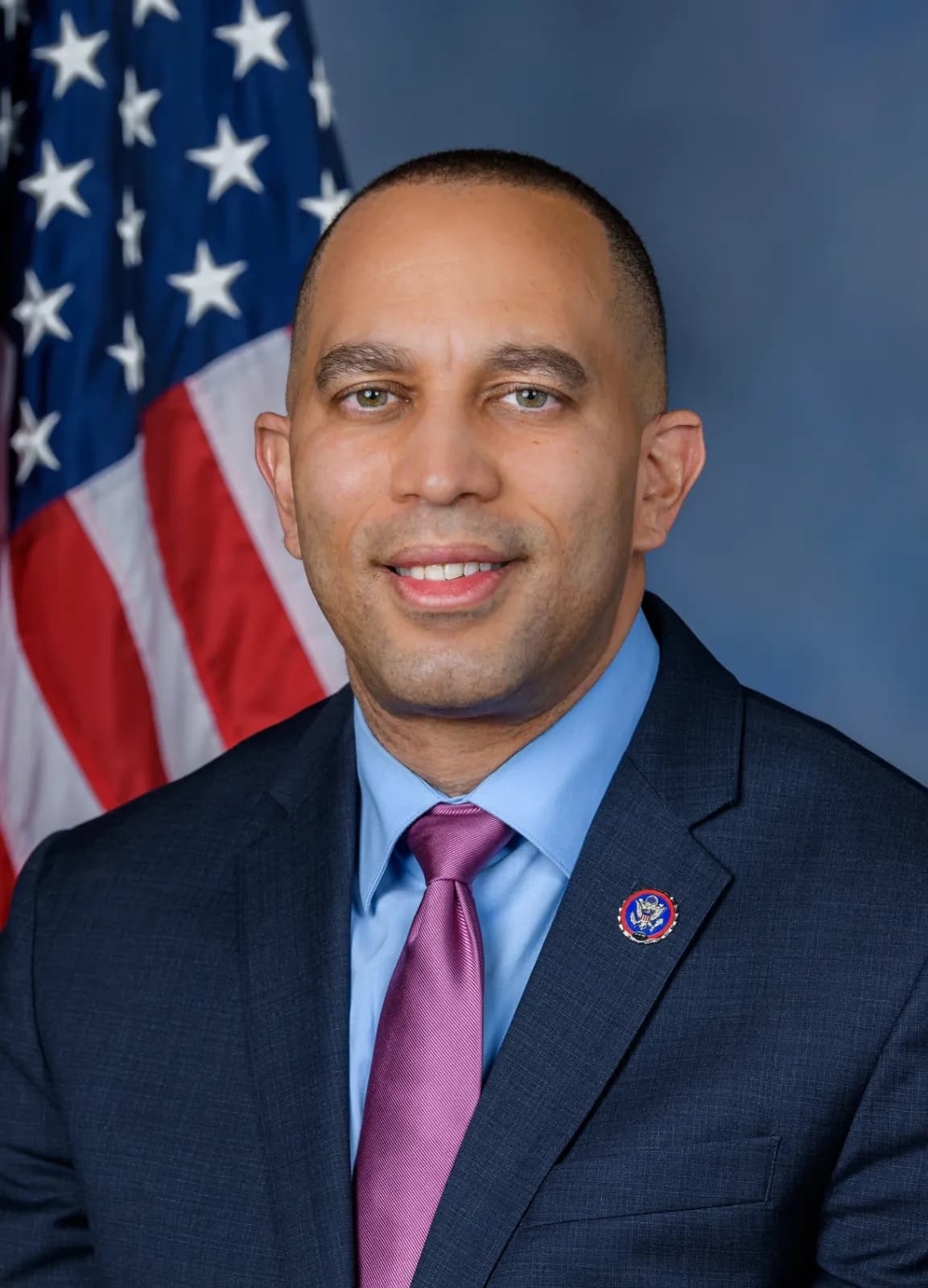
Democratic lawmakers elected Hakeem Jeffries as their leader on Wednesday, placing him on the path to becoming the first Black speaker of the US House of Representatives. The election followed a sweeping midterm election triumph for the party.
According to US media, the 56-year-old New Yorker secured 251 votes in a closed-door, secret ballot, with 11 votes cast against his nomination. While Jeffries faced no declared challenger, opposition from some newly elected progressives exposed divisions regarding how the Democrats should use their newfound power. These progressives had sought concessions on various issues, including the influence of money in politics and US military support for Israel.
Jeffries requested a recorded vote rather than a nomination "by acclamation," which some allies had hoped for. He argued that every Democrat should have an opportunity to weigh his experience, record and vision, citing the precedent set when the party last took control of the House in 2018.
The nomination puts Jeffries on course to preside over a commanding Democratic majority during the final two years of President Donald Trump’s term. The party is preparing to investigate the administration and reverse Republican policies. Jeffries must still win a formal vote of the full House when the new Congress convenes on Jan 3, at which point he would become the first Black politician to hold the post. With a large Democratic majority, this is seen as something of a formality.
Ahead of the election, Jeffries met with progressive lawmakers to discuss healthcare and Israel. Topics included proposals to expand coverage and lower the Medicare eligibility age. Jeffries also sought to focus on the party's governing plans following a crushing defeat for Republicans, which occurred amid anger over soaring fuel costs and the Iran war.
"Folks are drowning in this Republican economy, and House Democrats are committed to turning that situation around, beginning on day one," Jeffries told reporters Tuesday. "We’re going to relentlessly fight for an affordable America."
Jeffries, who was raised in Brooklyn’s working-class Crown Heights neighborhood, trained as a lawyer before joining the New York state legislature in 2007 and winning a seat in Congress in 2012. He became the first Black politician to lead a party in either chamber of Congress in 2022 when he succeeded Nancy Pelosi. He also served as a House prosecutor during Trump’s first impeachment trial in 2020.
As speaker, Jeffries will stand second in line to the presidency behind the vice president. He faces the task of managing a coalition that spans centrists and an assertive left flank. While the party has promised investigations into Trump, lawmakers remain divided over healthcare, Israel, and how aggressively to pursue their agenda against a president who retains veto power.
In contrast, Senate Democrats face a more competitive leadership contest. Veteran party chief Chuck Schumer faces a challenge from progressive Maryland Senator Chris Van Hollen. Van Hollen has received support from figures including Bernie Sanders but acknowledges he is the underdog. Senate Democrats will elect their leader in early December. Republicans chose their leaders last week, elevating Trump ally Jim Jordan in the House and retaining John Thune in the Senate.