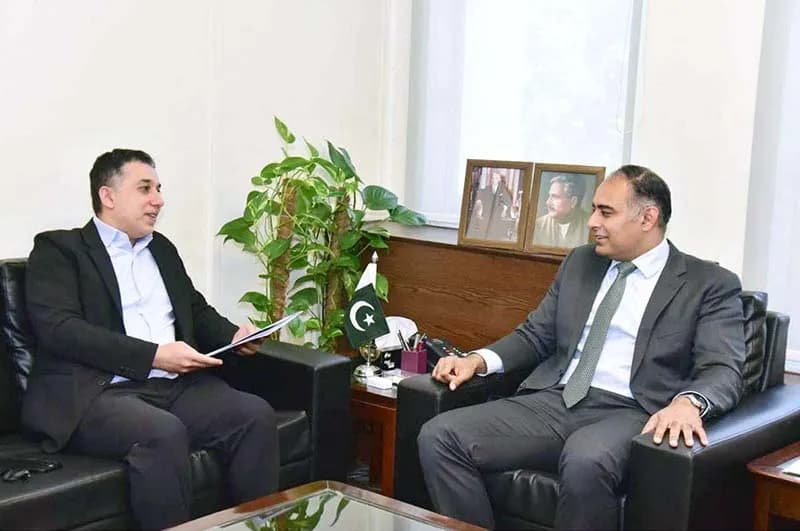
Minister of State for Finance and Railways Bilal Azhar Kayani met with a delegation of newly elected office-bearers from the All Pakistan Textile Mills Association (APTMA) on Wednesday at the Ministry of Finance. The delegation was led by APTMA Chairman Asad Shafi.
During the meeting, the group discussed the primary challenges facing the textile and apparel industry, the current business environment, and various measures intended to boost the sector's competitiveness and export performance. Bilal welcomed the new office-bearers and offered his best wishes for their upcoming tenure.
The APTMA delegation expressed appreciation for government efforts to improve the ease of doing business. They specifically acknowledged measures from the most recent federal budget, which included the elimination of super tax for mid-sized corporates and SMEs, as well as a reduction in taxes on exports.
The participants reviewed several issues impacting production, investment, and exports. These discussions included the Federal Board of Revenue’s (FBR) work on the Production Monitoring System (PMS) and the use of financing facilities for exporters. Specific attention was given to the Export Finance Scheme (EFS) and the Long-Term Export Growth Financing Facility (LTEGFF). APTMA provided proposals to make these facilities more responsive to the financing requirements of textile exporters, specifically regarding long-term investments and working capital needs.
The meeting also covered strategies for promoting Pakistani textile brands in international markets. The goal is to allow local manufacturers to move up the value chain through direct engagement with overseas consumers and brand development. Bilal acknowledged that these initiatives are important for enhancing value addition and strengthening Pakistan’s position in global markets.
Bilal recognized the textile sector's significant contribution to the country’s economic activity and exports. He emphasized the necessity of building on current performance by promoting investment and expanding export markets. Both the government and the private sector reaffirmed their commitment to regular engagement and coordination to promote sustained export-led growth.