Senior officials at Standard Chartered stated on Wednesday that international investors are comfortable with Pakistan remaining under the International Monetary Fund (IMF) programme. According to Talha Nadeem, Economist, Middle East and North Africa at Standard Chartered, investors who recently visited the bank to assess ground conditions view the lender-backed arrangement as an important source of policy discipline and macroeconomic stability.
Nadeem explained that having witnessed Pakistan's repeated boom-and-bust economic cycles, investors consider the IMF programme an important anchor for maintaining financial discipline. Adil Salahuddin, CEO and Head of Coverage at Standard Chartered Pakistan, echoed this sentiment, stating that international investors assess Pakistan through the lens of its economic history rather than future promises, making policy consistency particularly important.
However, Salahuddin cautioned that while investors have observed greater discipline under the IMF programme, this perception could change in the future. He noted that Pakistan would have to demonstrate its ability to maintain discipline beyond the programme. Salahuddin stressed that sustaining stability would require continued policy discipline, particularly after Pakistan exits the IMF programme, as investors are increasingly looking for policy stability before making investment decisions.
While the country's economic situation had improved, Salahuddin noted that questions remain about how macroeconomic stability would translate into business growth. He warned that geopolitical developments remain a significant risk for the regional economy in the foreseeable future and are unlikely to disappear anytime soon. Regarding growth prospects, Salahuddin pointed out that remittances remain a positive source of external financing, but emphasized that Pakistan needs proper planning to maximise benefits by training workers for higher-skilled, better-paying international jobs rather than relying predominantly on blue-collar employment. He maintained that sustainable economic growth could only come through industrialisation and export expansion.
Nadeem highlighted the cost of recent fiscal consolidation, noting that while progress has been made in improving the fiscal position, development spending under the Public Sector Development Programme (PSDP), alongside allocations for social sectors such as education and health, had suffered. This raised questions about the balance between fiscal discipline and investment in areas critical for long-term productivity and human capital development.
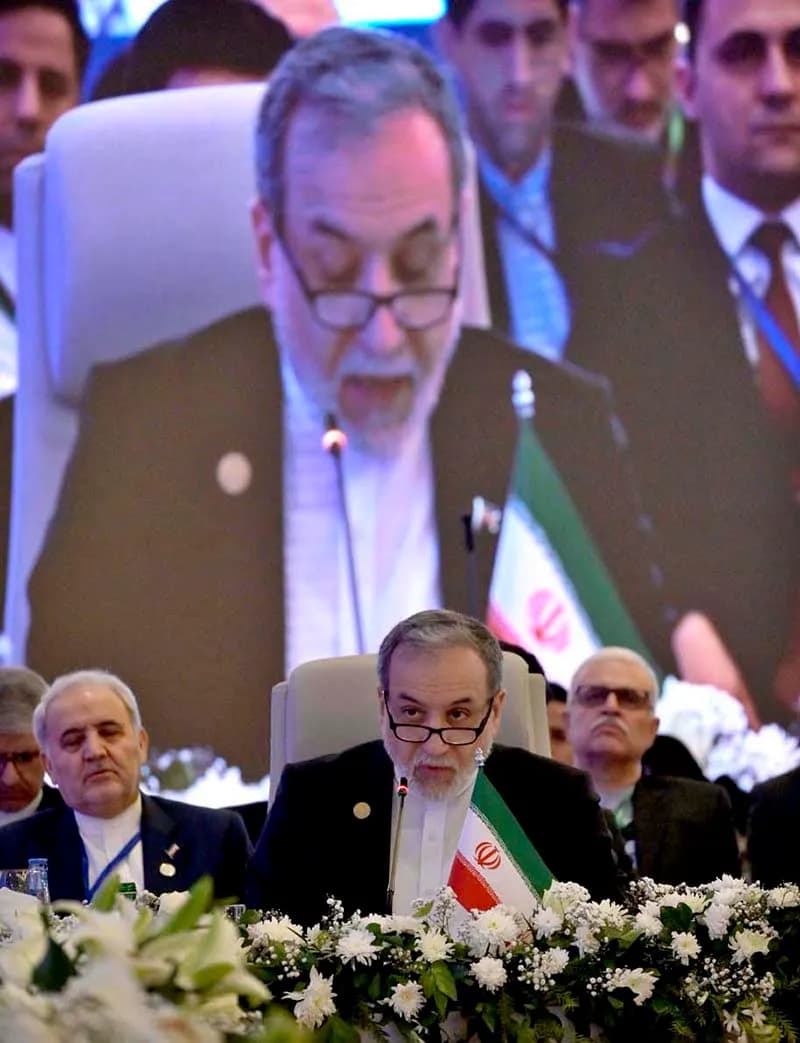
Regarding the regional outlook, Philippe Dauba-Pantanacce, Global Head, Geopolitical Strategist and Senior Economist at Standard Chartered, warned that the Middle East conflict could have prolonged repercussions for global energy markets, even if the current confrontation ended. He explained that while international attention was largely focused on Iran, attacks by Yemen's Houthi movement presented a more complicated challenge due to their potential repercussions for Saudi Arabia's oil supply chain.
Dauba-Pantanacce cautioned that the ongoing Israel-US war on Iran had no low-cost solution, warning that the conflict had exposed several weaknesses in the United States, including aspects of its military capabilities. Referring to the US midterm elections, he said the results had highlighted voters' dissatisfaction with the war and the resulting sharp increase in oil prices. He suggested that countries traditionally relying on Washington for protection might increasingly reconsider their security arrangements if the US reduces its presence in the Middle East.
Dauba-Pantanacce noted that damage to energy infrastructure could take years to repair, pointing out that Qatar had indicated restoring its damaged infrastructure could take as long as five years. He observed that Pakistan's decision to assume a mediating role in the regional conflict had placed the country in a strategically important position.
Responding to questions about China, Dauba-Pantanacce said Beijing is confronting significant structural challenges, particularly its ageing population and declining economic growth. He noted that China's economic growth had slowed from rates exceeding 7% to around 5-4%, and potentially closer to 3%. He added that China's growing economic competitiveness had posed considerable challenges to Western economies, particularly European countries.
On Wednesday, the rupee gained Rs0.01 on the US dollar to close at 276.55, compared with Tuesday's closing rate of 276.56. Gold prices fell by Rs10,000 per tola to Rs398,936 in the local market on Wednesday, tracking losses in the international market.