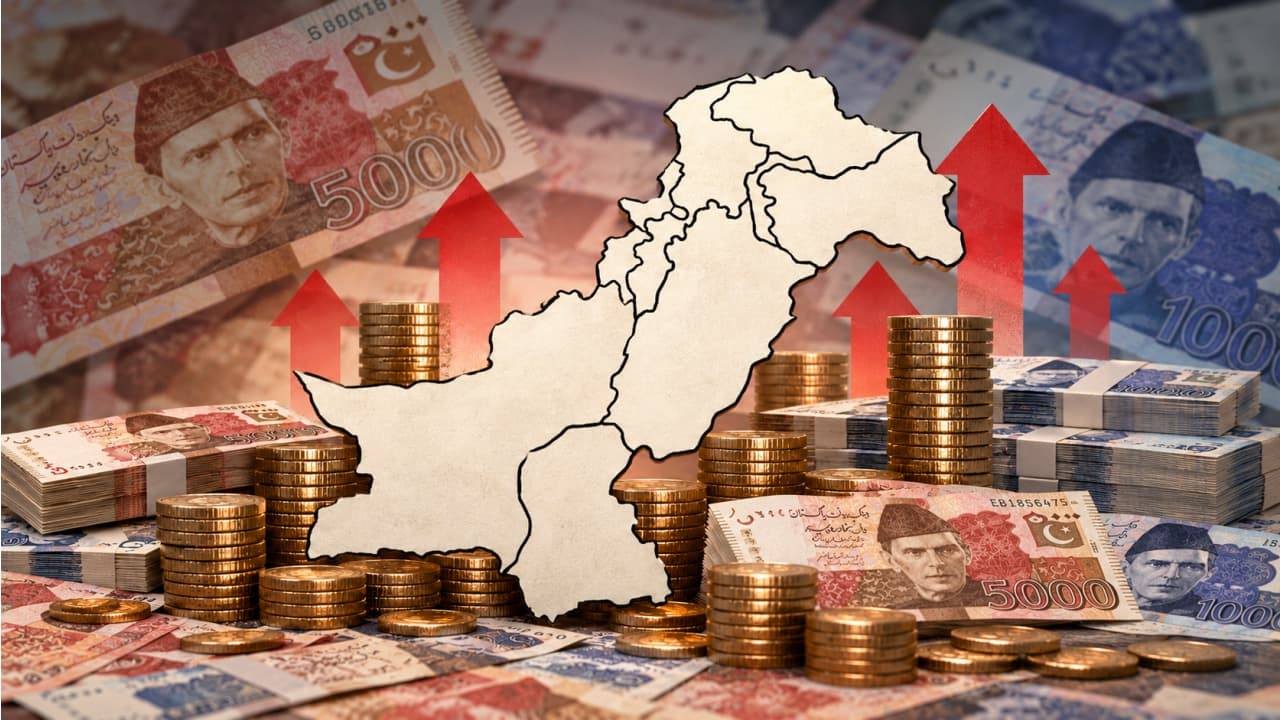
The government intends to finance approximately 75 percent of the federal fiscal deficit through domestic borrowing. Net domestic borrowing is projected at Rs. 6,046 billion against a federal fiscal deficit of Rs. 7,020 billion.
To manage refinancing risks and debt servicing, the government's borrowing strategy aims to reduce reliance on short-term debt in favor of instruments with longer tenors. Specifically, the government plans the net retirement of short-term debt, particularly Treasury Bills, at Rs. 2,592 billion, with maturing liabilities expected to be rolled over into instruments carrying longer tenors.
The government also plans to increase the issuance of Pakistan Investment Bonds, with net issuance projected at around Rs. 4,580 billion. Fixed rate bonds are expected to account for more than 50 percent of new issuances. Additionally, the government will cap floating rate debt, with the 10 year Sukuk Variable Rental Rate instrument expected to remain the only floating rate instrument.
Under a Sukuk expansion strategy, the government has set a gross issuance target of approximately Rs. 6,600 billion. This plan includes the introduction of three month and six month Sukuk, as well as new hybrid Sukuk instruments. The borrowing strategy also envisages continued liability management operations, including debt buybacks and switches, to reduce refinancing risks.
Regarding National Savings schemes, the government plans to restructure them through digitalization and market based pricing. Retail investor access will be expanded through digital wallets and InvestPak.
On the external financing front, the government has projected a modest net inflow of $2.8 billion, equivalent to Rs. 813 billion, for deficit financing. Multilateral development partners are expected to remain the primary source of external financing, with a projected net inflow of $1.58 billion. External repayments are projected at Rs. 17 trillion.
The government also plans to return to international capital markets through the issuance of more than $2 billion in Eurobonds and international Sukuk. The strategy notes that $3 billion worth of Eurobonds has already been issued. To improve the country’s debt maturity profile, the government intends to replace shorter external debt with longer dated financing. As part of efforts to diversify financing sources, Pakistan will also explore Panda Bonds and initiatives to channel foreign portfolio investment into domestic bonds.