US asset manager Federated Hermes has officially opened an office in the Nexxus Building in Central, Hong Kong, following two years of preparation. The move places the firm among a wave of international financial giants competing for growth in the Asia-Pacific region.
The company, which managed US$884 billion in assets as of September, first considered a Hong Kong presence two years ago, with its board approving a plan one year later. The new location expands the firm's Asia-Pacific footprint, which already includes offices in Singapore, Tokyo, and Sydney.
Jim Roland, head of business development in Asia-Pacific and Australia for Federated Hermes, stated on Wednesday that Hong Kong is a premier wealth and asset-management hub. He noted that opening the office helps deepen relationships with institutional investors, family offices, wealth intermediaries, and private banks, describing it as an important step in the firm's long-term regional growth strategy.
Federated Hermes is joining other world-leading financial institutions, such as Jane Street and Qube Research & Technologies, which have rushed to establish offices in Hong Kong since last year. This trend is driven by the rise of stocks in China’s tech sector and a growing demand for investment diversification beyond US dollar-denominated assets.
During the Global Financial Leaders’ Investment Summit this week, Financial Secretary Paul Chan Mo-po said many financial leaders planned to expand their investments and teams in the city. According to an SFC report, assets and wealth managed in Hong Kong increased by 20 per cent last year to a record of HK$42.2 trillion (US$5.4 trillion), fueled by China’s progress in artificial intelligence and a robust need for offshore investments.
In January, Roland told the South China Morning Post that the firm expected its Hong Kong presence to help it serve the biggest financial institutions. The firm's licence remains subject to the approval of the Securities and Futures Commission (SFC).
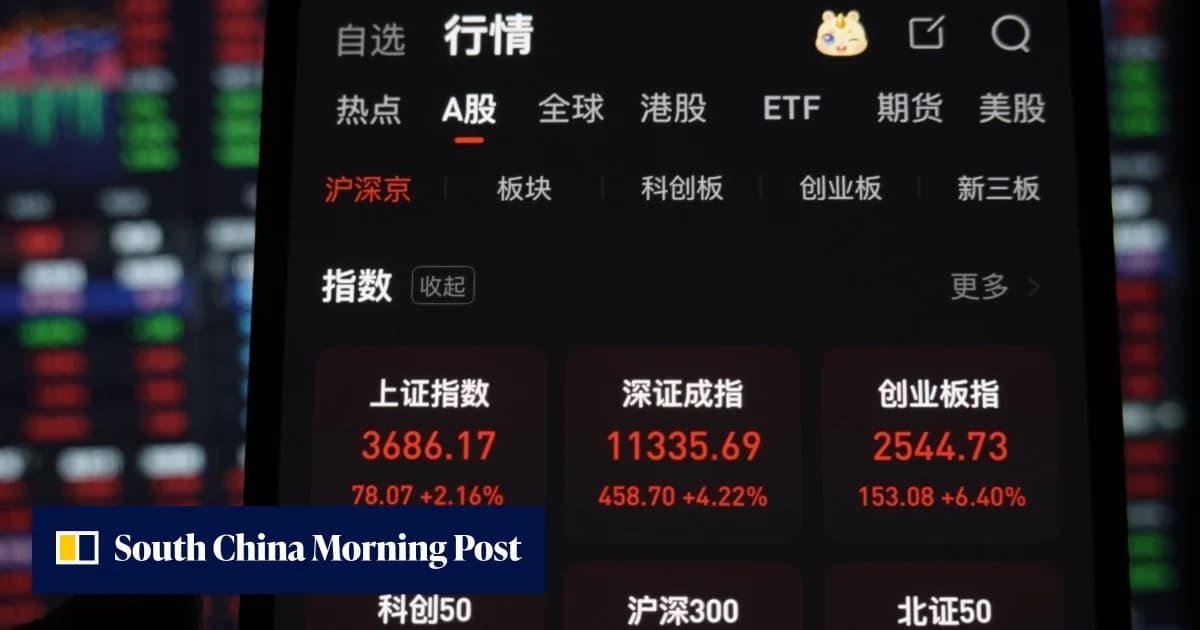
The opening coincides with a period of decline for stocks traded in Hong Kong and on mainland China’s exchanges so far this year. The Hang Seng Index and the CSI 300 Index have lost 9 per cent and 13 per cent, respectively, underperforming most global peers. This decline is attributed to rising interest rates and lower exposure to the AI buildout, particularly the memory-chip supercycle. However, Chinese financial regulators launched an array of measures on Monday to stabilise the struggling market, resulting in both benchmarks rising by over 1 per cent on Wednesday.