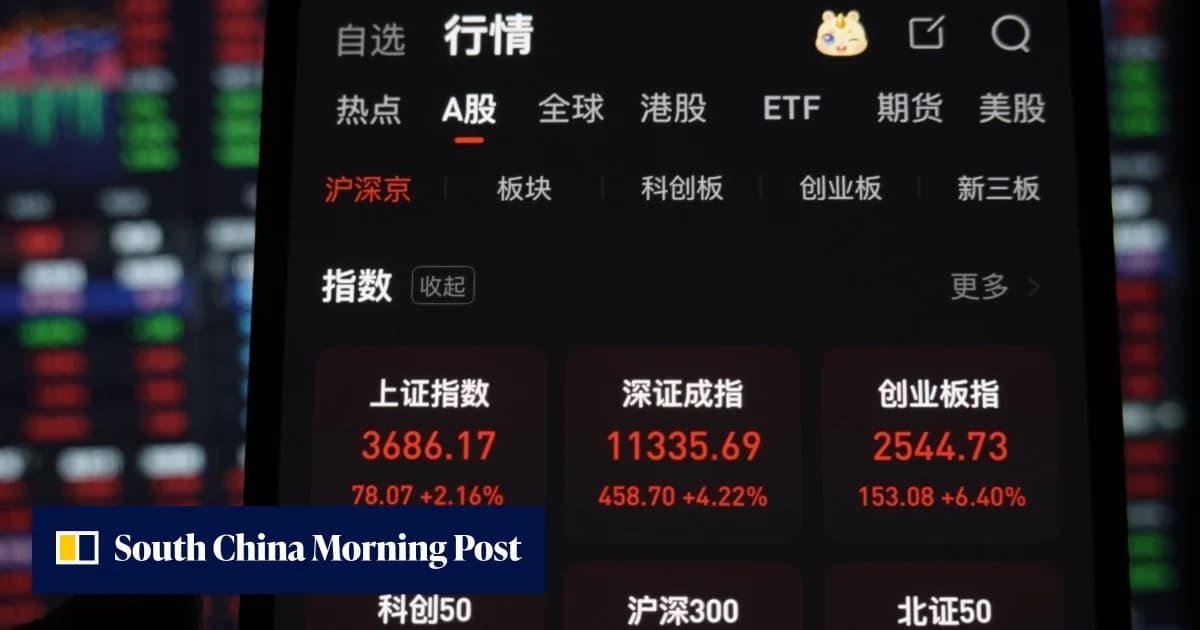
Chinese stocks continued their upward trend for a second consecutive day on Thursday. The CSI 300 Index increased by 0.4 per cent to reach 4,115.93 at the trading break, following a 2.3 per cent gain from the previous day. The Star 50 gauge, which is heavy on chips, rose 2.1 per cent after a 9.9 per cent surge the day before.
Daiwa Securities Group stated that Democratic control of the US Congress may lead to tighter tech exports to China. This could accelerate Beijing’s efforts to achieve self-reliance by developing home-grown products to replace imports.
The rebound in yuan-traded onshore stocks appears to be supported by state intervention and optimism regarding the Democratic sweep. Investors are looking toward a possible end to prolonged Middle East military conflicts and a potential restraint in fiscal expansion. According to Daiwa Securities Group, a united Democratic US Congress could limit the scope for US President Donald Trump’s administration to issue government debt and squeeze further funding for the war against Iran.
Global markets also saw significant movement. Brent oil dropped more than 9 per cent to approximately US$93 a barrel. The 10-year US Treasury rose, which pushed the yield down by 4.1 basis points to 4.85 per cent. Gold prices climbed back to US$4,100 an ounce.
Li Xuewei, a fund manager at HSBC Jintrust Fund Management in Shanghai, said the Chinese stock market “is expected to benefit from an easing of the external shock.” He added that falling US Treasury yields and a possible weakening of the US dollar will reduce pressure on the valuation of yuan assets.
This recovery comes after Chinese stocks were among the world’s worst-performing key markets this year. The CSI 300 Index had fallen more than 10 per cent due to concerns over a lopsided economic recovery and the spillover effect of a stumble in the AI trade in the US.
To support the market, top financial regulators have cut the interest rate on a relending programme for equity buy-backs and restarted a swap facility to inject liquidity. Additionally, China appears to have slowed the pace of initial public offerings (IPOs) to improve market sentiment by lowering supply. Local media reports show that the mainland’s three stock exchanges accepted only six IPO applications in the second half of the year, a sharp decrease from the 242 applications received in the first six months. Since the start of July, the bourses have terminated applications from 43 companies, which is 11 more than in the first half.
Foreign investment in Chinese stocks also increased in the third quarter. According to Wind data and latest results from listed companies, holdings under the Qualified Foreign Institutional Investor programme surged 80 per cent from a year ago, exceeding 270 billion yuan (US$40.5 billion) by the end of September.
On Wednesday, US stocks also rebounded. The Dow Jones Industrial Average jumped 3 per cent as investors focused on the earnings resilience of tech companies rather than potential tighter scrutiny of AI following the Democratic sweep. The Franklin Templeton Institute noted that in the 12 months following the previous nine midterm elections from 1990 to 2022, the S&P 500 gained an average of 14.5 per cent, with positive returns in all nine instances.
TYPE: news