Key Takeaways
- The Supreme Court ruled against Bawany Sugar Mills Ltd, upholding the Federal Board of Revenue's rejection of input tax adjustments.
- The court stated that concessions by parties cannot override correct legal interpretation.
- The case involved disputes over statutory exclusions and banking requirements under the Sales Tax Act.
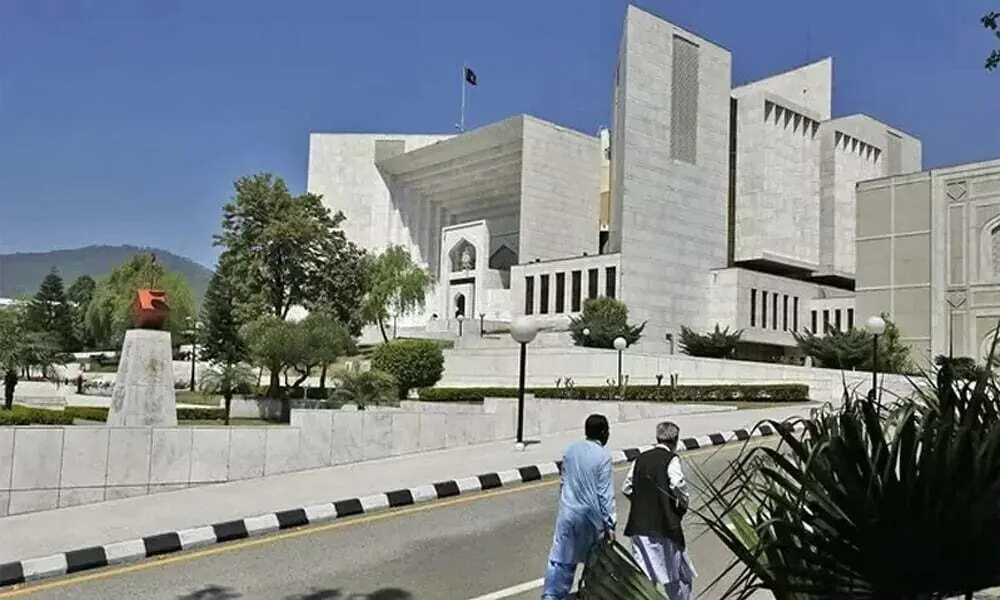
In a significant ruling, the Supreme Court has upheld the decision of the Federal Board of Revenue (FBR) to reject input tax adjustments claimed by Bawany Sugar Mills Ltd. The apex court’s three-member bench, led by Chief Justice Yahya Afridi and comprising Justices Irfan Saadat Khan and Shakeel Ahmed, examined whether construction materials used in immovable structures could be subject to input tax adjustment under the Sales Tax Act.
The dispute centered around Bawany Sugar Mills Ltd's claim for input tax adjustments on building materials such as cement and steel, utilized during the construction of its plant and machinery between July 2013 and December 2013. The company argued that these materials should be eligible for input tax adjustment under Section 8(1)(ca) of the Sales Tax Act, 1990.
However, the court ruled that an amendment introduced through SRO 4571 dated May 27, 2013, specifically excluded building materials from the scope of input tax adjustments. The Deputy Commissioner Inland Revenue (DCIR) noted this exclusion and issued notices seeking verification of supporting documents. Despite Bawany Sugar Mills Ltd’s submission of its reply, the DCIR found that the company had failed to produce necessary records such as purchase invoices and bank statements.
Consequently, the DCIR imposed a tax demand of Rs22,758,773 along with a penalty of Rs682,761 through an Order-in-Original dated January 30, 2015. The company appealed this decision to the commissioner Inland Revenue (Appeals), but their appeal was dismissed.
The Supreme Court’s ruling emphasized that even if parties or their counsel had conceded a legal point before lower courts, such concessions cannot override the correct interpretation of law. The court observed: 'There is no estoppels against a statute,' highlighting that judicial determinations must be based on accurate legal interpretations rather than party admissions.
The bench further held that the Sindh High Court and Appellate Tribunal Inland Revenue were incorrect in treating the matter as involving only questions of fact. The proper interpretation of statutory exclusions, applicability of amended SROs, and enforcement of banking requirements under Section 73 of the Act are all questions of law requiring judicial determination.
This decision underscores the importance of adhering strictly to legal provisions and maintaining accurate records in tax-related matters. It also sets a precedent that courts will not be bound by concessions made during proceedings when interpreting statutory exclusions.