Key Takeaways
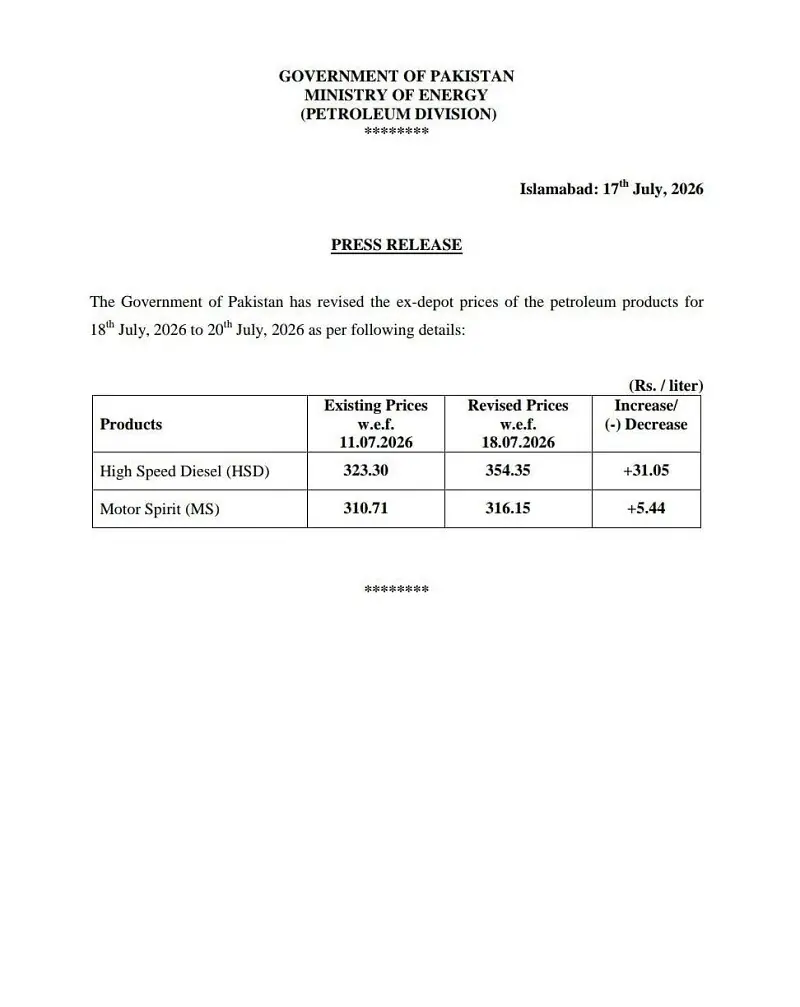
- Petrol price increased by Rs5.44 to Rs316.15 per litre.
- Diesel price rose by Rs31.05 to Rs354.35 per litre.
- New prices effective from July 18 until July 20.
The government has increased the prices of petrol and diesel in Pakistan, with immediate effect for the next three days until July 20. The hike follows regional tensions and higher import premiums, according to a press release by the Petroleum Division.
Petrol is now priced at Rs316.15 per litre after an increase of Rs5.44 from its previous rate of Rs310.71. Similarly, diesel has seen a significant rise of Rs31.05 to reach Rs354.35 per litre, up from the earlier price of Rs323.30.
The decision comes as Pakistan faces renewed regional tensions following hostilities between Iran and the United States. The government had been adjusting fuel prices weekly since early March due to these fluctuations in international markets, alongside measures aimed at conserving fuel amid potential oil supply disruptions.
Petroleum Minister Ali Pervaiz Malik announced that daily pricing of fuel would now be implemented based on Platts' 7-day moving average data. This move is part of a broader deregulation policy, with the Oil and Gas Regulatory Authority (Ogra) responsible for announcing prices daily and publishing detailed calculation sheets.
However, the decision has faced criticism from industry stakeholders. The All Pakistan Dealers Association rejected the new pricing system, warning that it could disrupt fuel transportation and oil tanker operations. They urged the government to consult with key players before finalizing the move.
Oil Marketing Companies (OMCs) expressed serious concerns about the impact on their operations. They warned that daily price changes would complicate stock valuation, inventory management, and cash flow. Additionally, they cautioned that this shift could hurt dealers' margins and confuse consumers.
Petrol is primarily used in private transport, small vehicles, rickshaws, and two-wheelers, affecting the middle and lower-middle classes significantly. Diesel, on the other hand, impacts the public at large as it is mainly used in heavy transport sectors, power plants, and large generators.
The government currently charges about Rs105 per litre on both products in the form of customs duty, alongside petroleum levy, climate support levy, and inland freight equalisation margin.
The decision has faced immediate backlash from key industry stakeholders. The All Pakistan Petroleum Dealers Association rejected the deregulation policy, warning it could disrupt fuel transportation, oil tanker operations, and the current pricing system.
All Pakistan Dealers Association, Industry Stakeholder
Petrol is mainly used in private transport, small vehicles, rickshaws and two-wheelers, and changes in its price affect the middle and lower-middle classes. Similarly, changes in diesel prices also impact the public at large, as it is mainly used in the heavy transport sector, power plants and large generators.
Petroleum Minister Ali Pervaiz Malik, Government Official