Key Takeaways
- The Lawyers’ Movement of 2007-2009 was pivotal in restoring democratic governance.
- Live television coverage played a crucial role in transforming the movement into a national narrative.
- Judicial independence and constitutional issues remained central, but no comparable mobilization has occurred.
The Lawyers’ Movement of 2007-2009 is often cited as one of Pakistan’s most significant episodes of civic mobilisation. This movement began with a dispute over the suspension of the chief justice and evolved into a nationwide campaign against Gen Musharraf's rule.
Its success was not merely due to the involvement of lawyers, judges, or political parties but also because it transformed a constitutional dispute into a compelling national narrative. The movement’s ability to leverage live television coverage played a critical role in making this transformation possible.
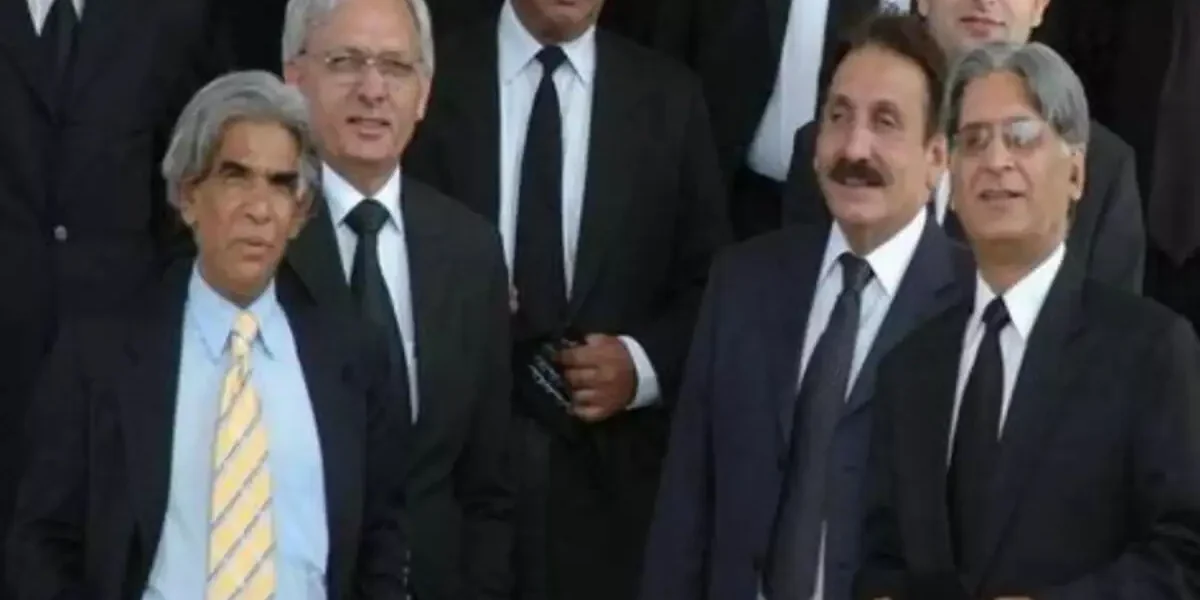
In those days, most Pakistanis had little direct engagement with judicial politics. However, when private television channels started providing continuous live coverage of protests, court proceedings, and political developments, the situation changed dramatically. Prominent lawyers such as Aitzaz Ahsan, Muneer Malik, Hamid Khan, Tariq Mehmud, and Ali Ahmad Kurd addressed audiences on television, openly challenging Gen Musharraf’s authority.
The turning point came in March 2007 when the chief justice was suspended. For days, weeks, and months, live visuals of rallies, arrests, police actions, and courtroom developments were broadcast continuously. This unprecedented media coverage allowed citizens to witness events as they unfolded, transforming isolated protests into a national conversation.
One of the most memorable moments was the image of the chief justice being manhandled by police, followed by unarmed lawyers in their black coats resisting arrest. The violence on May 12, 2007, further intensified public support and emotional resonance. Gen Musharraf’s arrogance during that evening also became a defining moment, as he raised his fists and declared victory.
An often-overlooked aspect of the movement is that in its initial months, the judiciary itself did not immediately emerge as a united institution of resistance. Following the chief justice's suspension, judges continued functioning within the existing judicial framework. However, between March and November 2007, the movement gathered extraordinary momentum through relentless media coverage and sustained public mobilisation.
Twenty-four-hour television transformed lawyers into national figures and judicial independence into the defining constitutional issue of the day. As public support intensified, judges increasingly found themselves at the centre of a national constitutional struggle. The emergency rule imposed in November 2007 further polarised the situation, leading to the eventual restoration of democratic governance.
Today, while debates about constitutionalism, judicial independence, and the rule of law continue, no comparable lawyers’ movement has emerged. This is because the media environment that facilitated the Lawyers’ Movement of 2007-2009 does not exist in the same form today. The current political landscape lacks the sustained public mobilisation and media coverage needed to spark a similar nationwide campaign.
In conclusion, while the principles of judicial independence and constitutionalism remain central issues in Pakistan, the absence of a comparable lawyers’ movement can be attributed to the lack of a compelling national narrative and the media environment that facilitated such a movement.