Key Takeaways
- US President Donald Trump has reimposed a naval blockade on Iranian ports.
- He also announced a 20% charge on cargo passing through the Strait of Hormuz.
- Iran responded by pledging to impose lower fees for ships transiting the strategic waterway.
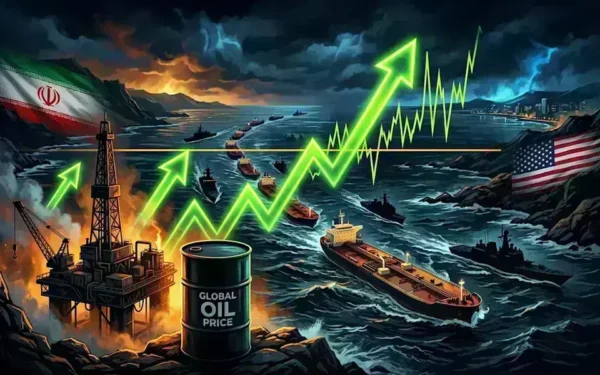
US President Donald Trump has reinstated a naval blockade on Iranian ports and imposed a 20% charge on all cargo shipped through the Strait of Hormuz, according to reports from multiple international news outlets. The move comes as tensions between the United States and Iran continue to escalate.
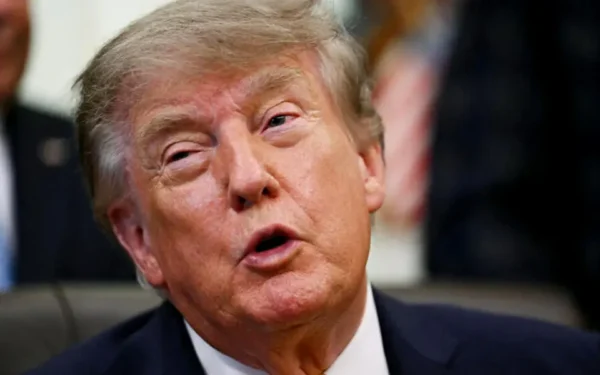
In a statement, Trump declared that the US would now collect a 20% fee on all cargo passing through the Strait of Hormuz, effectively turning it into a 'Guardian of the Strait.' This action is seen as a significant escalation in the ongoing conflict between the two nations. The imposition of such fees could have severe economic implications for countries relying heavily on maritime trade routes.

The US president's decision to reimpose the blockade and charge hefty fees was met with a mocking response from Iran. In an interview, Aaron David Miller, Senior Fellow at the Carnegie Endowment for International Peace and Former State Department Middle East Analyst, stated: 'Iran has already pledged to impose lower rates for passage through the Strait of Hormuz.' This statement underscores the ongoing diplomatic tension between the two countries.
The move by Trump is part of a broader strategy aimed at exerting pressure on Iran. According to reports from Euronews, US forces have struck dozens of targets in Iran and the Islamic Revolutionary Guard Corps (IRGC) retaliated by launching attacks against Bahrain, Jordan, Kuwait, and Oman. This marks one of the largest exchanges of military action since the April ceasefire.
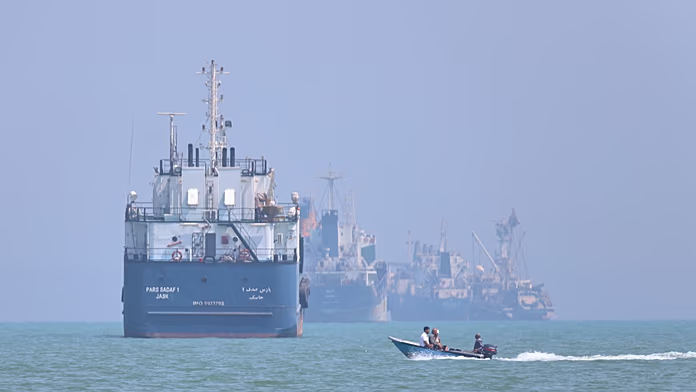
The Strait of Hormuz is a critical maritime passage through which about 20% of the world's oil supply passes each day. Any disruption to this route could have significant economic repercussions for global energy markets. The reimposition of fees and the blockade could potentially lead to increased costs for oil and other goods, affecting economies worldwide.
The response from Iran has been mixed. While the country has vowed to impose lower fees, it is unclear how this will be enforced or what the practical implications will be. The move by Trump also highlights the complex nature of international relations in the Middle East, where multiple actors are involved and tensions can quickly escalate.
In a statement, President Trump emphasized: 'We will not allow Iran to control the Strait of Hormuz.' This declaration underscores the US's determination to maintain its influence over this strategic waterway. The reimposition of fees and the blockade could potentially lead to further diplomatic and economic challenges for both countries.
'We will not allow Iran to control the Strait of Hormuz.'
President Donald Trump, US President
'Iran has already pledged to impose lower rates for passage through the Strait of Hormuz.'
Aaron David Miller, Senior Fellow at the Carnegie Endowment for International Peace and Former State Department Middle East Analyst