North Korea is preparing for a long-term confrontation with the United States as sweeping Democratic gains in the US midterm elections have diminished the chances of renewed diplomacy between Kim Jong-un and President Donald Trump, according to analysts.
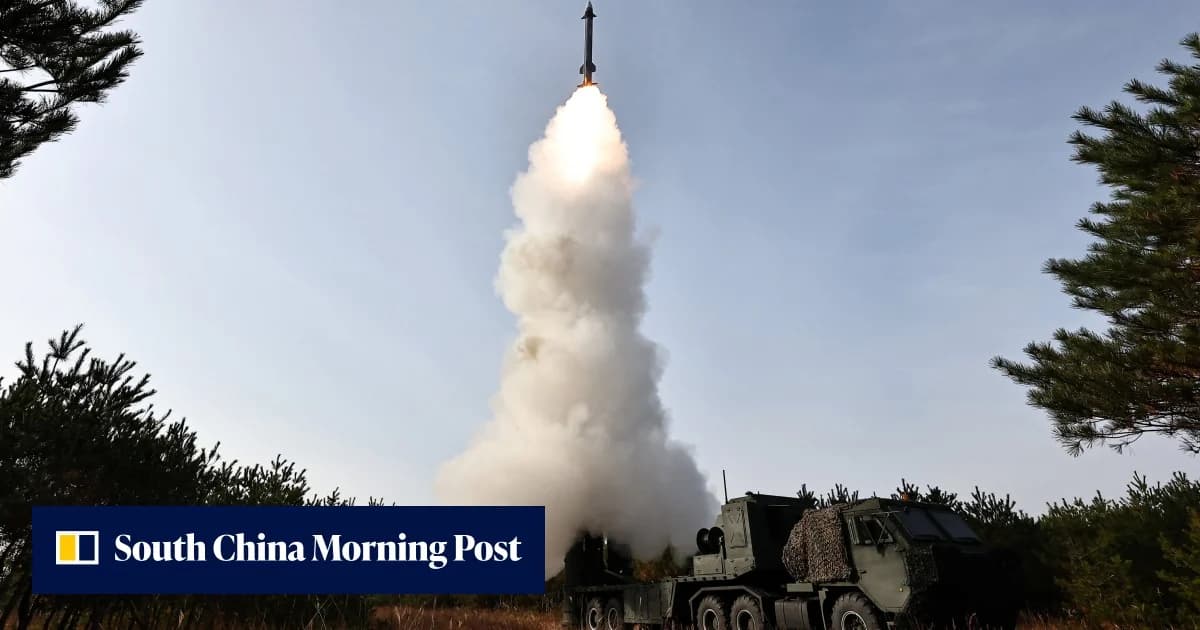
On Tuesday, as Americans voted in the midterm elections, Pyongyang test-fired a new surface-to-air missile system. Early Wednesday, Korean time, the country conducted a strike drill using long-range strategic cruise missiles, marking its fourth weapons test in a single week.
The launches occurred hours after Kim Yo-jong, the sister of North Korean leader Kim Jong-un, criticized Washington on Tuesday for linking Pyongyang to a US$6.3 billion cryptocurrency theft from Binance. She described the FBI’s findings as a “grave political provocation” and warned that Pyongyang had matters to “reconsider” due to US hostility, though she did not explicitly threaten retaliation. She stated on Wednesday: “The choice for peace includes dialogue, of course, but this is not surely equated with national interests for us.”
Oh Gyeong-seob, a senior researcher at the Korea Institute for National Unification, stated that the Democratic victory is unwelcome news for Pyongyang, which faced strict sanctions under the Biden administration. He noted that the Biden administration required a commitment to denuclearisation and working-level talks before any summit, contrasting with the top-down diplomacy favored by Trump. Oh said the North is deeply wary of the Binance heist sparking further international sanctions, which adds to the reasons for Pyongyang to seek dialogue, noting that Kim Yo-jong’s statement reflects this concern. However, Oh added there is little chance the Trump administration and Pyongyang could reach a compromise acceptable to a Democrat-led Congress, and Pyongyang is bracing for a prolonged confrontation.
Leif-Eric Easley, a professor of international studies at Ewha Womans University, suggested that while the midterm results were a blow to Trump, he is unlikely to moderate his policies. Instead, domestic constraints might encourage him to pursue dramatic and controversial diplomatic initiatives, such as deals with Xi Jinping, Vladimir Putin, or Kim Jong-un, while pressuring allies for defense costs and economic concessions. Easley noted that a Democratic-controlled Congress would likely investigate Trump’s decisions, scrutinize agreements, and resist sanctions relief for Russia or North Korea. He concluded that Washington might see more assertive presidential diplomacy but less certainty about implementation. Easley added that while South Korea supports renewed Trump-Kim diplomacy, a summit that ignores denuclearisation would weaken deterrence and cause friction between Washington, Seoul, and Tokyo. He noted that North Korea’s weapons tests, crypto heists, and cooperation with Moscow complicate engagement.
Lim Eul-chul, a professor at Kyungnam University’s Institute for Far Eastern Studies, said the election results dampened expectations for the top-down, transactional diplomacy Kim prefers. He argued that a Democratic-controlled Congress would resist Trump’s efforts to alter political dynamics through a summit by controlling spending, investigations, and sanctions legislation. From Pyongyang's perspective, Lim said, even an agreement with Trump could collapse at any time, leading the North to avoid a repeat of the 2019 Hanoi summit’s failure. Lim stated that North Korea holds a deep-seated conviction that “the essence of the US hostile policy towards North Korea will never change,” leaving little incentive to engage in dialogue for limited benefits. He predicted North Korea will consolidate a survival structure through military and economic cooperation with China and Russia to neutralize US sanctions. Lim said the current situation reinforces the North's conviction that developing independent nuclear capabilities is the strategically superior choice, and that weapons testing will become routine. He noted that the Wednesday tests combined defensive and offensive systems to show improved electronic warfare capabilities for evading air-defence networks.
Yang Moo-jin, a professor at the University of North Korean Studies, said it is rare for North Korea to launch defensive surface-to-air missiles alongside offensive cruise missiles. He suggested the near-simultaneous timing of the launches and Kim Yo-jong’s statement was planned to coincide with the US midterm elections to underscore North Korea's strategic significance. Yang stated the tests also served as a retaliatory show of force against Freedom Flag, a two-week joint South Korea-US air drill ending Friday. By pairing weapons demonstrations with Kim Yo-jong’s statement, Yang said Pyongyang signaled that its words are backed by action. He stated that Pyongyang is conveying that dialogue and confrontation, peace and military exercises, and improving relations and disrespect for its sovereignty cannot coexist. However, Yang added that North Korea is also signaling that dialogue and improved relations remain possible if the Trump administration respects the North Korean regime and abandons what Pyongyang regards as hostile policies, including joint US-South Korean military exercises.