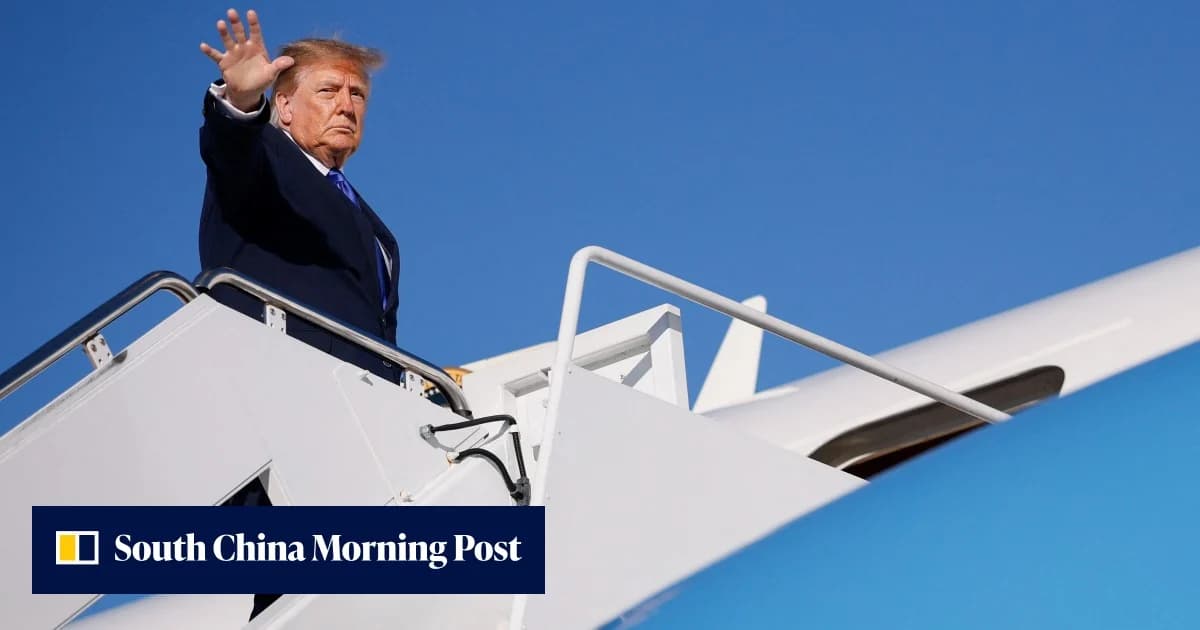
Democrats secured control of both chambers of the US Congress in Tuesday’s midterm elections. The results represent a significant setback for President Donald Trump, as voters expressed frustration regarding the Iran war and rising costs. With Democrats scheduled to take over Congress in January, they will possess the authority to investigate the Trump administration and block his legislative agenda.
Fudan University professor Zhao Minghao stated that the Democrats’ “blue tsunami” will turn Trump into a “lame duck” due to threats from congressional investigations and resistance to his policies. Zhao also noted that lawmakers will increase pressure on Beijing, specifically concerning export controls, AI, and Taiwan.
However, Hilton Root, a professor of public policy at George Mason University, suggested that a weaker Trump might not result in a softer stance toward Beijing. Root stated that Trump may offer China more room for a "personal, negotiated accommodation" than other figures in either party, noting that his desire to deal directly with Xi is not necessarily shared by the wider American foreign-policy establishment.
President Trump sought to distance himself from the Republican party's performance as early results emerged. On social media, he wrote, “I wasn’t on the Ballot and if I was, we would have won IN A LANDSLIDE! Thank you for your attention to this matter.” In an interview with Fox News, Trump partially blamed the Iran war for the losses, though he noted that while people agree with his actions on Iran, they "really probably weren’t willing to do the short-term consequence of paying more for gasoline." He also stated that Fox News "bears responsibility for these losses by constantly and consistently putting on the ‘Dumocrat’ opposition, and worse."
International reactions varied following the results. Beijing described the elections as a “domestic affair” and stated it remains committed to a constructive relationship of strategic stability with Washington based on respect, fairness, and reciprocity. Japanese Chief Cabinet Secretary Minoru Kihara said the importance of Japan-US relations remains unchanged and that Tokyo will continue working with Washington to “elevate the alliance to even greater heights.”
Iran’s speaker of parliament, Mohammad Bagher Ghalibaf, warned Washington against further military action, framing the Democrats’ sweep of Congress as a clear public rejection of the war. In a social media post, Ghalibaf wrote, “Conscience or the cost of living, Americans said NO TO WAR, and we endorse this message.”
Elon Musk, the head of Tesla and SpaceX who reportedly spent nearly US$500 million backing Republican efforts, remained quiet during early results. He later posted on X, “Guess my election-interfering space lasers didn’t work this time,” and added, “Data centres in space looking pretty appealing right now.” Data centers for artificial intelligence had been a campaign flashpoint as voters resisted Trump’s efforts to build more of them.