US and Chinese defence officials met in Washington on November 2 and 3 for the first meeting of a Crisis Communications and Prevention Working Group. The group was established under an agreement announced in September when the leaders of the two nations met.
According to a Pentagon readout released Tuesday, both sides agreed on the importance of “advancing practical communication measures” to reduce risks between the US and China. Delegates also discussed “additional channels” to promote “effective” crisis management and ways to communicate “expediently and effectively”.
The Pentagon stated that the “Department of War will continue to advance discussions with the PLA on key defence issues in the coming months,” without providing specific details.
The meeting involved Cynthia “Xanthi” Carras, the principal director for China, Taiwan and Mongolia from the Office of the US Undersecretary of War for Policy, as well as Senior Colonel Wang Wei, deputy director of the Americas and Oceania Affairs Bureau in the People’s Liberation Army (PLA) Office of International Military Cooperation.
This was the first such gathering of military officials from the two countries since China’s foreign ministry announced on September 26 that Beijing and Washington agreed to accelerate and conclude a memorandum of understanding on “crisis communication and prevention”. Beijing’s announcement of the military deal was made separately from eight summit readouts covering trade, artificial intelligence, counternarcotics cooperation and international affairs.
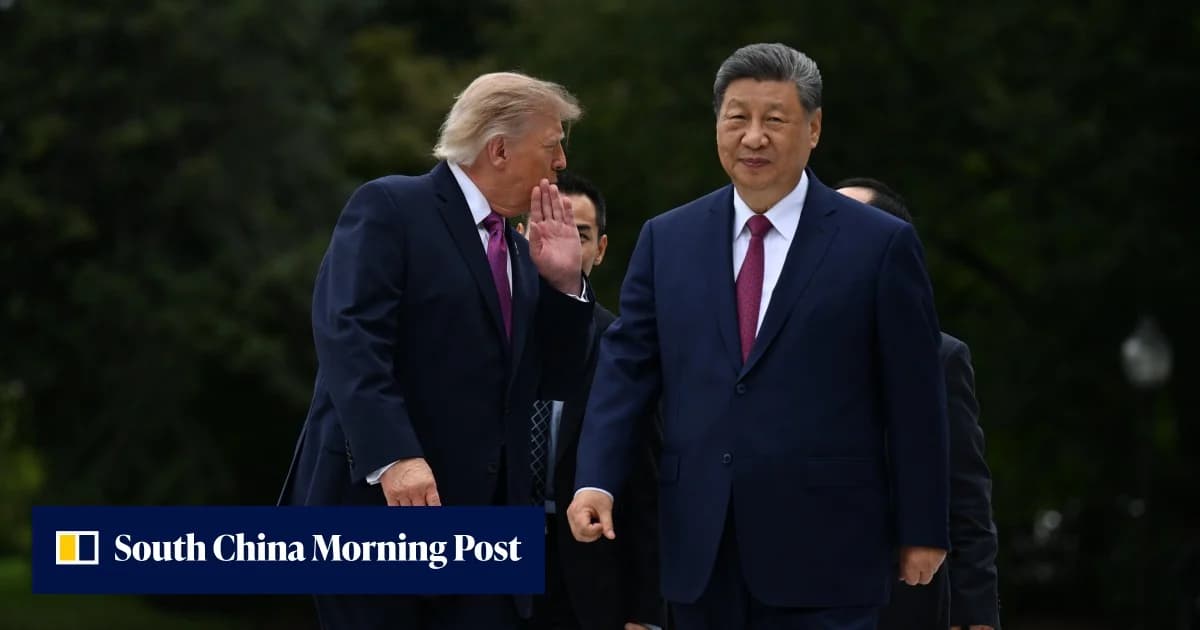
During his state visit to Washington for talks with US President Donald Trump, Chinese President Xi Jinping said “the Thucydides Trap can be overcome” and that the two militaries should maintain regular dialogue and “improve mechanisms for crisis communication and prevention”.
While the two militaries already have consultation arrangements and senior communication channels, the September announcement did not provide additional details about the new crisis management hotline. It also did not appear in Washington’s post-summit readouts or in any deliverables from US defence and military branches, such as the Pentagon or the US military’s Indo-Pacific Command.