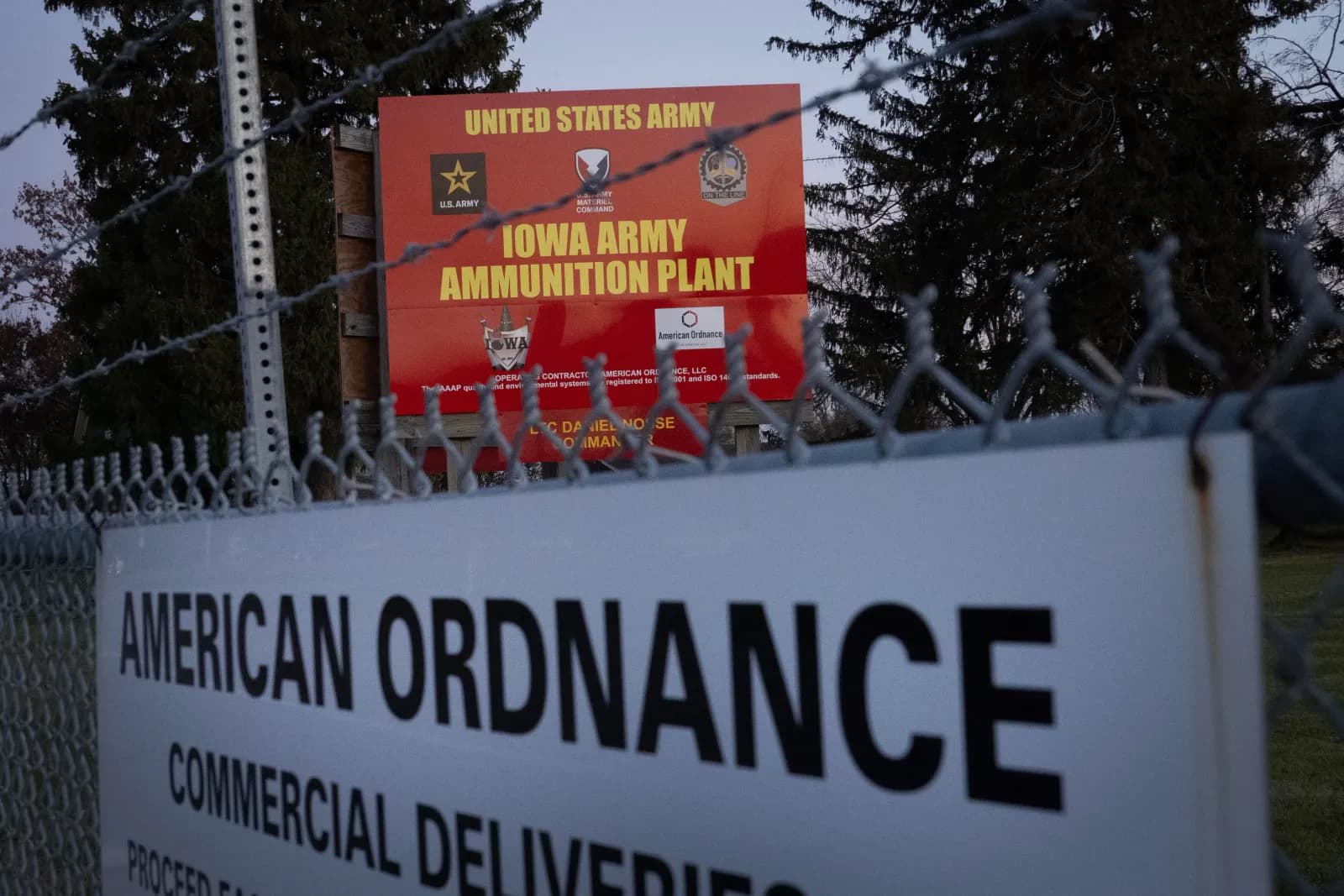
The US Army is scheduled to detonate a stockpile of unstable explosives at the Iowa Army Ammunition Plant in Middletown at approximately 9:00 AM CST on Wednesday. The operation involves 68 drums containing about 9,700 pounds of lead azide, a chemical compound used to detonate munitions like grenades.
Robert Cekada, director of the Bureau of Alcohol, Tobacco, Firearms and Explosives (ATF), stated in a Tuesday press briefing that the US began using lead azide as a primary explosive almost a century ago before "moving away" from it about 15 years ago. The material was transferred to the Iowa plant because it is difficult to store and transport. Lead azide is sensitive to flame, friction, sudden shock, and temperature fluctuations, and it can explode at 350 degrees Celsius (662F).
Some of the material in Iowa is more than 60 years old. Cekada reported that during a March inspection, the ATF noticed "significant crystallization on the exterior of the barrels." This crystallization makes the material too unstable to open the drums to add water and ethanol, which were previously used to keep the chemicals from freezing. Cekada warned that "It’s not a matter of if, it’s a matter of when."
Army Col. Aaron Teller, commander of the 71st Explosive Ordinance Disposal Group, said at the Tuesday briefing that using a chemical neutralization agent "proved to be an unsafe method" because opening the lids was too risky. Cekada added that experts have determined detonation is the only safe path forward.
The Army is attempting to limit lead dust spread through several measures. The Army now believes it can "significantly reduce" the spread of lead dust—which could reach as far as 100 miles away from the site—by using four 16,000-gallon water tanks to capture particulate. Teller noted that in a 1977 detonation of 7,000 pounds of lead azide in Colorado, 75 percent of the lead stayed on site. To further contain the blast, the Army has covered the cracked, 80-year-old magazines with tarps and a special containment screen, plans to flood the area with 2 feet of foam, and has set out "state of the art gel blocks in huge quantities all around to ensure that we absorb as much of this blast as we possibly can," according to Acting Secretary of the Army Adam Telle.
The Iowa Department of Health and Human Services (Iowa HHS) recommends that people in affected areas stay indoors with windows shut for 24 to 48 hours after the blast, turn off HVAC systems or set them to recirculate, and use HEPA air purifiers. FEMA is assisting with a voluntary 5-mile evacuation zone. Sean Kaufman, principal deputy assistant secretary for preparedness and response at the Administration for Strategic Preparedness and Response, said at the briefing that people who are pregnant, children, and individuals with chronic diseases should evacuate. Kaufman added, "Outside of that area, if you’re close to that proximity and you’re uncomfortable, I think you need to do what you need to do to take care of your family."
While lead is a neurotoxin with no "safe" level of exposure, Will Sander, associate professor of preventive medicine and public health at the University of Illinois Urbana-Champaign, told The Verge via email that "It is likely this exposure will not result in any observable acute clinical signs" and that the risk is minimal. However, Chris Kohler, an adjunct instructor at Indiana University and hazardous waste expert, told The Verge via email that the detonation will spread lead in the atmosphere, which he called "Not a desirable outcome."
A federal appeals court denied an emergency motion on Monday to stop the explosion, which had been sought by the Iowa Environmental Council and Sierra Club.