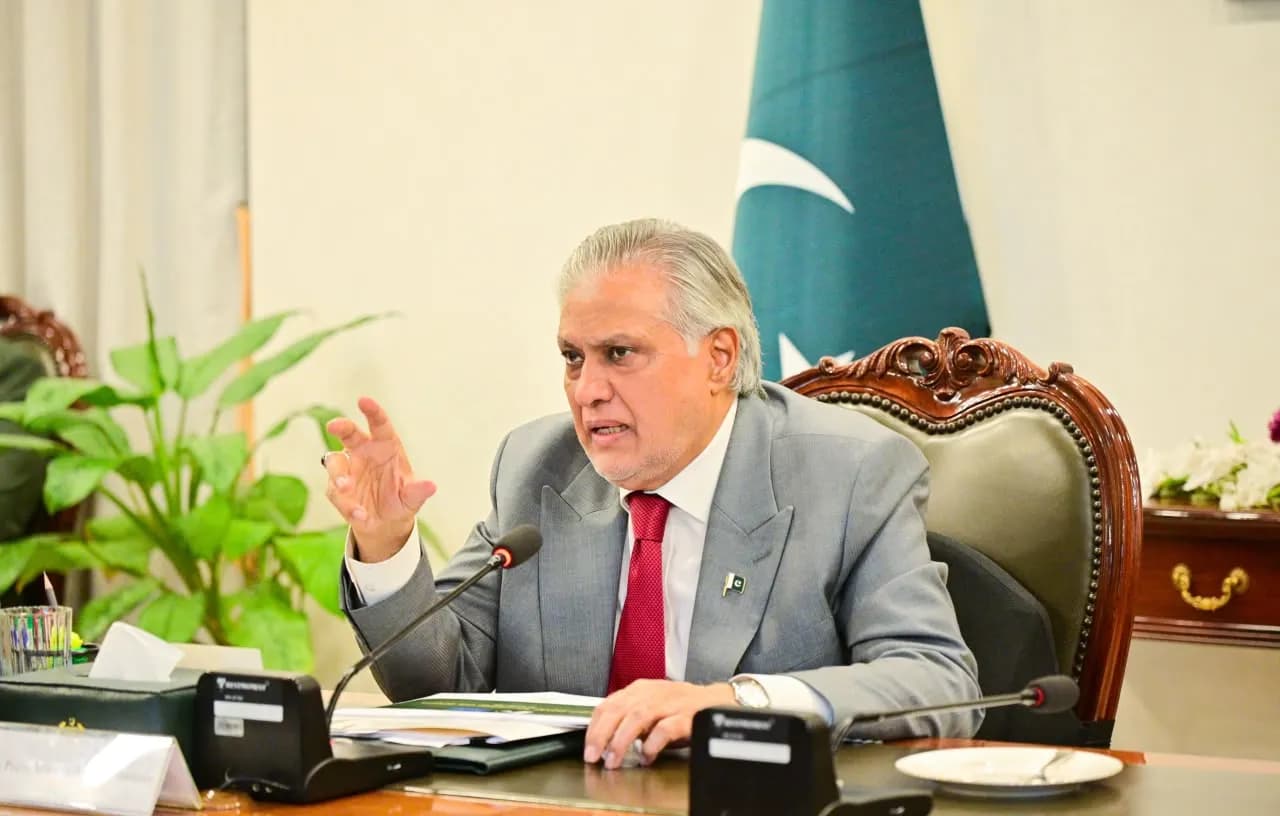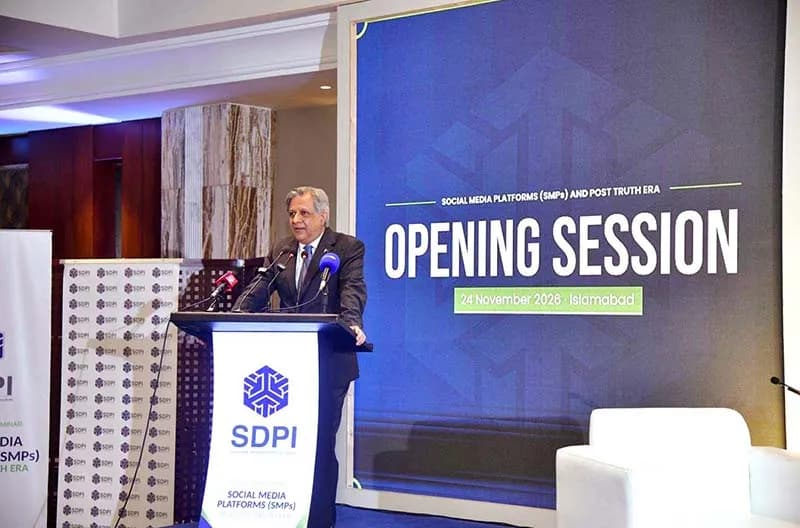
Interior Minister Mohsin Naqvi has identified four non-negotiable "red lines" for social media platforms in Pakistan: terrorism, hate speech, incitement to violence, and child sexual exploitation. Speaking on Tuesday at an international seminar titled “Social Media Platforms and the Post-Truth Era” organized by the Sustainable Development Policy Institute (SDPI) in Islamabad, Naqvi stated there would be no compromise on these issues.
Naqvi emphasized that Pakistan has suffered significantly from terrorism and noted that online hate speech frequently contributes to violence. He claimed that social media platforms currently act on only 47% of requests submitted by Pakistan’s counterterrorism departments. While asserting that the government does not intend to curtail freedom of expression—stating that journalists should report, citizens should question the government, and dissent should be heard—Naqvi maintained that free speech cannot be used as a shield for activities crossing the four red lines.
To improve oversight, the government has established the Social Media Protection and Regulatory Authority (SMPRA). Under this proposed framework, social media platforms, over-the-top (OTT) services, and major content creators will be required to register with the authority. Naqvi clarified that "Registration is not a licence to silence anyone. It tells us who is accountable when something goes wrong." He further called for every platform to appoint an empowered representative in Pakistan who can make decisions and respond to complaints.
The minister highlighted the current lack of resources for law enforcement, noting that Punjab has a population of around 140 million but only 61 National Cyber Crime Investigation Agency (NCCIA) personnel, including drivers, clerks, and officers. To address this, the government is moving NCCIA complaints to the PakID application and developing a centralized, trackable complaint system.
Naqvi described a gradual enforcement approach involving engagement, notices, and penalties, stating that blocking an entire platform would remain a last resort. He questioned why the Balochistan Liberation Army (BLA), a declared terrorist organization, continues to use social media for recruitment and fundraising, and urged international platforms to take action against such accounts.
During his address, Naqvi shared accounts of five girls he met during a recent public hearing; three expressed suicidal intentions over threats that sensitive material would be uploaded online, while two had attempted suicide but survived. He noted that authorities currently lack an effective mechanism to ensure immediate responses from platforms in such cases.
Naqvi also cited a recent NCCIA investigation into an international network selling child sexual abuse material, where Google’s cooperation helped identify an alleged offender in Abbottabad. He stated, "When a platform acts, a child is protected." He concluded by inviting international companies to work with Pakistani authorities, saying, "Let us sit together, not across the table, but on the same side of it."