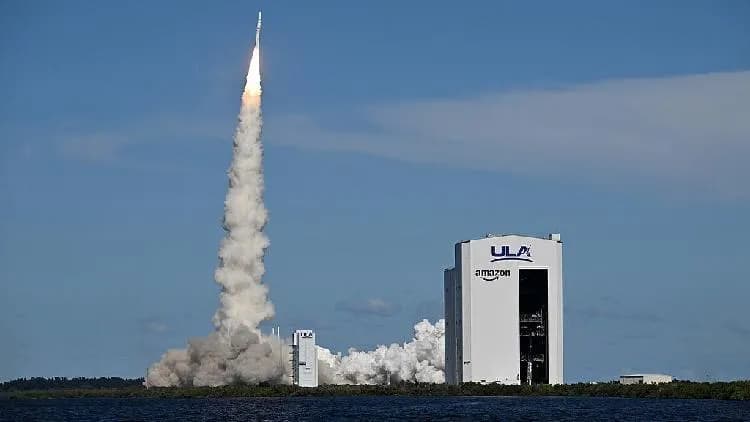
United Launch Alliance (ULA), the joint venture between Boeing and Lockheed Martin, suffered its first mission failure in its 20-year history on Sunday, November 15, 2026. The Vulcan rocket failed approximately 10 minutes after liftoff from Space Launch Complex 41 at the Cape Canaveral Space Force Station in Florida, destroying a payload of 40 satellites for Amazon's Leo internet network.
In a statement, ULA confirmed the incident, stating: "Based on data received by our Launch Director, we confirm that the Vulcan vehicle launched from Space Launch Complex 41 suffered an anomaly 10 minutes into the flight and failed to deliver the Amazon mission to orbit." The company added that because the anomaly just occurred, they do not yet have specific data to understand what happened, noting, "Every flight generates data, and every flight teaches us something."
The failure occurred during the Vulcan's fifth mission since its 2024 debut and its first launch in nine months. The hiatus was caused by technical investigations into the rocket's core BE-4 engines and solid rocket side-boosters. These components, supplied by Jeff Bezos' Blue Origin space company, were under scrutiny due to issues on Vulcan's previous two flights. While those missions successfully reached orbit, the Pentagon had not yet approved the rocket for national security payloads pending the results of the Amazon mission.
It is currently unclear if the BE-4 engines were responsible for Sunday's failure. However, the incident appeared to happen after the separation of the second stage, which carried the Amazon satellites, from the first-stage booster powered by the BE-4 engines. ULA spokesperson Jessica Rye told Reuters in August that Blue Origin had modified the engines delivered to ULA following a launchpad explosion in May involving Blue Origin's own New Glenn rocket.
The loss of the 40 satellites represents a setback for Amazon's efforts to rival SpaceX's Starlink network, which currently has more than 11,000 satellites. Since 2025, Amazon has deployed 398 Leo satellites across 14 launches, accounting for about 12% of its plan. The company had hoped to begin initial internet service this year.
Despite the failure, Amazon expressed continued confidence in its partner on X, stating: "There is risk with any launch, and that’s especially true for inaugural missions like LV-01. ULA has been a trusted partner for Amazon, and we believe they’ll learn from this mission and deliver on their long-term plans for Vulcan."