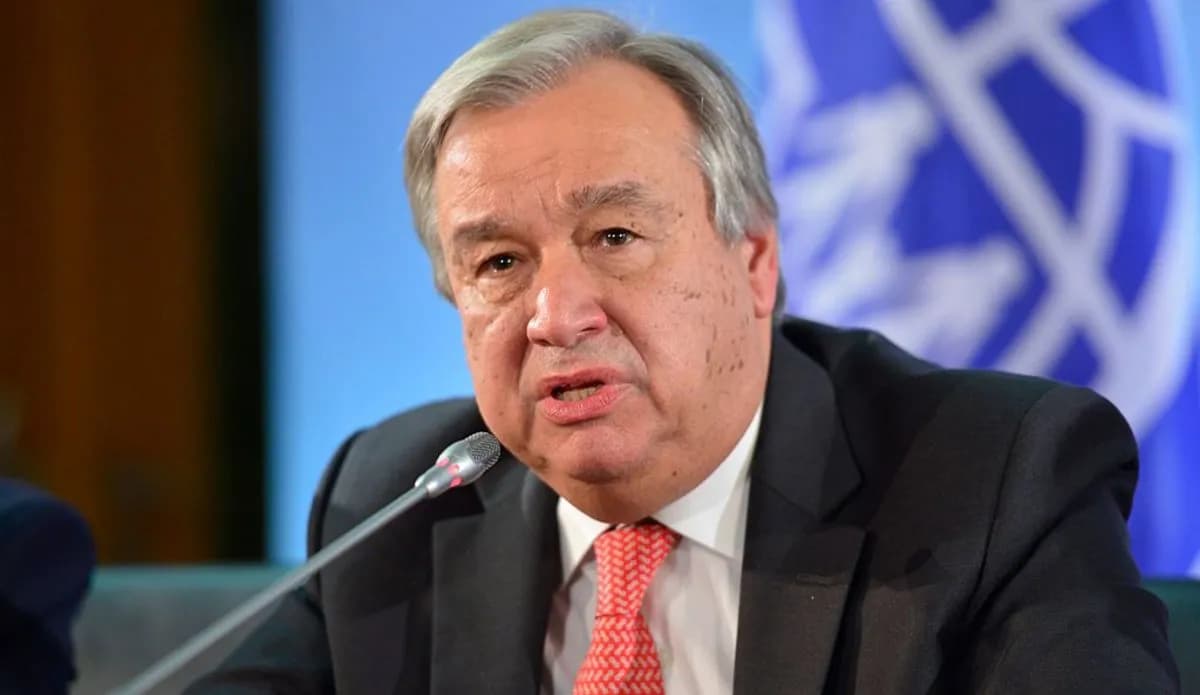
UN Secretary-General Antonio Guterres has urged delegates to negotiate a legally binding instrument to regulate lethal autonomous weapons, which are commonly known as "killer robots." Speaking to representatives from more than 120 Member States during the 7th Review Conference of the Convention on Certain Conventional Weapons in Geneva on Monday, Guterres called for the creation of "clear prohibitions and restrictions" on the rapidly evolving technology.
Guterres stated that "the nature of warfare is changing" and warned that "New technologies, including autonomous weapons systems, present new humanitarian, legal, ethical and security challenges…I urge you to seize this moment. Take action to prevent the use and spread of these merciless weapons." He emphasized that "we must never stop shielding civilians from the carnage and devastation of armed conflict and preventing unnecessary suffering."
The push for a treaty follows a strong appeal made last Friday by the UN human rights chief, Volker Turk. Turk urged States to urgently agree to a treaty, citing the risk that autonomous weapons could soon be widely accessible. "A machine must never have the power to decide whether a human being survives or dies," Turk stressed in a statement.
Turk called for specific prohibitions on autonomous weapons that target people by design or in practice, as well as a ban on weapons whose functions and effects cannot be fully understood, predicted, explained, and controlled by human users. He argued that human judgment and responsibility must remain central because machines do not understand the value of human life, cannot assess context like humans, and cannot make the complex judgments required by international law.
While UN General Assembly Resolution 78/241 from December 2023 confirmed that lethal autonomous weapons systems must respect the laws of war—receiving support from 152 countries, with four against and 11 abstentions—not all countries agree on controls.
The Convention on Certain Conventional Weapons, which has 128 "High Contracting Parties," has spent over 40 years reaching common ground on landmines, improvised explosive devices, incendiary weapons, and explosive remnants of war. The conference is also expected to consider the humanitarian impact of landmines and emerging methods of warfare not covered by other international instruments. Discussions are organized by the UN Office for Disarmament Affairs (UNODA).