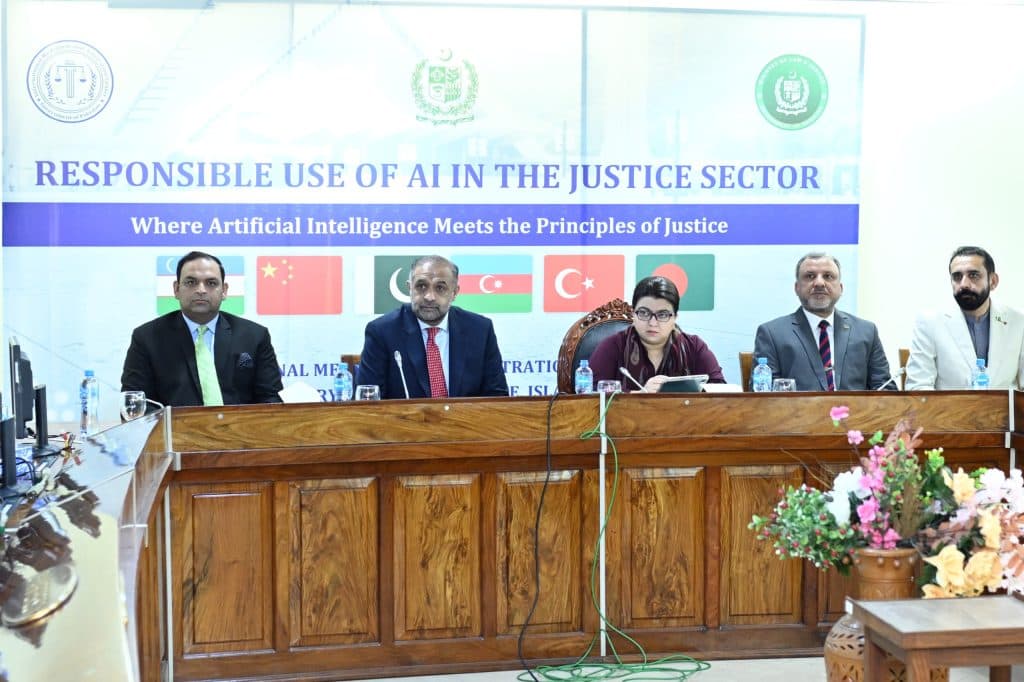
Shaza Fatima Khawaja addressed an international conference on AI and the Judiciary in Islamabad to discuss the integration of technology into the legal system.
Khawaja stated that the responsible use of Artificial Intelligence (AI) in the judicial system was need of the hour. According to Khawaja, Pakistan enacted the Digital Nation Pakistan Act, which resulted in the creation of the Pakistan Digital Authority. The Pakistan Digital Authority has published standards for machine-readable legislation in collaboration with the Ministry of Law and Justice, Khawaja said.
The National Information Technology Board (NITB) signed two memorandums of understanding with the Supreme Court of Pakistan, Khawaja noted. An E-Office system has been introduced at the Supreme Court, Khawaja said. Khawaja added that digital systems have been deployed to make the administrative affairs of the Supreme Court of Pakistan and the Law and Justice Commission of Pakistan paperless.
A dashboard has been provided to the higher judiciary, and the Case Management System is active, integrated, and interoperable with provincial courts, Khawaja said. Approximately 2.2 million cases are pending in Pakistan during 2025, Khawaja said.
Several startups in Pakistan, including Munshi and Lawbot Pakistan, are actively working to provide tech-driven and AI-based legal assistance to lawyers and citizens, Khawaja said.
Khawaja emphasised that keeping a “Human in the Loop” is strictly necessary within the judicial framework. The National Judicial Policy Committee issued national guidelines regarding AI usage in the judiciary in April 2026, Khawaja said.