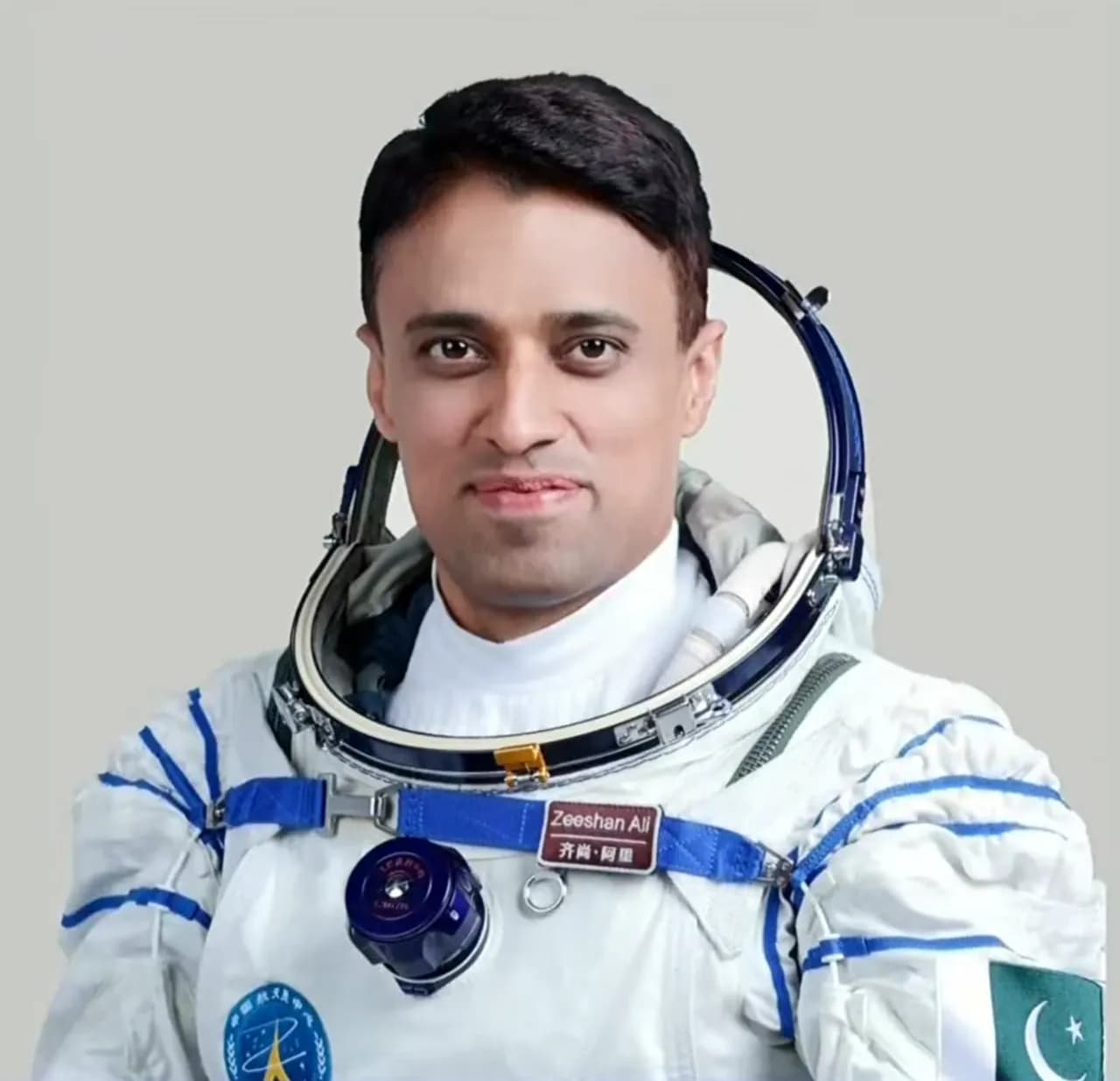
Pakistan celebrated a historic milestone on Wednesday morning as Muhammad Zeeshan Ali, a Pakistan Air Force (PAF) pilot and payload specialist, launched on a pioneering mission to northwest China. Ali became the first foreign astronaut to fly on a Chinese space mission and the first non-Chinese national to board the Tiangong space station.
The launch occurred at 5:18am on November 25, 2026, aboard the Shenzhou-24 alongside two Chinese crewmates. At the Space and Upper Atmosphere Research Commission (Suparco) headquarters in Islamabad, hundreds of scientists, students, and officials gathered to watch the liftoff on a large screen.
Zainab Abbasi, a physics and astronomy student and keen amateur astronomer, said, "I feel goosebumps just seeing the launch," adding, "I could have never imagined that so soon in my life I would see a Pakistani astronaut go to space."
Muhammad Yousaf Khan, the head of Suparco, noted that despite the early hour, the auditorium was full. "But now I see there isn't a seat left," Khan said, pointing to the crowd. He remarked, "That shows how attached everyone is to our astronaut, this mission and the hard work behind it."
Khan distinguished this event from previous satellite launches, stating, "With every launch our hearts were pounding, hoping it would succeed and the satellite would do everything it was designed for. But today we all feel something different."
During his week in orbit, Ali will conduct four experiments, including studies on growing quinoa beyond Earth, self-healing materials for spacecraft, and microalgae. These experiments were selected from over 300 proposals submitted by Pakistani universities.
Suparco reported that the selection process for astronauts was gruelling, involving the screening of more than 50 candidates. Nineteen candidates were sent to China for testing, from which Ali and Khurram Daud, a navy officer, were selected. Their training, which included underwater drills and centrifuge tests, lasted about seven months instead of the planned six.
Pakistan's space program, which began in 1961, has shifted toward an extensive partnership with China. A deal signed in February 2025 established a Chinese government training program for Pakistani astronauts.
Professor Raza Akbar of the Institute of Space Technology (IST) described the path toward technological independence from Beijing as "a gradual process." He explained, "Initially we collaborate... we get the technology, we get the mentorship, and collectively we develop." Akbar also noted that while the Himalayas reach a maximum height of nine kilometres, the mission has reached 400 kilometres.
Amna Ijaz Aziz, also from the IST, told Ali, "You've made history for all of us," and noted that children will learn about his achievement in future classes.
Ali is scheduled to return to Earth on the Shenzhou-23 spaceship, which is currently docked at the Tiangong station. While Ali is the first Pakistani to reach orbit, adventurer Namira Salim travelled to space on a commercial suborbital flight in October 2023.