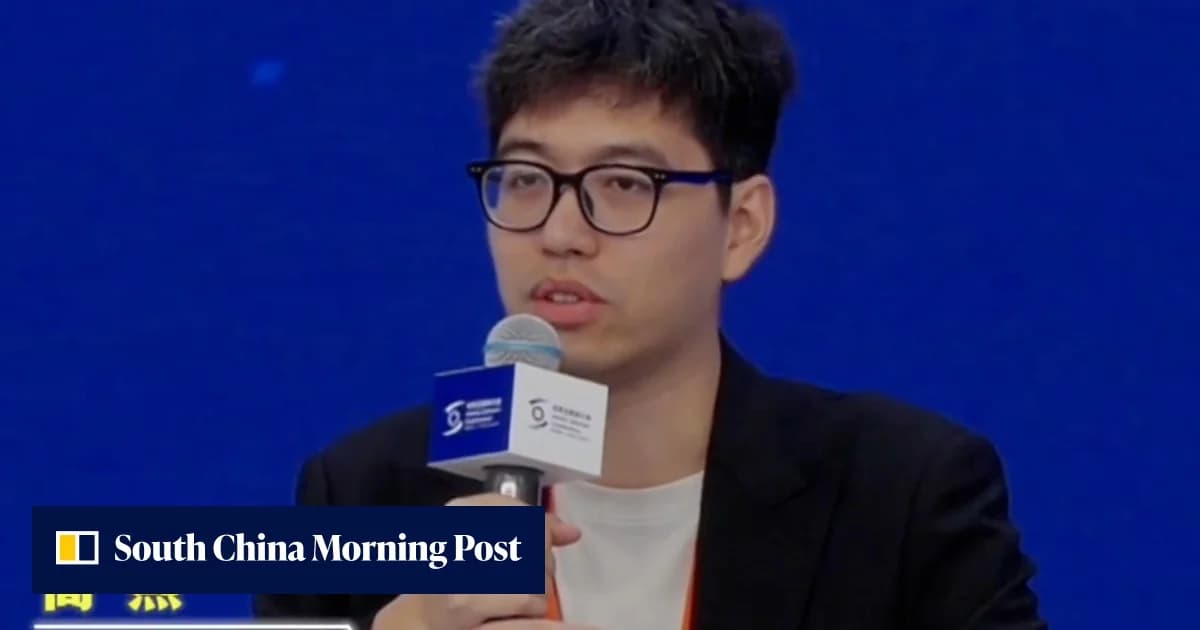
A DeepSeek engineer defended the company's commitment to open-source artificial intelligence, stating that the goal is to accelerate the arrival of artificial general intelligence (AGI) even if it increases safety risks. Speaking on Tuesday at an AI panel during the World Internet Conference (WIC) in Wuzhen, Gao Xi argued that open-source development fosters shared innovations and technical breakthroughs.
Gao framed the rapid progress of technology as a race against time rather than a competition against rival firms. “If AGI is going to arrive in 10 years, then I hope we can bring this forward to one year. If it is going to arrive in one year, then I hope it can arrive tomorrow,” Gao said. He further stated, “AI is developing faster every year. For AI model companies, the real competitor in the AI race is not other companies, but time.”
Gao suggested that technical barriers created by competitors would only provide a temporary delay to the inevitable arrival of AGI. His remarks come amid a flashpoint in the US-China tech rivalry regarding open-weight models, which allow users to download and modify code without vendor oversight, unlike the closed-weight systems used by American firms like OpenAI and Anthropic.
While Beijing has supported open-source ecosystems to counter US tech containment, security experts have warned that releasing model weights could make it easier for rogue actors to develop bioweapons or conduct cyberattacks. Additionally, AI pioneers Geoffrey Hinton and Yoshua Bengio have warned that AGI could escape human control.
Acknowledging that open-source releases “may amplify the impact of safety issues,” Gao said DeepSeek is working to strengthen safety features, including classifications for its models.
Liu Dayiheng, the project lead for Alibaba Group Holding’s open-weight Qwen models, also spoke on the panel. He acknowledged the “irreversible” nature of open-weight models as a safety challenge but pushed back against the Western preference for closed ecosystems. Liu argued that without open source, core technologies would be restricted to a few companies, stating, “Open source allows developers around the world to contribute technology and innovate together.” He suggested that the solution lies in industry standards and governance rather than technological gatekeeping.
The WIC, themed “Open Source and Openness,” hosted around 1,800 delegates from 138 countries and regions. During the opening ceremony on Tuesday, Premier Li Qiang stated that China would pursue “open innovation, promote technology transfer ... and work with all to build an open, inclusive and dynamic global ecosystem for digital innovation.”
Other participants at the conference included Wen Feng, chief architect of MiniMax, and John Higgins, chairman of the International AI Governance Association. On Wednesday, Unitree Robotics founder Wang Xingxing noted that much robot data remains underused and suggested that self-improving physical AI models could help accelerate advances by making better use of that data.