According to analysts, a strong voter backlash in the US midterm elections against AI infrastructure projects, including data centres, indicates that framing the domestic buildout as key to competing with China failed to convince Americans and underscores the need to address local concerns.
“The argument that we need to build more data centres to win in AI against China no longer seems to have the kind of resonance it did before, if it ever did, frankly,” said Kyle Chan, a fellow at the Brookings Institution’s John L. Thornton China Centre. Lizzi Lee, a fellow at the Asia Society Policy Institute, echoed that assessment, saying: “The lesson is that invoking China as a justification for tech and industrial investment is becoming less effective.”
The Trump administration and the Republican Party cited rivalry with China to barrel through AI infrastructure across the country, but voters chose to prioritise local concerns about soaring power bills, water use and quality of life above Washington’s technological competition with Beijing. Sourabh Gupta, resident senior fellow at the Institute for China-America Studies, said, “Competition with China on AI simply did not factor into the races as far as the electorate was concerned.”
Tuesday’s elections saw Democrats who campaigned against unchecked AI and data centre expansion score major victories, winning Senate races in Texas and Ohio and gubernatorial races in Texas, Georgia and Ohio. In addition, voters in dozens of townships across the country approved measures to ban or restrict the construction of new data centres.
The Trump administration framed AI infrastructure expansion as vital to keeping pace with China and preserving US leadership, while downplaying local communities’ concerns, along with calls to slow the development of frontier models amid safety risks. “We are leading China in AI, we’re the most sophisticated country in the world, and frankly, I want to keep it that way because whoever wins AI, wins,” Trump said in September.
In the short term, Paul Triolo, a partner at the DGA-Albright Stonebridge Group, thinks it is unlikely that fears about the US-China AI race will override local concerns about data centres, such as electricity prices and water supplies. “Right now the idea of a race around AI is not that appealing when job losses, AI safety and AI data centres form a solid negative trifecta around the issue, putting China competition well down the list for most voters,” he added.
On AI safety, Trump has favoured voluntary industry oversight over government regulation. He met leading AI executives at the White House in September and backed a voluntary pact requiring companies to monitor and audit their own systems, describing the agreement as “morally binding”. “I can imagine Trump continuing to be reluctant to rein in AI progress in the US and for him to continue to want to frame it as America being number one and beating China in AI,” Chan said.
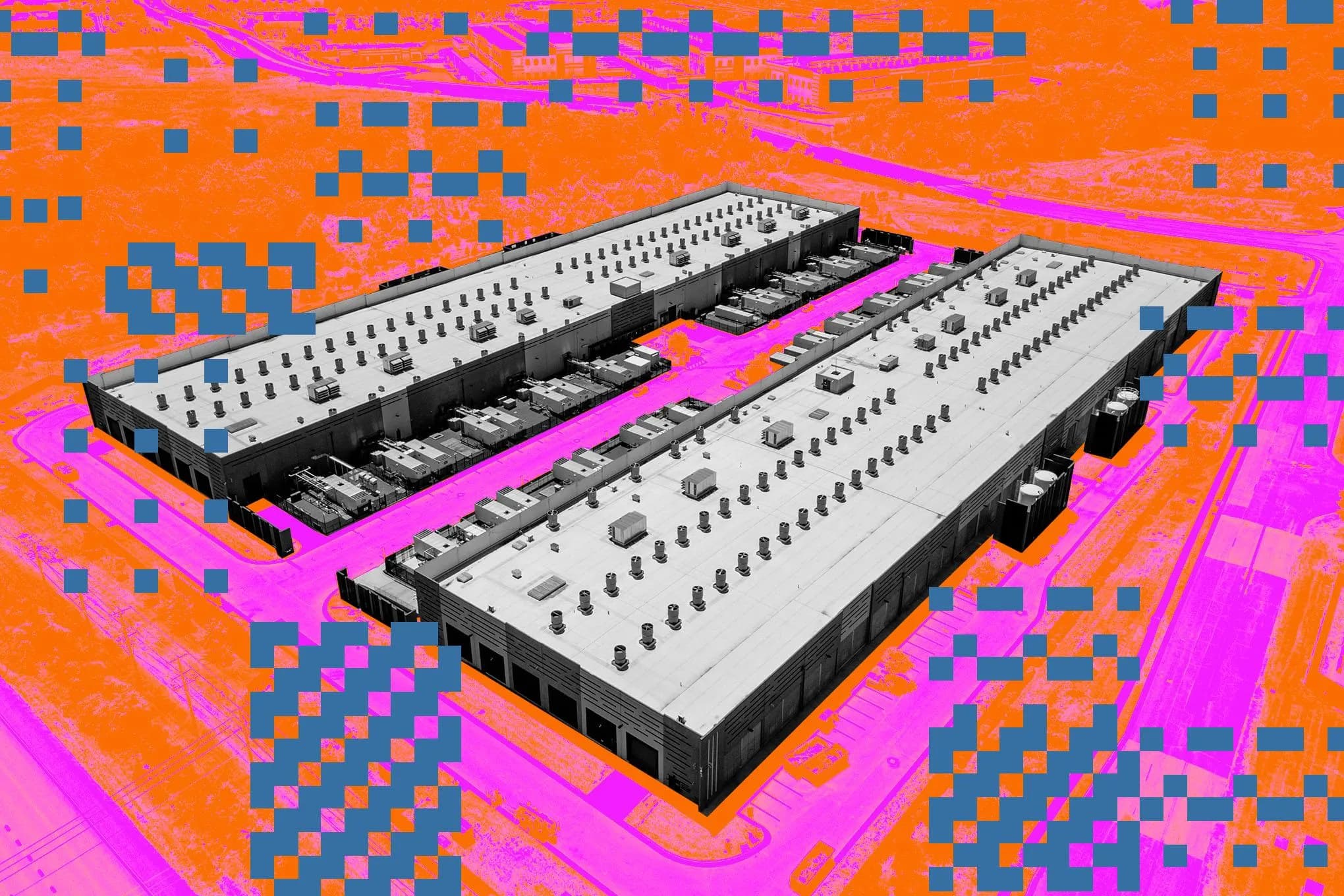
However, the argument that the US must outpace China in AI carries less weight for residents living near data centres, who are more concerned about the projects’ direct impact on their communities. Lindsay Shaw and Jessica Medeiros know first-hand the toll of America’s data centre boom. They live in Loudoun County, northern Virginia, which has the most data centres per capita in the world. Across the street from their homes in Sterling, a massive facility runs day and night, subjecting them to gas turbines, diesel fumes and relentless industrial noise.
“Living next to a data centre, I’ve learned that progress looks a lot different on a PowerPoint slide than it does from your backyard,” Medeiros said. “I think voters are sending a message that growth matters, but so does listening to the people who live with the impacts.”
Shaw agrees the vote signals a broader appetite for accountability rather than an anti-technology or anti-AI stance. “Whether the argument is to win the AI race against China or just to house and protect our data – we need them. All of us use AI and the internet in our daily lives,” she said. “Whatever reason is used, though, does not justify the impact on communities.”
Medeiros shared that view, arguing that communities shouldn’t suffer to advance a broader political agenda, whether tied to AI, China or economic growth. “I just don’t believe that Trump’s push to win the AI race with China should be at the citizens’ expense,” she said. “I think he’s using competition with China to move faster and build bigger, while expecting us to just accept the consequences.”
While Medeiros hopes the election results will force officials across the country to weigh community impact before building new data centres, Shaw remains sceptical. “I’ll feel more hopeful when I see leaders actually standing up for the people and plan and build these in industrial areas and not among communities,” she said. “I hope Americans in other areas are more successful in working with big tech, but with enough money, I’m not sure any leader would stand up for their communities.”
Fresh off winning the midterms, Democrats are promising to do just that. Ted Lieu, who comfortably won re-election from California’s 36th Congressional District and is the co-chair of the Democratic Commission on AI in Congress, said on Wednesday that his party plans to step in with new guardrails around data centre construction and broader AI regulation. “Two things will change next term,” Lieu said. “We will hold public hearings on AI. We will pass legislation, reasonable guardrails, on AI.”
The House Democratic Commission on AI is an internal party panel created to build policy expertise, engage tech stakeholders and shape legislative guardrails and oversight for artificial intelligence. Democrats could push for legislation related to data centres, but they would need Republican support to pass anything, said Triolo. “Even more important than the AI infrastructure buildout will be discussion in the new Congress on regulating how models are developed and released and what the government oversight role should be,” he added.
As AI safety issues have dominated the debate on government oversight over the past few months, calls for congressional action have already emerged. Triolo said safety oversight is likely to take more bandwidth in the new Congress than attempts to legislate national restrictions on data centres, which have remained a largely local issue. “If Chinese firms appear to be keeping pace or even surpassing US AI firms in some areas, there will be more calls for both an easy hand on regulation and more support for data centre buildouts in a Democrat-led Congress,” added Triolo, who specialises in China and technology policy.