Key Takeaways
- Researchers at the Beijing Institute of Technology have developed a new night vision goggle.
- The device translates infrared wavelengths into full-color images, providing natural vision-like perception.
- Mercury telluride colloidal quantum dots and dual-layer OLEDs are used to achieve this breakthrough.
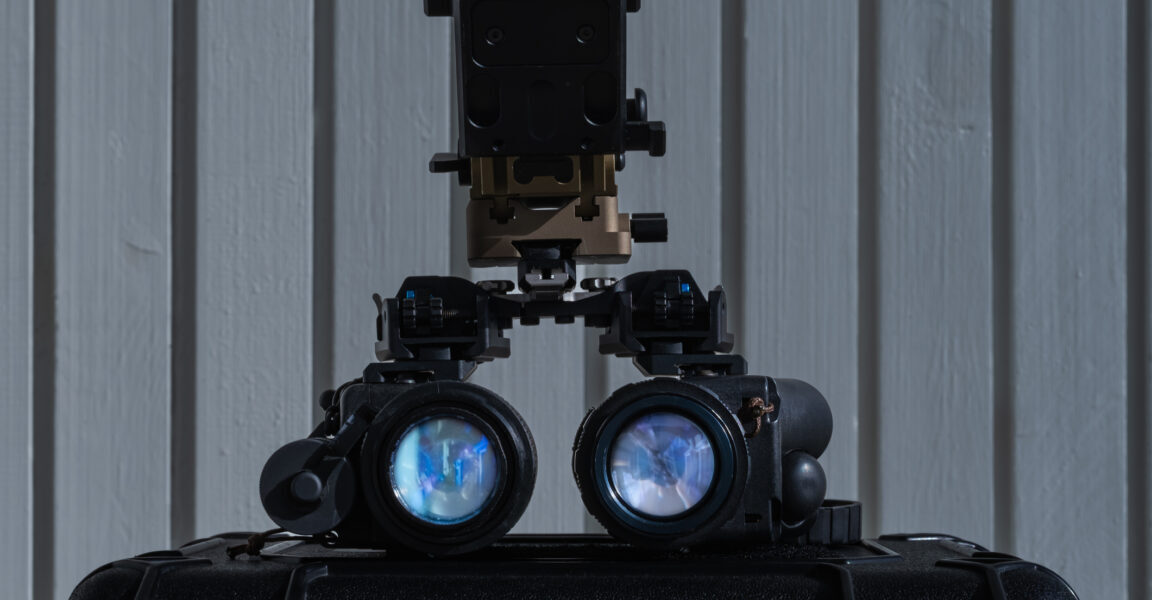
Researchers at the Beijing Institute of Technology have devised a groundbreaking night vision goggle that translates infrared light into full-color images. This innovative device, led by Xin Tang and Ge Mu, offers users a more natural visual experience compared to traditional green-tinted night-vision goggles.
Unlike conventional night vision technology, which converts infrared signals into shades of green, this new system maps different wavelengths of infrared directly onto the visible spectrum. The result is an image that closely mimics what the human eye would perceive under normal lighting conditions.
The key to this advancement lies in the use of mercury telluride colloidal quantum dots, which absorb infrared light efficiently. These are combined with a dual-layer organic light-emitting diode (OLED) structure, which converts the absorbed energy into visible colors. By stacking these components and optimizing their internal wiring, the device can process incoming infrared radiation and output it as an ordinary-looking, full-color image.
This technology could have significant implications for military, medical, and scientific applications where clear visual perception in low-light or dark environments is crucial. The ability to see heat signatures in natural colors may enhance situational awareness and reduce the cognitive load on users.
The researchers emphasize that this device represents a major step forward in night vision technology, potentially revolutionizing how we perceive infrared light. While further testing and development are required before commercialization, the potential benefits of this innovation are substantial.
In traditional night-vision goggles, the green hue can be disorienting for users who need to quickly identify objects or navigate through complex environments. The new system aims to address these limitations by providing a more intuitive visual experience.
The team’s approach is based on a combination of materials science and electronics engineering, demonstrating how interdisciplinary collaboration can lead to significant technological breakthroughs in the field of vision enhancement.
While the exact specifications and performance metrics are not detailed in this source, the potential for this technology to improve safety and efficiency in various fields makes it an exciting development in scientific research.