Key Takeaways
- Scientists link recent floods in West Africa to global heating.
- Dozens of people drowned, thousands displaced by the severe weather event.
- Experts warn adaptation and faster emission reductions are crucial.
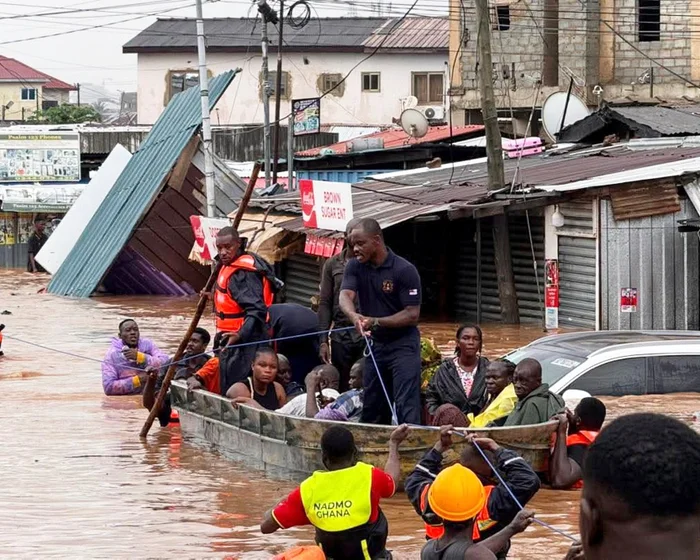
Severe flooding has affected coastal regions of West Africa, displacing thousands of residents. The recent weather event, which saw dozens of fatalities and hundreds rescued, has been linked to climate change by scientists who argue that global heating exacerbated the situation.
According to a statement from leading environmental researchers, the heavy rainfall responsible for the floods was intensified due to rising temperatures. 'The rains that caused these floods were supercharged by climate breakdown,' said Dr. Fatima Ahmed, an expert in climatology at the University of Lagos. She emphasized the need for urgent action: 'Adaptation to this frightening new normal and reducing emissions further and faster is critical.'
Local communities have been struggling to cope with the aftermath of the floods. In Lagos State alone, over 5,000 people were forced to leave their homes, while rescue operations are ongoing in several coastal towns. 'The situation is dire,' said Mr. Adebayo Ogunleye, a resident of Epe, who lost his home and belongings during the flood. 'We need immediate assistance and long-term solutions.'
Environmental activists have called for increased government investment in infrastructure to prevent future disasters. 'Investing in resilient infrastructure can save lives and reduce economic losses,' said Ms. Aisha Aliyu, a representative of Green Action Nigeria. She highlighted the importance of community preparedness: 'Local communities must be empowered with knowledge and resources to respond effectively to such events.'
The United Nations has issued an urgent appeal for aid to support affected populations in West Africa. The organization estimates that over $10 million is needed to provide emergency relief, including food, shelter, and medical supplies. 'We are deeply concerned by the scale of this disaster,' said Mr. Ali Bello, a UN official based in Dakar. He added: 'The international community must act now to support these vulnerable communities.'
Experts stress that while immediate relief is essential, long-term strategies are necessary to address the root causes of climate change. 'Reducing emissions and transitioning to renewable energy sources are crucial steps,' said Dr. Ahmed. She called for global cooperation: 'It's not just about adaptation; we need a comprehensive approach to mitigate the impacts of climate breakdown.'
As the world grapples with the consequences of rising temperatures, West Africa serves as a stark reminder of the urgent need for action. The region is particularly vulnerable due to its geographical and economic conditions, making it essential that both local and international efforts are prioritized in addressing this crisis.
'Adaptation to this frightening new normal and reducing emissions further and faster is critical.'
Dr. Fatima Ahmed, Expert in climatology at the University of Lagos