Key Takeaways
- Federal Minister Sardar Muhammad Yousuf unveiled Pakistan’s first four-year Hajj policy.
- Pilgrims can now choose their preferred Hajj year in advance under a digital waiting list system.
- The government will gradually transition to the role of regulator, while private sector involvement increases.
Federal Minister for Religious Affairs Sardar Muhammad Yousuf has unveiled Pakistan’s first four-year Hajj policy (2027–2030), aimed at ensuring transparent and digital governance in the country's Hajj arrangements. Speaking at a press conference in Islamabad, he highlighted that this policy marks the beginning of fundamental reforms in the management of pilgrimages.
Under the new system, pilgrims will be able to register for their preferred Hajj year by depositing 10% of the estimated expenses upfront. This innovative approach ensures transparency and allows for better planning. The minister also announced that multiple Hajj packages with varying durations would be introduced under the Government Hajj Scheme, catering to different needs and preferences.
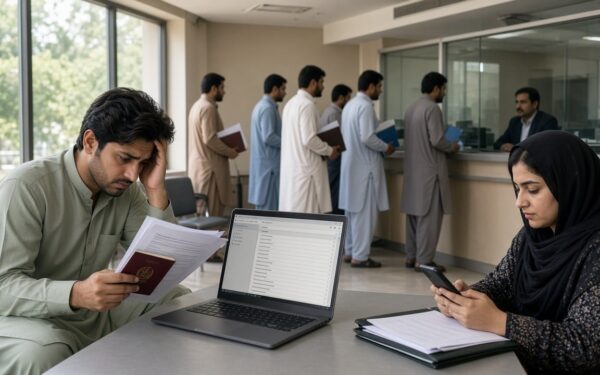
Sardar Yousuf emphasized the importance of digital governance in all stages of the Hajj process—from registration to grievance redressal and post-Hajj review. He stated that all procurement and contracts for accommodation, transport, catering, air travel, and cargo services would be awarded transparently according to government procurement rules. This move is expected to improve the quality of facilities while reducing costs.
The minister also highlighted the role of private sector companies in the Hajj arrangements. He said these companies will now use a Private Hajj Management Portal (PHMP) for bookings, payments, monitoring, and auditing, ensuring that all transactions are conducted through digital means. All Hajj payments would be made only through government-designated banking channels to ensure transparency and financial security.
To address pilgrims' concerns, the minister introduced a modern digital complaint management system with effective monitoring and a formal appeals process. This mechanism is designed to resolve complaints promptly and efficiently. Additionally, an independent third party will review both public and private Hajj arrangements impartially to further improve service quality.
Regarding the quota system, Sardar Yousuf confirmed that the government and private Hajj schemes would continue to receive 60% and 40% of the quotas respectively from 2027 to 2030. However, he noted that these percentages could be revised by the federal cabinet if necessary. The minister also mentioned that a merit-based criterion for selecting Hajj assistants would be formulated by the Cabinet Committee.
The policy aims to transition the government’s role from direct management of Hajj arrangements to one of regulation and quality assurance. This shift is expected to increase private sector involvement, thereby enhancing the overall service delivery. Sardar Yousuf concluded that this four-year policy represents a significant step towards modernizing Pakistan's Hajj administration.