Key Takeaways
- 170 amendments have been made to the Companies Act 2017.
- Reforms aim to simplify registration and reduce compliance costs.
- Government seeks to attract foreign investment and modernize regulatory framework.
The Pakistani government has unveiled 170 amendments to the Companies Act 2017, aimed at facilitating company registration and business operations, and modernizing the country’s corporate regulatory framework.
Adviser to the Prime Minister on Industries and Production, Haroon Akhtar Khan, disclosed this at a news conference on Friday, alongside Gilgit-Baltistan Chief Minister Amjad Hussain and members of his cabinet.
Khan highlighted that the complexity of the regulatory framework and the difficulties of doing business have been major factors discouraging foreign investment in Pakistan.
The Adviser stated that over the past 78 years, laws and regulations have been introduced to meet various needs, but over time, unnecessary complexities and overlapping requirements have accumulated, making it difficult for businesses to operate efficiently.
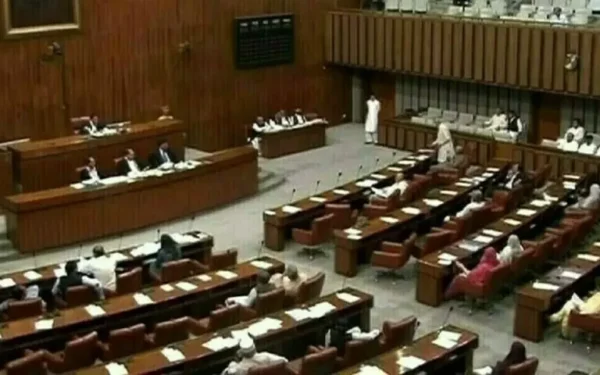
The government has approved 170 amendments and forwarded the relevant bill to parliament. Approximately 60-70 per cent of the overall work has been completed, with substantial progress made.
Regulatory reviews are underway in several sectors, including dairy, maritime, beverages, oil refineries, pharmaceuticals, and restaurants. The objective is to identify redundant requirements, streamline procedures, and ensure that regulations serve legitimate public and economic interests without imposing unnecessary burdens on businesses.
The government has engaged a senior international consultant with experience in regulatory reform across 135 countries to support the process. The initiative aims to simplify regulatory procedures, reduce compliance costs, and create a more predictable, investor-friendly framework for businesses operating in Pakistan.
Khan emphasized the need for close coordination between the federal government and provincial and regional administrations to ensure that federal and provincial reforms are aligned. This will help businesses across Pakistan operate in a simpler, more transparent, and more consistent environment.
Industrial inspections have also been a focus of the reforms. Businesses often face multiple inspections from different departments, including those responsible for labour, environmental protection, fire safety, buildings, and boilers. Overlapping procedures can disrupt operations and create avoidable compliance costs.
The proposed reforms aim to bring greater transparency and consistency to the inspection system, protecting businesses from unnecessary disruptions and costs.