Key Takeaways
- Wally Funk, the last surviving member of the Mercury 13 program, has died at the age of 87.
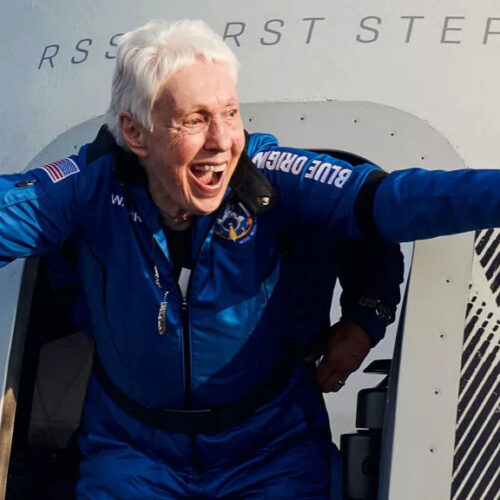
- Funk became the oldest woman to fly into space in 2021, 60 years after her initial astronaut candidacy.
- She was a key figure in the fight for women's rights and opportunities in space exploration.
Wally Funk, who made history as one of the first female astronauts to attempt spaceflight and became the oldest woman to fly into space at 87 years old, has passed away. Funk was a pivotal figure in the early days of American space exploration, representing the hopes and dreams of women seeking equal opportunities in this male-dominated field.
In 1961, Funk and 12 other women underwent rigorous physical and psychological tests as part of the Lovelace Woman in Space Program, which aimed to identify potential female astronauts. Despite their exceptional performance, they were not selected by NASA due to the agency's requirement that its astronauts be test pilots with jet time—a criterion that excluded women from military flight programs at the time.
Funk remained dedicated to her cause and continued advocating for women in space exploration throughout her life. Her legacy is a testament to the perseverance of those who fought against gender discrimination in science and technology. In 2021, Funk's dream came true when she became the oldest woman to fly into space aboard a private mission, marking a significant milestone in her decades-long journey.
The Mercury 13 program, as it was later dubbed by the media, highlighted the disparity between women and men in the early days of American space exploration. Funk's story is not just one of personal achievement but also a symbol of the broader struggle for gender equality in scientific fields. Her passing marks the end of an era, but her spirit lives on through the ongoing efforts to ensure equal opportunities for all.
Funk's journey from being a pioneering candidate to becoming the oldest woman in space encapsulates the challenges and triumphs faced by women in science and technology. Her legacy serves as inspiration for future generations, encouraging them to pursue their dreams regardless of societal barriers.
Throughout her life, Funk remained an advocate for women's rights and opportunities in space exploration. She was a role model for aspiring astronauts and a symbol of the progress made in gender equality within the field of space science.