Key Takeaways
- FIFA's use of Video Assistant Referee (VAR) has sparked numerous disputes during the World Cup.
- Critics argue that VAR interventions are inconsistent and may be used to favor certain teams.
- FIFA officials defend the technology, stating it is designed to correct clear and obvious mistakes.
The introduction of Video Assistant Referee (VAR) technology by FIFA has not silenced critics during the ongoing World Cup. Instead, its use has become a central point of contention, with several high-profile incidents drawing attention to perceived inconsistencies in application.
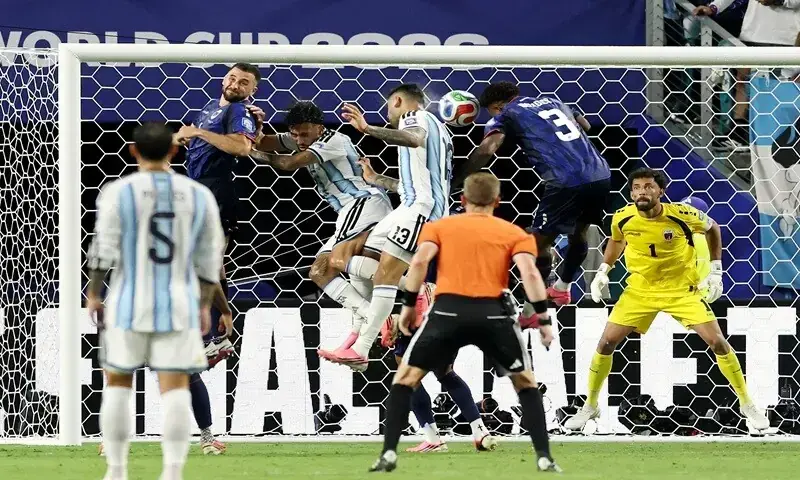
Egypt coach Hossam Hassan expressed frustration after his team's goal was disallowed due to a foul committed earlier in the match, while a penalty shout went unaddressed. 'What’s happening isn’t fair,' Hassan declared, highlighting the growing dissatisfaction among coaches and players with VAR interventions.
FIFA referees’ chief Pierluigi Collina defended the technology, stating that VAR can intervene regardless of the distance from the goal or the time elapsed between the incident and the subsequent goal. He emphasized that 'a foul is a foul,' even if it appears obvious to fans but not to on-field officials.
The controversy surrounding VAR has extended beyond individual matches, with United States President Donald Trump weighing in on the Balogun red card saga. This intervention by a world leader underscores the broader impact of VAR controversies on global sports discourse.
Network scientist Brennan Klein analyzed data from the tournament and concluded that while VAR could theoretically be expanded to cover more aspects of the game, fans have already reached their limit with the current level of intervention. 'This kind of dystopian future of over-refereeing everything kind of fails to address what it’s originally designed to intervene on,' he stated.
The 2026 World Cup will see an even greater expansion of VAR's role, with four additional areas where the technology can be used. This move is part of Collina’s strategy to enhance the integrity of refereeing decisions but has also raised concerns about over-reliance and potential bias in match outcomes.
Critics argue that the inconsistency in VAR application undermines its credibility as a tool for correcting clear and obvious mistakes, instead leading to arbitrary decisions that can significantly impact team strategies and player performances. The ongoing debate highlights the complex challenges FIFA faces in balancing technological innovation with fan satisfaction and fair play.
While FIFA officials maintain that VAR is essential for maintaining fairness on the field, the growing number of controversies suggests that the technology may need further refinement or reevaluation to address the concerns raised by coaches, players, and fans.
'What’s happening isn’t fair.'
Hossam Hassan, Egypt coach
There is no defined limit regarding either the distance from goal or the amount of time between the incident and the goal.
Pierluigi Collina, FIFA referees’ chief