Key Takeaways
- The KSE-100 Index dropped over 500 points at the opening of trading on Friday.
- Key sectors such as automobile assemblers and commercial banks saw significant declines.
- Global markets, including Asia, experienced selling pressure due to escalating tensions between the US and Iran.
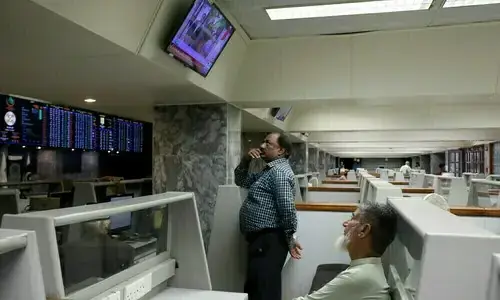
Selling pressure dominated the Pakistan Stock Exchange (PSX) on Friday morning, with the benchmark KSE-100 Index plummeting over 500 points at the opening of trading. By 9:35am, the index had settled at 177,562.67, down by 560.89 points or 0.31%. This marked a sharp reversal from Thursday’s recovery session, where the KSE-100 Index gained 2,837.78 points or 1.62%, buoyed by renewed optimism over potential dialogue between the United States and Iran.
The decline was widespread across key sectors, with automobile assemblers, cement companies, commercial banks, fertiliser producers, oil and gas exploration firms, OMCs (oil marketing companies), and power generation companies all experiencing significant losses. Notably, index-heavy stocks such as HUBCO, MARI, POL, PPL, MCB, MEBL, NBP, and UBL traded in the red.
Internationally, Asian markets faced a rocky start on Friday, with the broader MSCI Asia Pacific Index down 0.06% by early trade. The Nikkei slid 2.8%, while Nasdaq futures lost 0.7% and S&P 500 futures declined 0.4%. EUROSTOXX 50 futures were also down 0.5%. These global market movements reflect the broader impact of escalating tensions between the US and Iran, which have dampened investor sentiment.
The selling pressure in Pakistan’s stock market was exacerbated by similar trends observed globally. In South Korea, markets were closed for a holiday following government measures to curb volatility in technology-related ETFs. The South Korean government announced it would temporarily ban new listings of exchange-traded funds (ETFs) tied to certain major technology firms and raise minimum required deposits for retail investors.
Investors across the region rotated out of semiconductor plays into other sectors such as banking, following robust earnings from major lenders. This shift left Asia particularly vulnerable to the selloff given its heavier exposure to chip manufacturers. The global market environment, characterized by increased volatility and cautious trading, has created a challenging backdrop for Pakistan’s stock exchange.
Analysts attribute the sudden drop in the KSE-100 Index to heightened geopolitical tensions between the US and Iran, which have disrupted investor confidence. The potential resumption of dialogue between these two nations had initially provided some relief, but recent developments have overshadowed this optimism. Traders and investors are now closely monitoring further developments that could influence market sentiment.
The PSX’s intraday update highlights the volatility in the market, with key indices fluctuating rapidly based on global events. As tensions continue to simmer between major world powers, Pakistan’s stock exchange remains at the mercy of broader geopolitical dynamics.