Key Takeaways
- Andy Burnham, Labour's new leader, must navigate three critical issues.
- Economic growth and fiscal capacity are central to his agenda.
- Rebuilding public confidence in managing migration is essential.
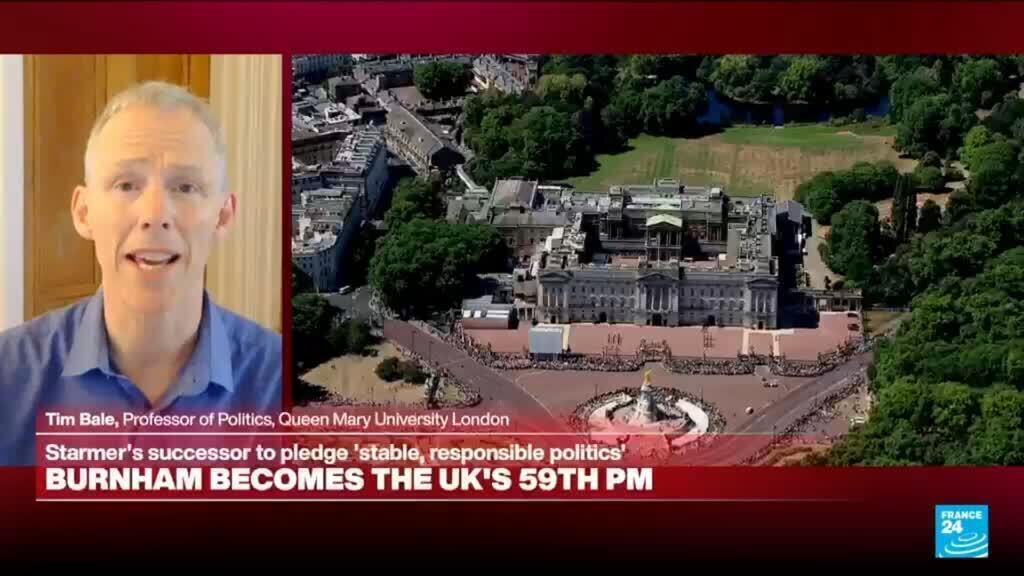
Andy Burnham, the newly appointed leader of the Labour Party, faces significant challenges as he seeks to reposition Britain within a post-Brexit landscape. According to Professor Tim Bale from Queen Mary University in London, Burnham's success hinges on three interconnected dilemmas: restoring economic growth, rebuilding public confidence in state management of migration, and gradually redefining Britain’s relationship with the European Union (EU) without reopening politically divisive debates prematurely.
Professor Bale asserts that 'Burnham inherits a Labour leadership at a moment when Britain's political debate is defined less by ideology than by structural constraints.' This means that Burnham must focus on practical solutions rather than ideological battles, particularly in the context of economic recovery and public trust.
Economic growth is paramount for fiscal capacity. Professor Bale suggests that 'big gains will only come from rejoining the Single Market,' indicating a potential shift towards a more pragmatic approach to trade and economic policy. Burnham's ability to address this issue effectively could be crucial in gaining support among Labour members and the broader electorate.
Public confidence in managing migration is another key challenge. The UK has faced significant public concern over immigration, which has been exacerbated by Brexit. Professor Bale notes that 'rebuilding public confidence' requires a careful balance between addressing legitimate concerns and avoiding politically divisive rhetoric. This task will be particularly challenging given the sensitivities surrounding the issue.
Finally, Burnham must gradually redefine Britain's relationship with Europe without reopening old debates. Professor Bale emphasizes that 'gradual redefinition' is necessary to avoid alienating key constituencies within the Labour Party and the wider public. This approach suggests a cautious and incremental strategy in negotiations with the EU, focusing on areas where mutual benefit can be achieved.
Andy Burnham's leadership will be tested as he navigates these complex issues. His ability to balance economic growth, public confidence, and pragmatic EU relations could determine the future direction of Labour and its role in British politics post-Brexit.
In conclusion, Burnham’s success will depend on his strategic approach to these interconnected challenges. The path forward requires a delicate balancing act between practical solutions and maintaining political cohesion within the party.
'Burnham inherits the Labour leadership at a moment when Britain's political debate is defined less by ideology than by structural constraints.'
Professor Tim Bale, Professor of Politics, Queen Mary University in London