Key Takeaways
- AMD has introduced ROCm.ai, an AI-native development platform.
- The new platform aims to simplify and accelerate AI application development on AMD hardware.
- ROCm.ai integrates coding assistants, deployment tools, and optimization capabilities.
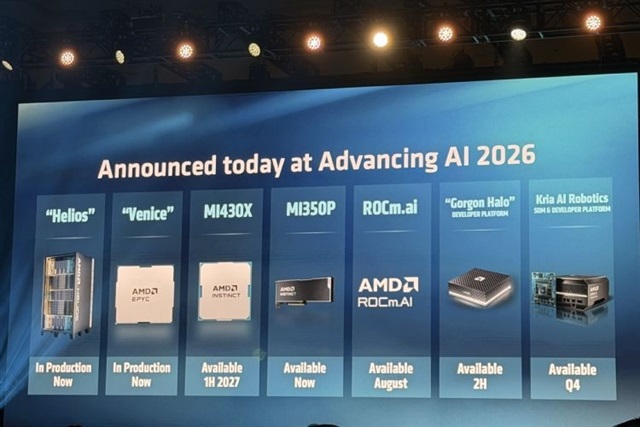
AMD has unveiled a new initiative aimed at enhancing the development of artificial intelligence applications. At its Advancing AI 2026 event, the company launched ROCm.ai, an AI-native development platform designed to streamline the process for developers working on AMD hardware.
According to AMD’s announcement, ROCm.ai is intended to provide comprehensive support throughout the AI application lifecycle, from coding and deployment to optimization. The platform includes features such as AI coding assistants, which can help developers write more efficient code; deployment tools that facilitate the integration of models into production environments; and automated optimization capabilities that enhance performance.
AMD’s move comes in response to growing competition in the AI hardware market, particularly from NVIDIA, whose CUDA platform has long been a dominant force. By offering ROCm.ai, AMD hopes to challenge NVIDIA's market position by providing developers with a more user-friendly and efficient development environment on its own hardware.
In a statement released during the event, AMD highlighted that ROCm.ai is designed to accelerate model deployment, potentially achieving up to 3.3 times faster inference gains compared to traditional methods. This performance improvement could be crucial for businesses looking to deploy AI solutions more quickly and efficiently.
The launch of ROCm.ai marks a significant step in AMD’s strategy to expand its presence in the AI market. By focusing on both hardware and software, AMD aims to create a comprehensive ecosystem that can compete with NVIDIA's offerings. The platform is expected to be available for download soon, allowing developers to start exploring its capabilities.
AMD’s Advancing AI 2026 event also featured discussions around the future of AI development, emphasizing the importance of collaboration between hardware and software providers. By integrating these elements into a single platform, AMD hopes to provide a more seamless experience for developers working on complex AI projects.