
Key Takeaways
- Agentic AI is gaining boardroom attention but faces significant implementation challenges.
- Organizations must address organizational, architectural, and data readiness gaps for successful deployment.
- Working with experienced systems integrators can help close these gaps.
Wateen, a leading technology solutions provider in Pakistan, is focusing on addressing the critical gap between enterprise interest in agentic artificial intelligence (AI) and its practical implementation. According to Gartner, more than 40% of organizations are at risk of failing due to escalating costs, unclear business value, or inadequate risk controls when implementing agentic AI.
The challenge lies not just in adopting the technology but in creating the necessary conditions for it to succeed. Research from the RAND Corporation indicates that enterprise AI failures often stem from leadership ambivalence and organizational preparedness rather than technological limitations. Three key areas determine an organization's readiness: organizational, architectural, and data readiness.
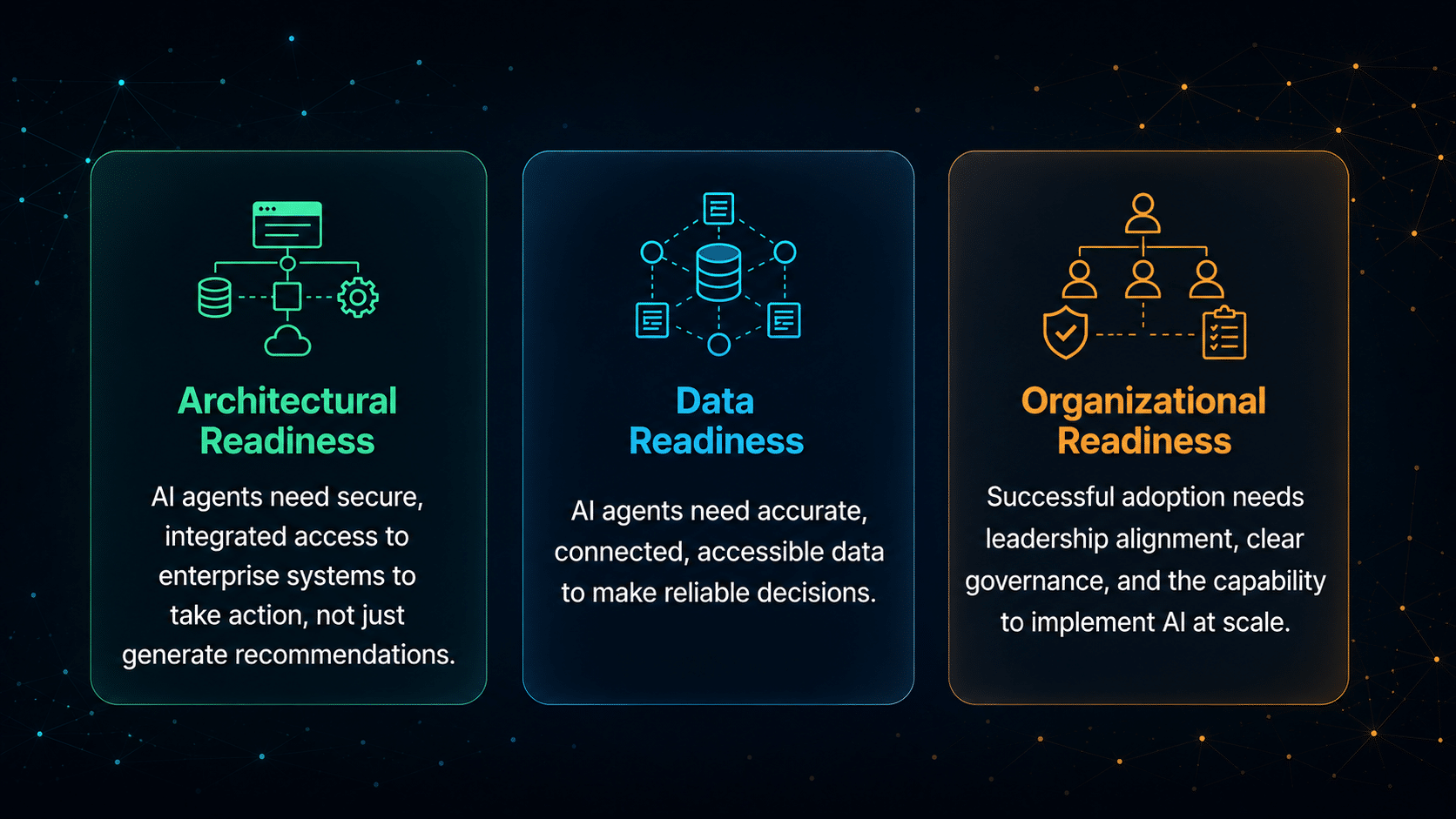
Organizational readiness involves recognizing the strategic importance of agentic AI and having governance, ownership, and internal capabilities to implement it responsibly. Architectural readiness ensures that AI agents have secure access to systems where work happens, enabling them to execute tasks automatically. Data readiness requires accurate, connected, and accessible information across various applications.
Fivetran’s 2026 Agentic AI Readiness Index found that only 15% of organizations have data environments ready for agentic AI in production despite significant investment. Fragmented data can lead to incomplete or misleading insights from AI agents. For instance, an agent might identify a problem but lack the necessary information to resolve it.
Organizations face another strategic decision: whether to build their own capabilities or work with experienced systems integrators. While some enterprises have the engineering resources to develop and maintain their own AI platforms, most organizations do not. Building enterprise-grade agentic AI requires integrating with existing systems, establishing governance, monitoring performance, managing risk, and continuously improving agents as business processes evolve.
Wateen’s approach is to help organizations navigate these challenges by providing comprehensive solutions that address all three readiness gaps. By working closely with clients, Wateen ensures that the technology aligns with their specific needs and objectives. This includes developing robust architectures, integrating data from various sources, and implementing governance frameworks to manage risk effectively.
The success of agentic AI lies in its ability to understand requests, make decisions, and carry out tasks autonomously. However, without addressing these readiness gaps, organizations may struggle to realize the full potential of this technology. Wateen’s expertise in systems integration can be a critical factor in ensuring that agentic AI is not just adopted but also deployed effectively.
In conclusion, while interest in agentic AI is growing rapidly among businesses across various industries, turning that ambition into real business value requires more than simply selecting the right model or platform. It demands a comprehensive approach to readiness, including organizational, architectural, and data preparedness. Organizations that work with experienced partners like Wateen can bridge these gaps and unlock the full potential of agentic AI.