Key Takeaways
- Sindh Assembly passed the Sindh Local Government Amendment Bill 2026 by majority vote.
- Opposition members protested and tore copies of the bill during the session.
- The bill introduces changes such as the mayor assuming administrator powers and establishing a reconciliation commission.
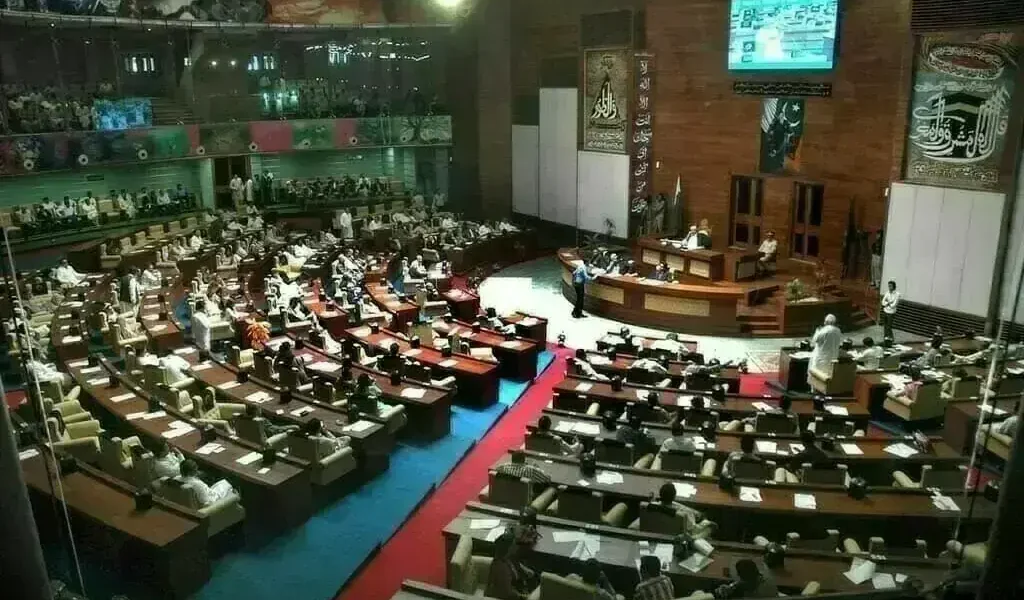
The Sindh Assembly in Pakistan has passed the Sindh Local Government Amendment Bill 2026, despite strong opposition protests. The bill, which was approved by majority vote, introduces several significant changes to the local government system.
Law and Parliamentary Affairs Minister Zia-ul-Hassan Lanjar presented the report of the special committee on the Sindh Local Government Act 2026 before the bill was discussed. However, opposition members immediately began raising slogans and creating a noisy scene, tearing copies of the bill in the process.
Despite the disruptions, the bill was passed by majority vote. The new legislation includes provisions for the mayor to assume the powers of an administrator when the term of a council expires, with outgoing elected representatives continuing to work as administrators until a new mayor or chairman takes charge.
The amendments also stipulate that the deputy mayor or vice chairman will be appointed as the convener of the council and will be authorized to preside over its meetings. Additionally, union council chairmen will be required to identify illegal constructions and report them to the Sindh Building Control Authority (SBCA).
The bill also provides for the establishment of a reconciliation commission, which must be constituted within 90 days. Following the passage of the bill, the Sindh Assembly session was adjourned until 3pm on Tuesday.
During the session, Parliamentary Secretary for Environment, Hassan Ali Shah, addressed questions from lawmakers regarding environmental issues. He reported that 16 monitoring systems were available to check the Air Quality Index (AQI), including 13 in Karachi. He also mentioned that sea winds helped reduce air pollution.
Hassan Ali Shah highlighted that Karachi generated 470 million gallons of sewage daily, but only 55 MGD was being treated. He noted that one treatment plant was treating just 20 MGD, while treatment at other plants was negligible. The remaining sewage was being discharged untreated, affecting marine life and causing marine pollution.
The parliamentary secretary also addressed the issue of plastic bags, stating that despite a ban, they were still widely available and being used in markets, increasing pollution and causing health problems. He emphasized that the Environment Department’s role was limited to issuing directions, while ensuring their implementation was the responsibility of law-enforcement agencies and local governments.
MQM lawmaker Abdul Waseem criticized the city’s increasing heat due to global warming, despite the cutting of trees. Hassan Ali Shah responded that there was a strict ban on tree cutting and that urban forests were also being developed in the city. JI lawmaker Muhammad Farooq questioned the effectiveness of the act, citing the continued discharge of untreated sewage and industrial waste into the sea.