Key Takeaways
- ECC approved Rs75 billion for the Prime Minister’s Fuel Relief Scheme.
- The scheme provides targeted fuel subsidies to lower-income segments.
- Refineries’ upgradation agreement also approved by ECC.
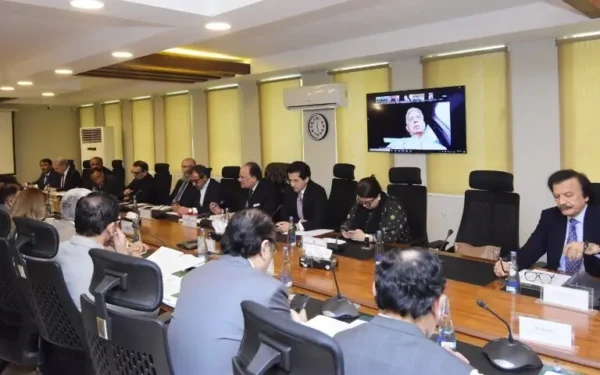
The Economic Coordination Committee (ECC) of the Cabinet has approved Rs75 billion for the Prime Minister’s Fuel Relief Scheme, aimed at providing targeted fuel subsidies to lower-income segments in the wake of increased petroleum prices.
The scheme, chaired by Minister for Finance and Revenue, Muhammad Aurangzeb, will offer relief to non-commercial users, with two- and three-wheelers receiving Rs500 per week, equivalent to 5 litres at Rs100 per litre, and cars up to 800cc receiving Rs1,000 for ten days, based on 30 litres per month at Rs100 per litre.
To ensure transparency and accountability, the Ministry of IT & Telecom will deploy and manage the Fuel Pass System (FPS) for digital management and transparent delivery of the relief.
Additionally, the ECC approved a summary related to the draft Upgrade Agreement under the Pakistan Oil Refining Policy for Upgradation of Existing/Brownfield Refineries, 2023, as amended in August 2026. This agreement will provide the framework for implementation and monitoring of refinery upgradation projects and associated incentives, with a completion period of five years.
The ECC also approved the proposal of the Petroleum Division regarding the settlement of financial matters of Oil Marketing Companies (OMCs), including compensation of unadjusted input sales tax claims of OMCs for July 2025 to June 2026 through the Inland Freight Equalisation Margin (IFEM).
Furthermore, the ECC considered a summary submitted by the Science & Technology Division seeking a review of the earlier ECC decision regarding standards and regulatory requirements for commercial imports of used vehicles. The matter was deferred, and the recommendations of the Committee constituted to review the EDB vehicle import inspection regime will be obtained.
The ECC also approved permission for the export of 200,000 tons of surplus sugar with safeguards to prevent a spike in domestic prices. This move is part of the broader strategy to manage the country’s economic challenges while ensuring the welfare of lower-income segments.
The approval of the Fuel Relief Scheme and the refineries’ upgradation agreement reflects the government’s commitment to addressing economic challenges and improving the operational efficiency of the refining sector.