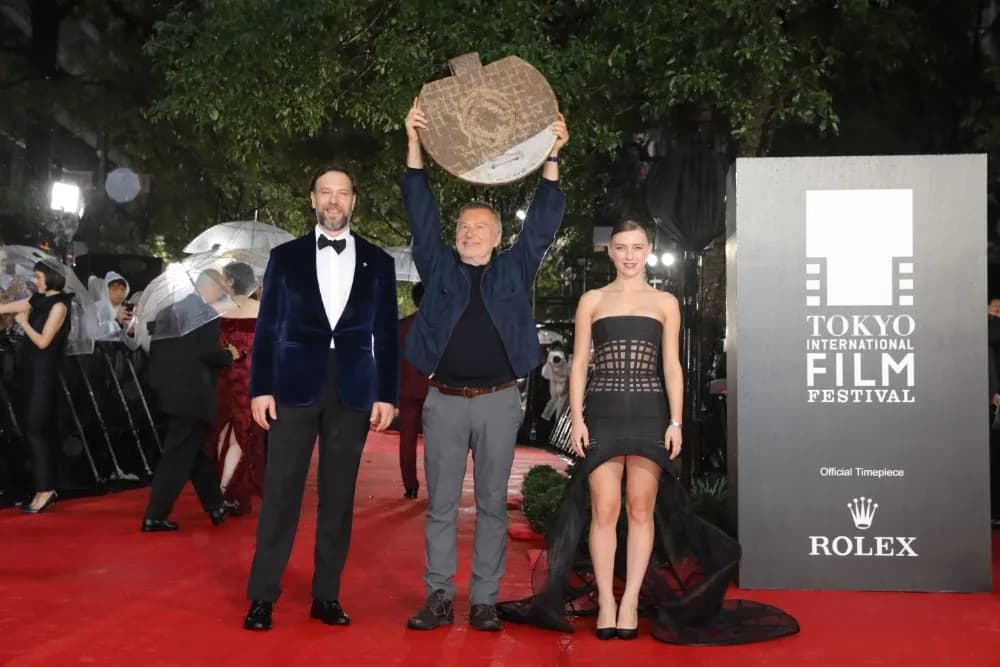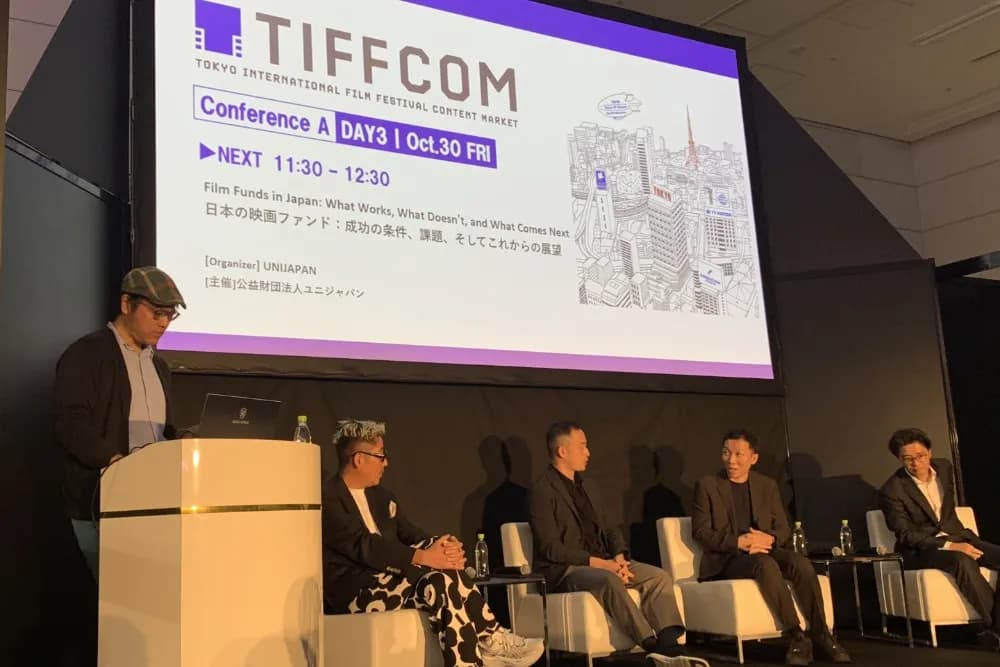
Kii Muneyuki, the CEO and producer of K2 Pictures, joined the discussion alongside Ibe Tomonobu, CEO of Questry.
Nakagawa Keita, managing director at MUFG Bank, and Motoyanagi Yusuke, a partner at the law firm Nishimura & Asahi, also participated in the session. K2P Film Fund I closed in February 2026, raising approximately JPY5 billion, which is roughly $32 million.
The fund operates as a blind pool where investors commit capital before specific films are selected, with the goal of backing around 50 films over a seven-year period. Financial institutions and companies, including the Development Bank of Japan and MUFG, serve as investors for K2P Film Fund I.
A greenlight committee manages the approval of projects for the fund, which saw five films released in theaters during 2026, according to Kii. Kii stated that a central challenge for film funds is determining how to return revenue to creators, particularly from streaming and other windows following a theatrical run.
Kii added that it is difficult to depend on overseas box office results and noted that Japanese companies must build businesses that extend beyond distribution. In the United States, producers often secure bank loans by combining presales with completion guarantees. These guarantees ensure a film is delivered on schedule and within budget, rather than guaranteeing its commercial success.
South Korea utilizes a mix of public and private support, where government-backed guarantees assist projects in obtaining bank financing. Nakagawa said MUFG was chosen on 31 March to conduct a Japan-specific feasibility study commissioned by the Ministry of Economy, Trade and Industry.
The study, which will continue until February 2027, will use real-world data to create valuation and completion-guarantee models while testing the entire process from application to contract drafting, Nakagawa said. The panel concluded by identifying four priorities: regulation, capital, creators, and cross-border business.