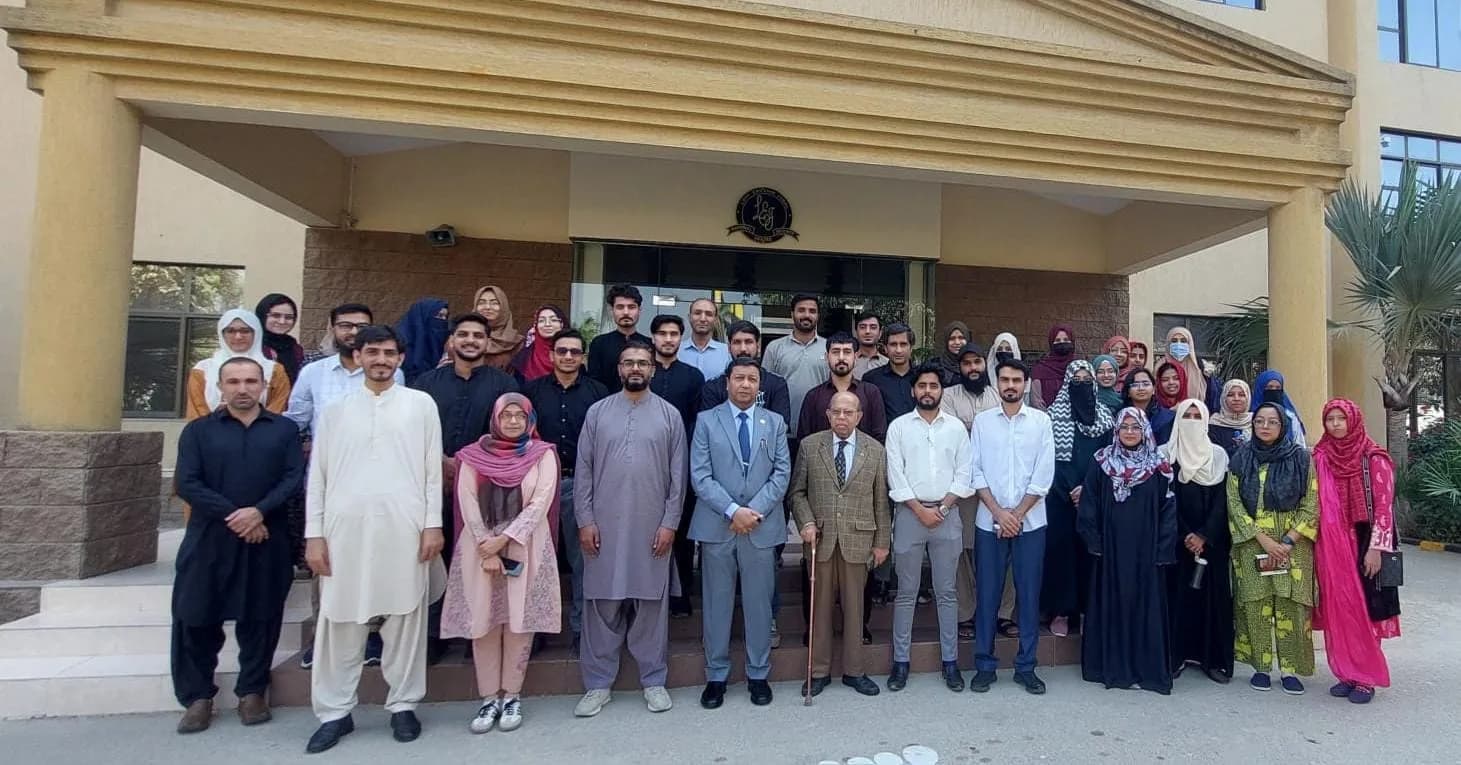
An international training course titled “Vaccinology: From Research and Development to Vaccine Production” began on Monday at the International Center for Chemical and Biological Sciences (ICCBS) at the University of Karachi. The six-week program has secured more than 2,000 registrations from 70 countries.
While approximately 100 researchers, students, and health professionals are attending the sessions physically at the ICCBS, the remaining participants are joining online. The course is jointly designed and organized by OIC-COMSTECH, the Pasteur Institute of Iran, and ICCBS. It is scheduled to continue until December 28.
The program is intended to improve participants' understanding of immunology, vaccine design, research, emerging vaccine platforms, and the scientific processes involved in vaccine development and production. It consists of 15 technical lectures followed by a final examination. Topics include immune responses and protection, vaccine antigens and adjuvants, antigen-presentation pathways, B- and T-cell responses, systemic and mucosal immunisation, traditional and novel vaccine platforms, and vaccines against cancer, bacterial, viral and protozoan infections. New technologies in vaccine development will also be discussed.
Inaugurating the course, OIC-COMSTECH Coordinator General Prof. Dr. M. Iqbal Choudhary stated that vaccines were among the most effective tools for protecting public health, while the Covid-19 pandemic had underlined the importance of vaccine research, scientific innovation and local production. Choudhary said OIC member states needed to invest in trained scientists, strong research institutions and access to modern vaccine technologies to reduce dependence on external sources and prepare more effectively for future health emergencies.
Choudhary noted that COMSTECH supports scientific capacity-building through training, fellowships and research partnerships. He stated the course would help participants strengthen their knowledge of immunology, vaccine design, different vaccine platforms and emerging technologies, while contributing to the development of vaccinology expertise across OIC member states. He expressed hope that the exchange of expertise among participating institutions and specialists would strengthen scientific collaboration and provide valuable learning opportunities for young researchers.
Director General of the Pasteur Institute of Iran Dr. Ehsan Mostafavi said vaccines had saved millions of lives and substantially reduced the burden of infectious diseases. However, Mostafavi added that vaccine development remained a complex multidisciplinary process requiring expertise in immunology, microbiology and molecular biology, along with advanced technologies, quality assurance and cooperation among scientists, institutions and industry.
Mostafavi stated that countries needed not only access to vaccines but also the knowledge, expertise and infrastructure required for vaccine research, evaluation, development and production. He explained that the wider training programme had been structured at basic, advanced and expert levels to enable participants to progressively develop their scientific knowledge and professional skills.
National Professor Prof. A.K. Azad Khan, President of the Diabetic Association of Bangladesh and COMSTECH Distinguished Scholar, also addressed the inaugural ceremony. Khan, an internationally recognised physician, researcher and public-health leader known for his contributions to diabetes and noncommunicable disease prevention, welcomed the launch of the course.
Khan emphasized the importance of scientific training, disease prevention and stronger public-health systems. He said investment in young researchers and greater cooperation among health and research institutions would help developing countries strengthen their preparedness for emerging health challenges. He also expressed appreciation for OIC-COMSTECH, the Pasteur Institute of Iran and ICCBS for jointly organising the programme.