AgiBot released the GO-3 Preview on 29 October to provide a model capable of learning at scale across pre-training, post-training, and deployment phases.
The company intends to open-source the complete model by the end of 2026. GO-3 Preview secured first place on the RoboDojo, RoboTwin, and RoboColiseum leaderboards. AgiBot stated the model is built on a World Reasoning Action Model, or WRAM, architecture.
According to AgiBot, robots using this technology can perform unfamiliar tasks in kitchens, homes, and multi-robot setups without requiring extra fine-tuning after pre-training. The model can learn to perform lengthy, intricate jobs, such as preparing a Chinese savory crepe known as a jianbing, using only a few demonstrations.
AgiBot also claimed that a robot can assemble Lego pieces after fine-tuning when an agent coordinates the individual steps. To develop these capabilities, AgiBot created Genie Evolver, a distributed training system that integrates approximately 100 real robots with world models and physics simulations. Testing showed a robot surpassed the average human in tabletop curling after four hours of online practice.
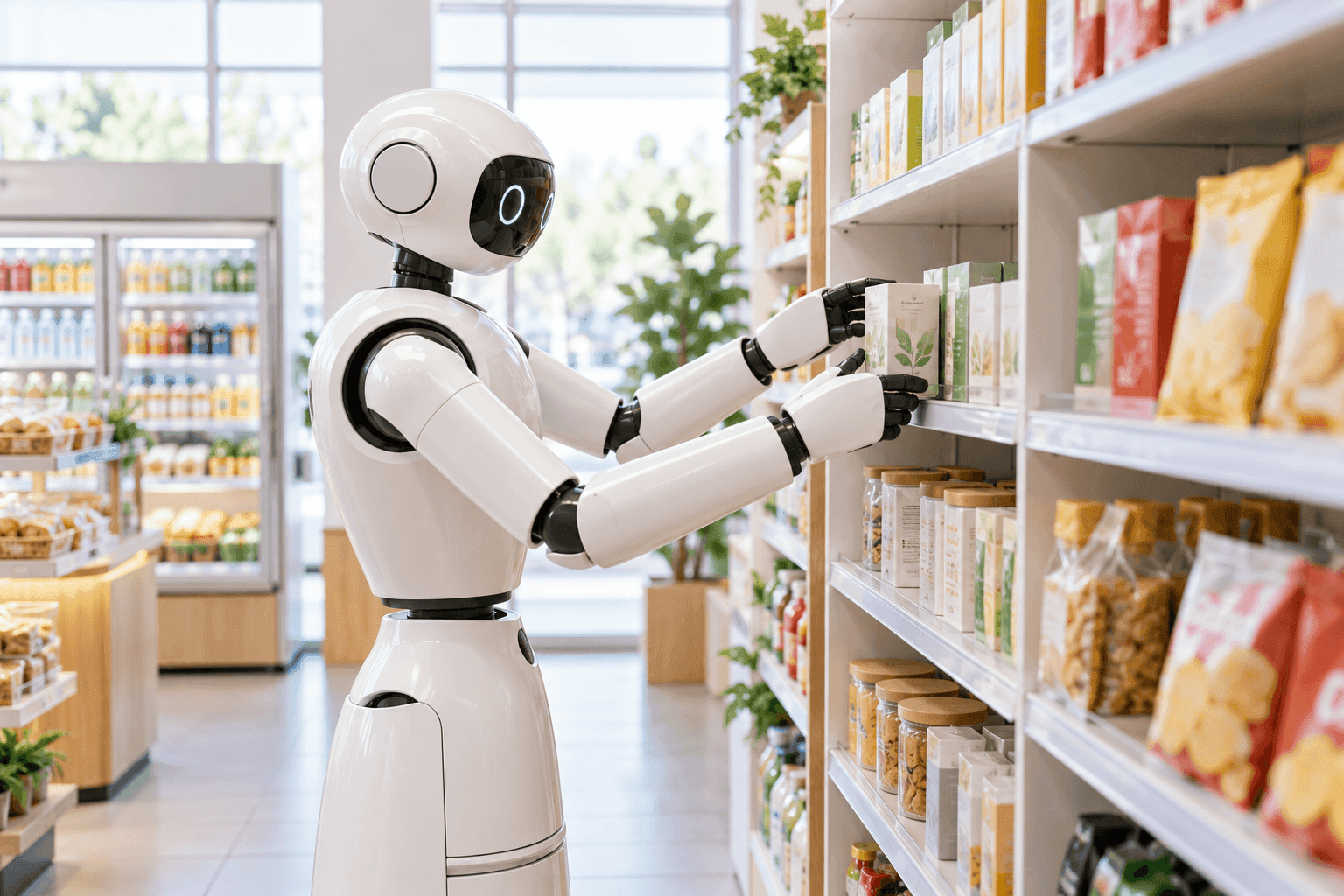
In a block-tower game, a robot successfully pulled out five blocks in a row while keeping the tower upright. An AgiBot G2 robot deployed in a real convenience store identified the causes of its own failures and adjusted its approach without human tuning or demonstrations.
AgiBot said this method improved single-task success by 17.7 percentage points over conventional supervised fine-tuning for tasks like hanging small hooks.