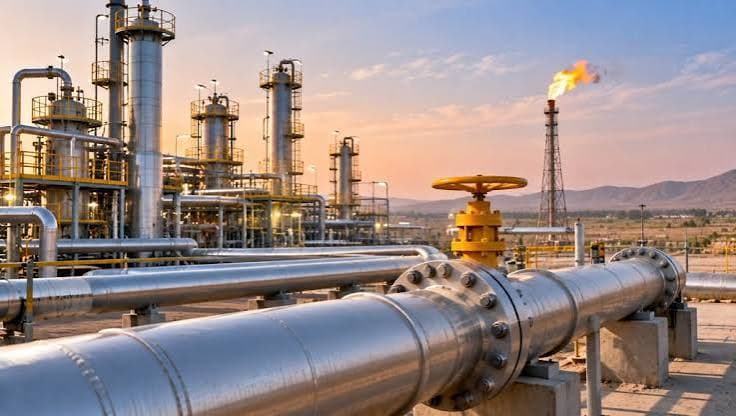
Pakistan’s 10 major gas fields contain 10.605 trillion cubic feet (TCF) of remaining recoverable reserves.
These fields originally held a combined 43.358 TCF of recoverable gas, from which 32.753 TCF was extracted by 30 June 2026. The Mari HRL field in Ghotki district holds the largest remaining gas reserves at 2.777 TCF. Other significant gas deposits include 2.551 TCF in Uch in Dera Bugti and 1.858 TCF in Kandara in Sukkur.
Mari Ghazij in Ghotki holds 1.723 TCF of remaining reserves, while Sui, a major gas-producing field, has 621 billion cubic feet (BCF) remaining. Sui originally had 12.655 TCF of recoverable reserves, with cumulative production reaching 12.034 TCF by 30 June 2026.
Remaining reserves in other fields include 603 BCF in Qadirpur in Ghotki, 355 BCF in Kandhkot in Kashmore, and 83 BCF in Sawan in Khairpur. Smaller deposits are located in Bhit in Dadu with 23 BCF and Zamzama in Dadu with 11 BCF. The 10 largest oil fields in the country contain 105 million barrels of remaining recoverable oil.
These oil fields had combined original recoverable reserves of 567 million barrels, of which 462 million barrels have been produced. Bargzai in Kohat district leads the remaining oil reserves with 49 million barrels. Pashaki/Pashaki North in Hyderabad holds 11 million barrels, while Nashpa in Karak, Adhi in Rawalpindi, and Dhurnal in Attock each contain around nine million barrels.
Kumar in Hyderabad has eight million barrels of remaining oil, and Makori East in Karak holds six million barrels. Balkassar in Chakwal has two million barrels, while Meyal in Attock has one million barrels. The Council of Common Interests approved the Tight Gas Policy 2024 in February 2024.
Oil and gas companies drilled 58 exploratory and development wells during FY2025-26, which resulted in 18 discoveries. Exploration and production activities added around 300 million cubic feet per day of natural gas and 16,000 barrels per day of crude oil to the country’s domestic production system during the financial year.