Key Takeaways
- Several Pakistani cities, including Hyderabad, Multan, Lahore, Faisalabad, and Karachi, rank among the world’s least resilient to climate disasters.
- The report by AlphaGeo highlights a dangerous gap between exposure to climate threats and capacity to cope with them.
- South Asian cities dominate the bottom of the ranking, reflecting high exposure to flooding and monsoon-related hazards.
Several Pakistani cities, including Hyderabad, Multan, Lahore, Faisalabad, and Karachi, have been ranked among the world’s least resilient to climate disasters, according to a new assessment by geospatial analytics company AlphaGeo.
The report measures cities’ exposure to climate hazards and their ability to adapt and withstand their effects, with Hyderabad ranking second least resilient, Multan third, Lahore fifth, Faisalabad seventh, and Karachi eighth.
Ahmedabad in India topped the list of cities deemed least resilient, followed by Hyderabad and Multan, reflecting a dangerous gap between exposure to climate threats and capacity to cope with them.
AlphaGeo assessed cities against a range of climate risks, including inland and coastal flooding, extreme heat, drought, wildfires, and hurricane winds.
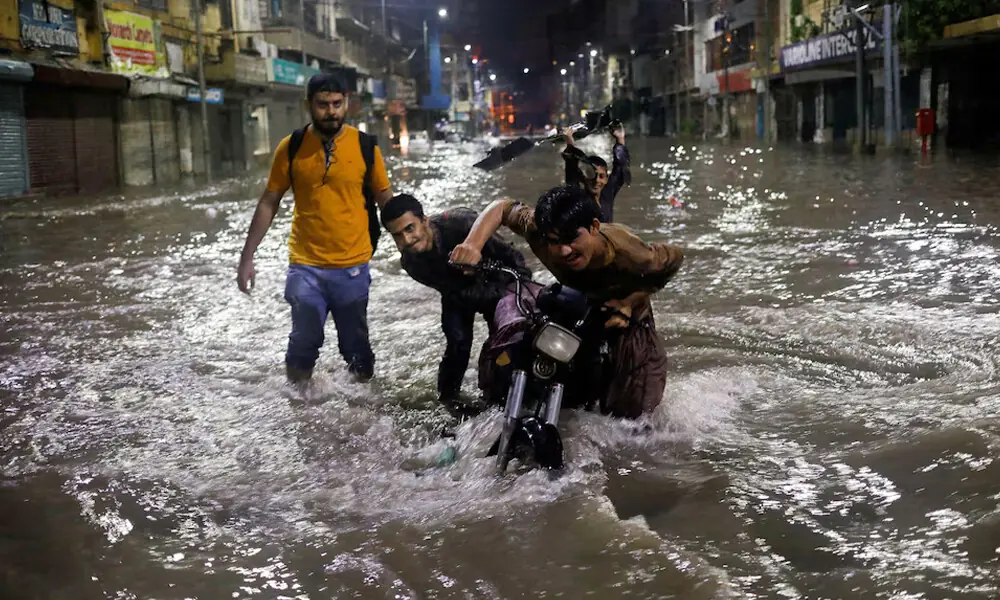
The assessment found that South Asian cities dominated the bottom of the ranking, reflecting the region’s high exposure to flooding and monsoon-related hazards alongside weaker adaptation measures.
Pakistan’s cities were particularly prominent in the bottom 10, with Hyderabad, Multan, Lahore, Faisalabad, and Karachi joined by Ahmedabad and Kolkata in India, Dhaka and Chittagong in Bangladesh, and Taipei in Taiwan.
At the other end of the scale, Chicago was ranked the world’s most resilient major city, followed by Addis Ababa, Melbourne, Barcelona, Ankara, Buenos Aires, Paris, Istanbul, Bogotá, and Nairobi.
Chicago’s position was attributed to its temperate climate, access to freshwater, and relatively low hurricane risk, as well as long-term investment in infrastructure, such as the Deep Tunnel Project, which helps manage flooding and water pollution.
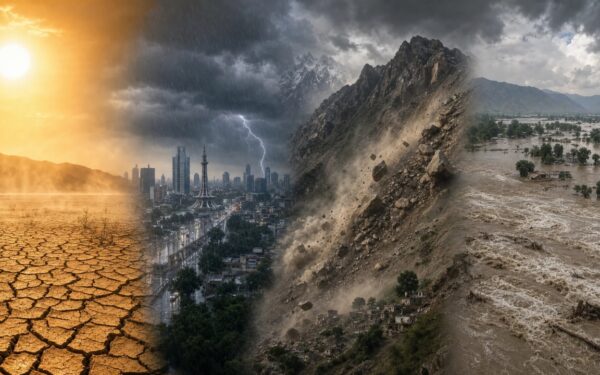
The findings come against a backdrop of increasingly severe climate-related disasters across South Asia, with recent floods and mudslides in Nepal and Tibet illustrating the potential consequences of extreme weather colliding with vulnerable settlements and limited adaptation capacity.
Resilience equals risk minus adaptation.
Parag Khanna, Founder and CEO of AlphaGeo